
For whom can it be considered?
IV administration may be considered in cases of confirmed deficiency, absorption problems, fluid and electrolyte needs, specific clinical goals, or situations in which oral supplementation is not appropriate. For wellness or recovery goals, formulation selection is considered in conjunction with individual needs and safety data.
How is it planned?
The formulation and dose are determined based on medical history, laboratory findings, kidney and liver function, medications, allergy history, and the intended clinical outcome. The infusion rate and interval between sessions are also individualized accordingly; a standard, one-size-fits-all “infusion package” approach is not used.
Key points
- The IV route offers the advantage of rapid and predictable administration in some clinical situations.
- The formulation, dose, infusion rate, and session plan are determined individually.
- Confirmed deficiency, absorption problems, fluid and electrolyte needs, or specific clinical goals may strengthen the decision to administer treatment.
- In protocols aimed at wellness and recovery, the level of research on the components varies; each component is evaluated separately.
- Sterility, preparation quality, kidney/heart function, medications, allergy history, and component compatibility are the foundation of safety.
IV and Infusion Treatment Showcase
First, select the clinical goal or component you are looking for. Each guide separately addresses uses, level of evidence, safety, potential interactions, and the circumstances in which the IV route may be considered.
Basic IV treatments
Dose, G6PD, kidney safety, and clinical useIV Glutathione
Redox support, suitability, and safetyIV NAD+
Energy metabolism and current researchAlpha Lipoic Acid
Metabolic/redox use and safetyFluids, Electrolytes, and Magnesium
Hydration, replacement, and monitoringMyers’ Cocktail
Formulation, evidence, and individualized planningB Complex and B12
Deficiency and administration optionsB1 / Thiamine
Deficiency, Wernicke, and IV use
Applications by clinical target
Inflammation, CRP, and clinical planningImmune Support
Micronutrients and personalized evaluationSkin and Collagen
Skin quality and micronutrient approachMetabolic Support
Insulin resistance, weight, and metabolic planningMitochondrial Support
Energy metabolism and clinical goalsNootropic / Cognitive Support
Focus, brain fog, and cognitive healthAmino Acid and Micronutrient
Nutrition, muscle, and recoveryJet Lag and Recovery
Sleep, light, and selected IV supportEDTA Chelation
True indication, heavy metals, and safetyBeauty Cocktail
Skin health goals and evidenceHair & Nail Cocktail
Hair-nail evaluation and ingredient selectionMood & Sleep Cocktail
Sleep goals and safety evaluation
Vitamin, mineral, and molecule guides
View all vitamin, mineral, and molecule guides →
What is IV administration?
In IV administration, fluid or a suitable injectable preparation is delivered directly into a vein. This route bypasses intestinal absorption and provides more predictable circulating levels of certain substances. However, not every vitamin, mineral, or antioxidant is suitable for intravenous use. Injectable product quality, dose, pH, osmolarity, solution compatibility, and preparation conditions are evaluated before administration.
In which situations can it be considered?
IV fluid and micronutrient administration may be used for clinically significant fluid loss, situations in which oral intake is inadequate, certain pronounced deficiencies, selected malabsorption disorders, and specific medical protocols. For people seeking care for fatigue, recovery, metabolic support, or healthy aging goals, the causes of these concerns are evaluated first; if deemed appropriate, an IV approach may be part of a broader clinical plan.
Oral supplementation or IV administration?
Many vitamin and mineral needs can be met through diet and, when necessary, oral supplementation. The IV route may offer an advantage in cases of impaired absorption, a need for faster replacement, specific pharmacokinetic goals, or situations in which oral use is not appropriate. The choice is based less on the question “which route is more powerful?” and more on “which route is more appropriate for this person and goal?”
Our approach to IV infusion treatment and IV therapy in Bodrum
The first question is not “which IV infusion?” but “what clinical need?” Symptoms, existing conditions, nutritional status, sleep, medications and supplements being used, laboratory findings, and the expected goal of administration are evaluated together. For suitable patients, the formulation is kept as simple and justified as possible; unnecessary combinations are avoided.
The IV treatment plan takes into account whether products meet injectable quality standards, physicochemical compatibility within the same solution, infusion rate, total fluid load, and necessary laboratory checks. For certain applications, such as high-dose vitamin C, additional safety considerations such as G6PD, kidney function, or a history of kidney stones are evaluated separately.
Are starting an IV drip and IV therapy the same thing?
In everyday language, “starting an IV drip” often refers to administering fluids intravenously. In addition to fluid therapy, IV therapy may also include intravenous administration of vitamins, minerals, or other selected components, but only when there is a medical need and an appropriate preparation is available. The goal is not simply to administer an IV infusion, but first to determine why it is needed.
For information about IV infusion evaluation and appointments in Bodrum, you can visit the appointments and contact page.
Safety and what to expect
Tenderness at the IV site, minor bruising, a sensation of coolness, nausea, or temporary discomfort may occur during administration. A more detailed evaluation is conducted in cases of kidney or heart disease, heart rhythm disorders, pregnancy/breastfeeding, use of multiple medications, certain enzyme deficiencies, or a history of allergies.
Related clinical areas
- Healthy aging and Longevity
- Weight management and metabolic health
- Functional medicine
- Insulin resistance and metabolic syndrome
- Hair loss and hair strengthening
- Skin rejuvenation and wrinkle treatments
References
- Intravenous vitamin injections: where is the evidence? Drug and Therapeutics Bulletin. 2023;61:151–155. PubMed
- Wells C, et al. Intravenous Multivitamin Therapy Use in Hospital or Outpatient Settings: A Review of Clinical Effectiveness and Guidelines. CADTH. 2020. PubMed
Written and medically reviewed by: Dr. Kerem Çağlayan
Last medical review: 10 September 2026
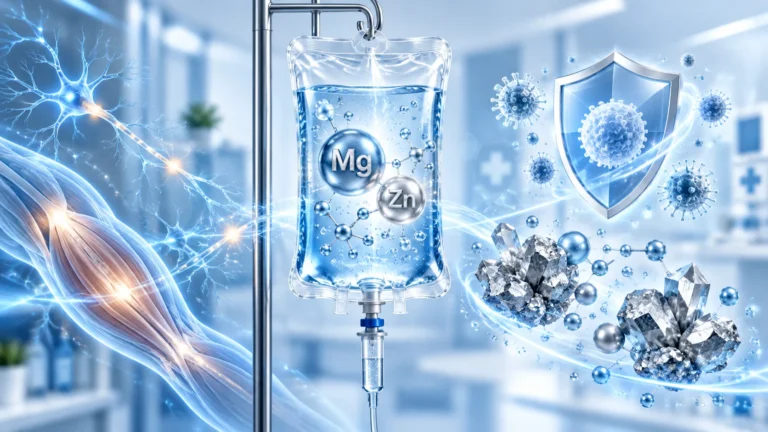
Image note: The page image is a representative clinical scene generated with artificial intelligence; it is not a photograph of an actual patient.
Disclaimer: This content is general health information; it is not a personal diagnosis or treatment recommendation.
Clinical evaluation in Bodrum: you can use the Bodrum Clinic and Appointments and Contact pages to discuss whether the procedure is appropriate for you.