Who is it evaluated for?
A personalized evaluation can be performed in individuals with specific aesthetic goals such as fine lines, spot/tone irregularities, pores, acne scars, skin laxity, or volume loss.
How is it planned?
Skin type, pigment tendency, facial anatomy, target tissue, and recovery time expectations are evaluated together. The method is planned alone or as a staged combination, prioritizing a natural appearance and safety.
Key points
- Skin aging is not a single problem; the surface, dermis, subdermal tissue, and volume loss are evaluated separately.
- In applications known as Salmon DNA, PN and PDRN products are not the same molecule; differences in product and formulation are important.
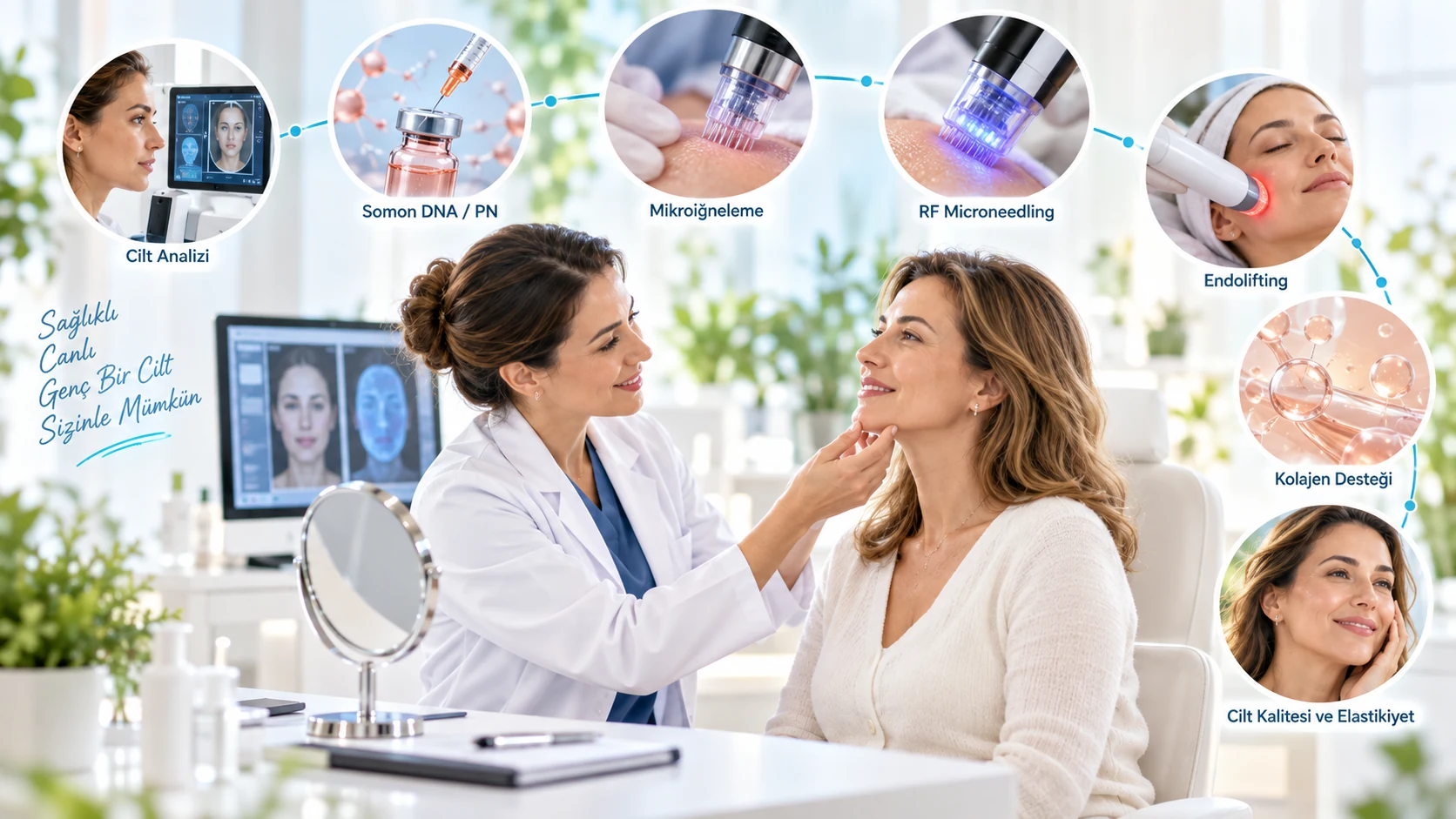
- RF microneedling, fractional CO₂, Endolifting, PN/PDRN, and photobiomodulation have different targets.
- Skin type, pigment tendency, scar history, previous procedures, and medications used are taken into account when selecting a method.
- For new or unexplained skin lesions, a dermatological evaluation should be performed before aesthetic procedures.
Why does skin age?
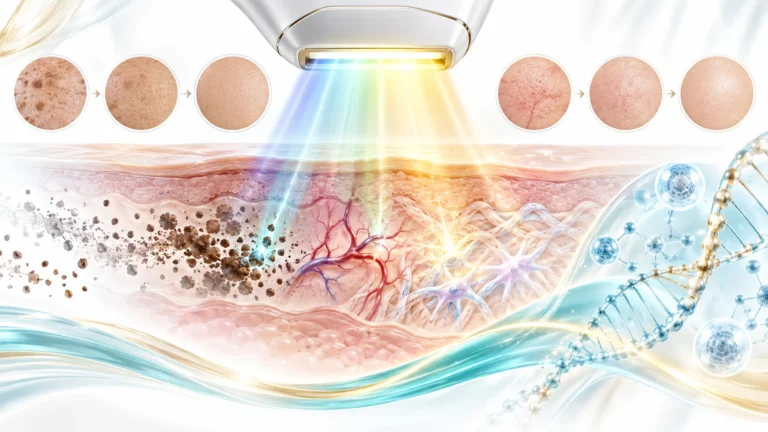
Skin aging is influenced by the combination of the natural aging process and ultraviolet exposure, smoking, air pollution, sleep, nutrition, hormonal changes, and repetitive facial expressions. Collagen and elastin organization can change, epidermal renewal can slow down, dermal support can decrease, and pigment distribution can become irregular. Changes in fat compartments, connective tissue, muscles, and bone structure also contribute to facial aging.
Which problem is targeted in the initial evaluation?
- Fine lines and superficial wrinkles
- Deep wrinkles and expression lines
- Skin laxity and sagging
- Pores and texture irregularity
- Acne scars
- Dryness and loss of hydration
- Photoaging and pigment irregularity
- Loss of periorbital skin quality
- Neck and décolleté aging
- Volume loss
Pronounced volume loss, superficial fine wrinkles, or subdermal laxity should not be attempted to be addressed with the same method. Correctly identifying the target reduces the number of unnecessary procedures.
Salmon DNA, PN, and PDRN
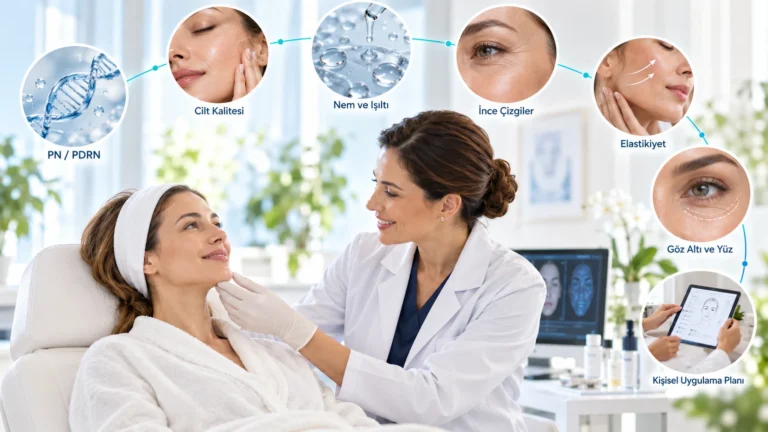
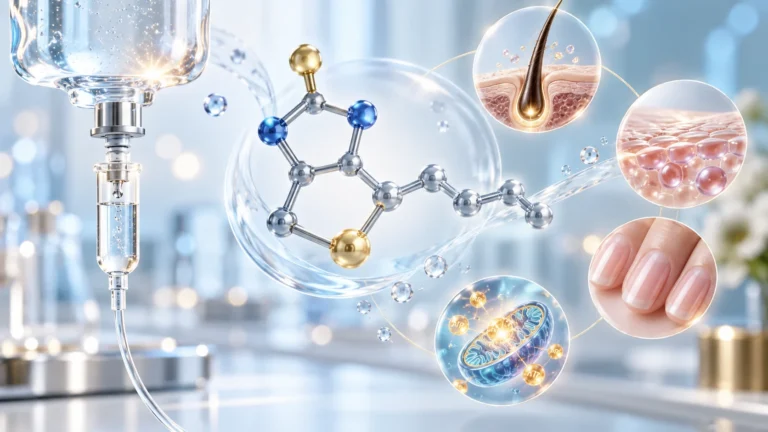
“Salmon DNA” is a popular term used in everyday language for DNA-derived polynucleotide products. PN refers to longer polynucleotide chains, while PDRN refers to shorter DNA fragments. The molecular structure, concentration, production method, and intended use of the products may differ.
In systematic reviews in recent years, it has been reported that PN/PDRN applications yielded positive results in some studies regarding measurements of wrinkles, skin texture, elasticity, hydration, scars, and wound healing. Because differences exist among protocols and products, results are evaluated along with the product used and patient characteristics.
RF microneedling / Gold needle
RF microneedling delivers radiofrequency energy at the dermal or subdermal level via needles. It can be evaluated for targets such as acne scars, pores, tissue quality, and mild to moderate laxity. Needle depth, energy, and pulse count are adjusted according to skin type and anatomical region.
Fractional CO₂ laser
Fractional ablative CO₂ laser stimulates re-epithelialization and collagen remodeling by creating microscopic thermal columns in the skin. It can be a more intensive resurfacing option for acne scars, pronounced photoaging, and certain superficial wrinkles. Recovery time and the risk of pigmentary changes may be more pronounced compared to milder methods.
Endolifting
Endolifting is a minimally invasive approach where laser energy is applied to the subdermal tissue via a fine optical fiber. It is mostly evaluated for the jawline, double chin, subdermal laxity, and selected local contour targets. It is not intended for the same purpose as superficial hydration or fine wrinkles.
Red Light / photobiomodulation
Red and near-infrared light are being investigated to support skin quality through processes associated with cellular signaling and tissue repair. Requiring no recovery time and being non-invasive are significant advantages. It has a different effect profile than more intensive resurfacing methods and can be evaluated as a supportive option in appropriate individuals.
Skinboosters and mesotherapy
Hyaluronic acid-based skinbooster products can focus on hydration and skin quality. Mesotherapy, on the other hand, is a broad procedural category, and its clinical significance varies depending on the ingredients used. Vitamins, amino acids, or other cocktails should be evaluated separately according to their own formulation and research data.
Which method do we choose, and how?
| Primary goal | More frequently evaluated methods |
|---|---|
| Fine wrinkles / skin quality | PN/PDRN, skinbooster, microneedling, Red Light |
| Acne scars / textural irregularity | RF microneedling, microneedling, fractional CO₂ |
| Mild–moderate laxity | RF microneedling, energy-based systems, Endolifting |
| Jawline / subdermal laxity | Endolifting and appropriate energy-based methods |
| Hydration | Skinbooster, selected PN products, topical care |
| Volume loss | Volumizing treatments and a combined plan when necessary |
Why is basic skin care important?
UV exposure is one of the most important modifiable factors in photoaging. Regular broad-spectrum sunscreen, not smoking, adequate sleep, proper hydration, and personalized topical products support the long-term effects of the procedures performed. Retinoids, antioxidants, or pigment treatments can also be evaluated based on skin type and tolerance.
Our approach in our Bodrum clinic
We do not translate the statement “I want to look younger” directly into the name of a single procedure. First, we determine whether the surface, dermis, subdermal laxity, pigment, scars, or volume loss is in the foreground. Then, we compare the options along with recovery time, expected contribution, risk, cost, and the individual’s preferences.
If a combination is required, we prefer phased planning rather than performing multiple procedures at the same time. The goal is to achieve a more natural, balanced result that preserves the individual’s own facial features.
Frequently asked questions
Can Salmon DNA reduce the appearance of wrinkles?
PN/PDRN products have shown positive results in skin quality, hydration, and wrinkle measurements in some studies. For deep expression lines, significant sagging, or volume loss, different or combined methods may be more appropriate.
Is RF microneedling or CO₂ laser more suitable?
It varies depending on the goal and skin type. CO₂ laser can provide more intensive resurfacing; RF microneedling, on the other hand, can target dermal remodeling at different depths. Acne scarring, pigment risk, and recovery time are evaluated together.
In which individuals might Endolifting be more suitable?
It can be evaluated in selected individuals with targets of the jawline, double chin, or subdermal laxity. Different methods may be more appropriate for superficial fine wrinkles and hydration goals.
Can Red Light be used together with other procedures?
In appropriate protocols, it can be evaluated alongside other methods to support tissue recovery and skin quality. Timing is planned according to the type of procedure performed.
Related content
- Salmon DNA: PN and PDRN
- The difference between PN and PDRN
- Salmon DNA or Skinbooster?
- Endolifting
- Endolifting or RF microneedling?
- Red Light therapy
- Red Light and skin rejuvenation
- Skin aging and wrinkles
- Aesthetic and energy-based procedures
References
- The Effectiveness of Polynucleotides in Esthetic Medicine: A Systematic Review.
- Polynucleotides and Polydeoxyribonucleotides for Skin Rejuvenation, Postoperative Scar Prevention, and Wound Healing: A Systematic Review of Randomized Clinical Trials.
- Radiofrequency Microneedling for Facial Rejuvenation: A Systematic Review.
- Microneedling for Facial Rejuvenation: A Systematic Review.
Written and medically reviewed by: Dr. Kerem Çağlayan
Last medical review: September 10, 2026
Warning: This content is for general informational purposes; it does not replace individual diagnosis or procedure recommendations.