Are silicon, silica, and orthosilicic acid the same thing?
No. Silicon refers to the element itself; silica mostly refers to silicon dioxide structures; orthosilicic acid refers to a different chemical form that is water-soluble and has been studied for its bioavailability. The form used matters in supplementation or clinical evaluation.
Skin and connective tissue research
A randomized, double-blind human study conducted with choline-stabilized orthosilicic acid reported positive changes in some measures of skin roughness and mechanical properties in women with photoaged skin after 20 weeks of oral use. The mechanical properties and brittleness of hair have also been studied with similar products. These results support interest in silicon’s role in connective tissue biology; different products and doses should not be assumed to produce the same results.
Bone health and silicon
There are observational associations between silicon intake and bone health, as well as some intervention studies. A comprehensive review from 2024 emphasizes that the biological mechanism is intriguing, but studies are highly heterogeneous in terms of the silicon form and dose used, and that establishing a clear “effective dose threshold” for humans remains difficult.
How is it evaluated in terms of hair and nails?
There are small human studies on hair strength and nail brittleness with specific oral products containing silicon. In cases of hair loss or nail breakage, more common factors such as iron/ferritin, thyroid function, zinc, protein intake, rapid weight loss, and dermatological causes should also be evaluated together.
Are oral and IV use the same?
No. Results from oral orthosilicic acid studies cannot be directly transferred to intravenous administration. If IV silicon is being considered, the pharmaceutical product’s actual suitability for parenteral use, sterility, dose, safety, and local licensing information must be verified separately. The research literature focuses predominantly on oral forms.
Its role in skin rejuvenation
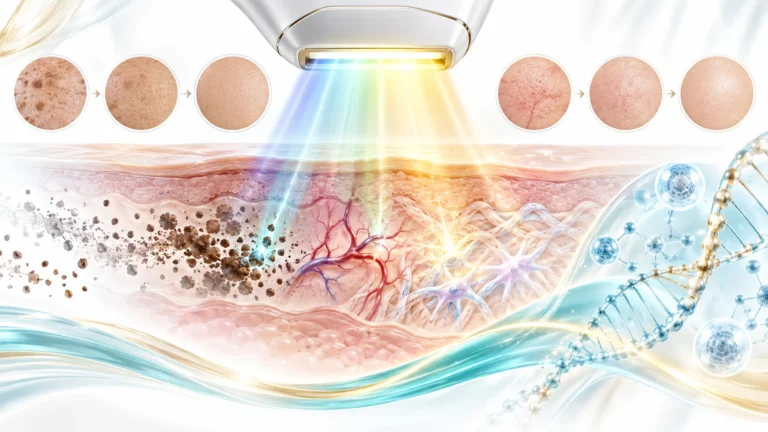
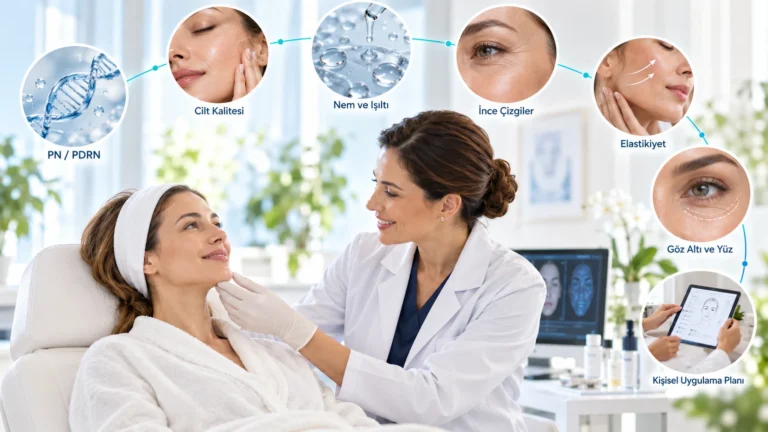
Silicon is only one of the many factors that affect skin quality. Options such as nutrition, sun protection, retinoids/topical care, procedures targeting collagen synthesis, PN/PDRN, RF microneedling, Red Light, and Endolifting can be considered for different goals. Silicon supplementation may be one of the complementary nutritional components of this broader approach in a suitable individual.
Safety
The chemical form, dose, purity, and accompanying minerals in supplement products are important. Individual assessment should be performed in cases of kidney disease, pregnancy, breastfeeding, or use of multiple supplements. Industrial silica or oral supplement products must not be used for injection.
Our approach at our Bodrum clinic
We evaluate silicon not as a standalone “collagen-boosting” product, but in conjunction with the skin, hair, or bone goal, nutritional status, and human data for the form used. For skin rejuvenation, we consider methods as options that complement one another according to individual needs, and we do not interpret oral research data as if it applied to IV administration.
Frequently asked questions
Can silicon help with collagen?
There are mechanistic data and some human data regarding connective tissue and collagen biology. Positive skin outcomes have been reported with specific oral orthosilicic acid products; the magnitude of the clinical contribution may vary depending on the product, dose, and individual circumstances.
Does silicon treat hair loss?
Small studies on hair structure have reported positive signals; however, focusing on a single micronutrient without identifying the cause of hair loss may not be sufficient. Ferritin, thyroid function, hormones, nutrition, and a scalp examination provide a more holistic plan.
Related content
Skin Rejuvenation · Hair Loss and Hair Strengthening · Salmon DNA / PN-PDRN · IV and Infusion Treatments
References
Barel et al., 2005, oral choline-stabilized orthosilicic acid and skin; Wickett et al., 2007, hair properties; Spector et al., 2008, bone markers; Pritchard & Nielsen, 2024, silicon and bone health umbrella review.
Written and medically reviewed by: Dr. Kerem Çağlayan
Last medical review: 10 September 2026