
Key points
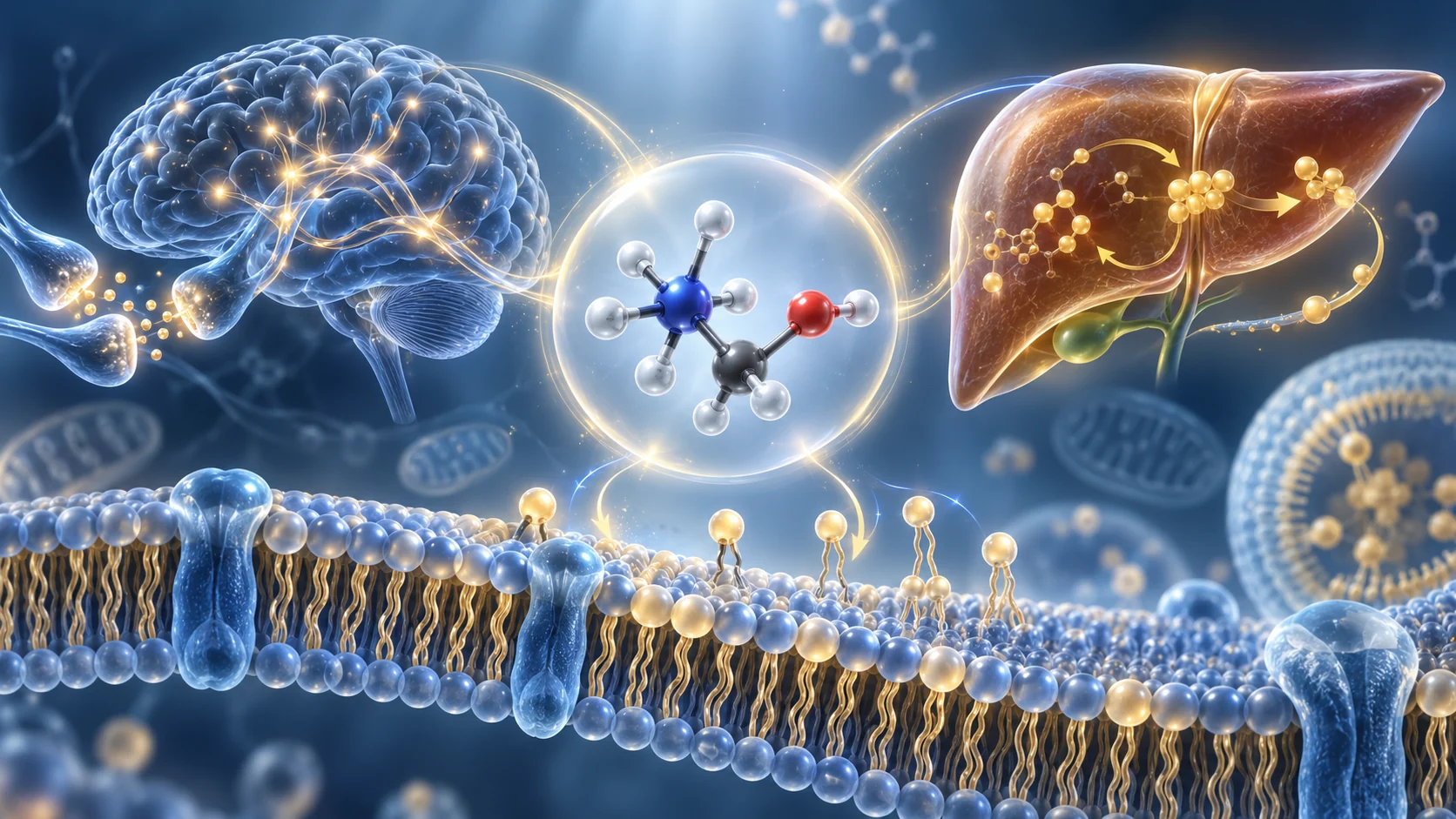
- Choline is required for the synthesis of phosphatidylcholine and acetylcholine.
- It is associated with triglyceride transport from the liver and cell membrane integrity.
- Nutritional requirements can vary depending on age, sex, pregnancy-lactation, and individual metabolism.
- Choline, citicoline, and phosphatidylcholine are not the same product; research results should not be directly transferred from one to another.
- Parenteral use is evaluated in specific clinical situations and is a different practice from oral supplementation.
What does choline do?
Choline is used in the synthesis of cell membrane phospholipids such as phosphatidylcholine and sphingomyelin. It is also the precursor to acetylcholine, which is involved in the parasympathetic nervous system and neuromuscular communication. It is also important for the formation of very-low-density lipoproteins and lipid transport in the liver.
What are its dietary sources?
Egg yolks, liver and other meat products, fish, dairy products, soy, and certain legumes are choline sources. An adequate and varied diet can meet a significant portion of the requirement for many individuals. In very restrictive diets, inadequate protein-energy intake, or specific clinical situations, nutritional evaluation becomes more important.
Relationship with liver health
Choline deficiency may be associated with fat accumulation in the liver; controlled feeding studies have shown that low choline intake can affect markers of liver and muscle damage in some individuals. However, not all fatty liver disease is caused by choline deficiency. In metabolic dysfunction-associated steatotic liver disease, weight, insulin resistance, diet, alcohol, medications, and other causes must be evaluated together.
Difference between choline, citicoline, and phosphatidylcholine
Although these molecules are biochemically related to one another, they are not the same. Phosphatidylcholine is a membrane phospholipid; citicoline is a distinct compound involved in the phosphatidylcholine synthesis pathway. A clinical result obtained with one form regarding the brain, liver, or cell membrane should not be automatically transferred to the other form.
When are parenteral and IV use considered?
Low choline status and hepatic changes have been investigated in patients receiving long-term parenteral nutrition. Small controlled studies point to the physiological importance of choline in the context of parenteral nutrition. However, this patient group is quite different from healthy individuals. When intravenous use is considered, the pharmaceutical form of the product, route of administration, clinical necessity, and local regulatory approval status must be evaluated separately.
Safety
High choline intake may be associated with effects such as a fishy body odor, sweating, gastrointestinal complaints, and a drop in blood pressure. The total dose used, other choline-containing supplements, pregnancy-lactation status, and accompanying conditions should be reviewed.
Our approach at our Bodrum clinic
In choline supplementation, daily diet, liver-metabolic health, other nootropic or phospholipid supplements used, and the individual’s goal are evaluated first. For general complaints such as memory or energy, rather than focusing solely on choline, sleep, B12-folate status, thyroid, metabolic health, and medications are addressed together. IV use is taken into consideration only when an appropriate pharmaceutical product and a genuine clinical rationale are present.
Frequently asked questions
Does choline enhance memory?
Choline is required for acetylcholine synthesis; however, it cannot be said that using more choline in a healthy individual who already obtains adequate choline will enhance memory at the same rate. The clinical contribution may vary depending on the form used and individual circumstances.
Does choline correct fatty liver disease?
Choline deficiency can contribute to the development of fatty liver. However, metabolic fatty liver is multifactorial; the place of choline supplementation should be determined together with nutritional and metabolic evaluation.
Are phosphatidylcholine and choline the same thing?
No. Phosphatidylcholine is a choline-containing phospholipid; free choline and citicoline are different molecules.
Related content
- Phosphatidylcholine: Cell Membranes and Clinical Research
- IV and Infusion Therapies
- Metabolic Health and Weight Management
References
- NIH Office of Dietary Supplements. Choline: Health Professional Fact Sheet.
- Buchman AL, et al. Parenteral nutrition–associated choline deficiency and hepatic changes: controlled clinical research.
Written and medically reviewed by: Dr. Kerem Çağlayan
Last medical review: September 10, 2026
Disclaimer: This content is for general medical informational purposes only; it does not substitute for personal diagnosis or treatment advice.