Who is it evaluated for?
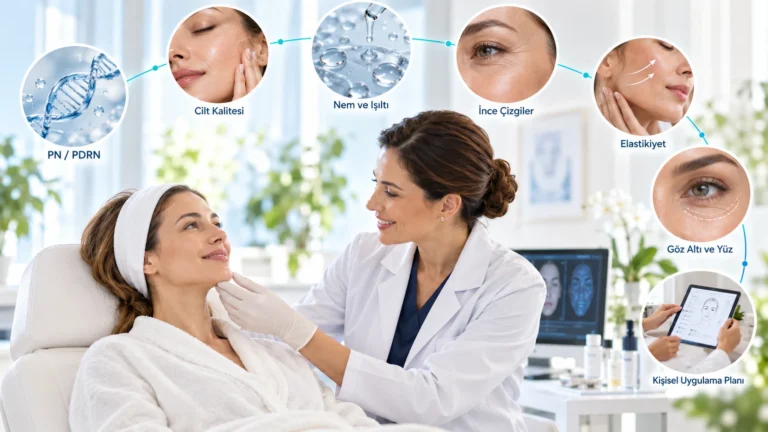
It can be evaluated in individuals who desire a personalized assessment in terms of nutritional status, skin quality, or tissue support; particularly those with a deficiency, absorption issues, or for whom a support plan is being considered in conjunction with aesthetic procedures.
How is it planned?
Nutrition, protein intake, micronutrient status, skin goals, and other ongoing treatments are evaluated together. If IV administration is required, the ingredients and dosage are selected based on laboratory findings, clinical requirements, and safety data.
What is required for collagen synthesis?
Collagen is a structural protein rich in glycine, proline, and hydroxyproline. Adequate total protein intake, vitamin C, zinc, copper, and overall energy-nutritional status are important for tissue synthesis. Vitamin C acts as a cofactor in the hydroxylation of proline and lysine. For this reason, in skin support, the entire nutritional pattern is more valuable than a single “beauty vitamin.”
Human data on oral collagen peptides
Various meta-analyses of randomized trials have reported positive outcomes in skin hydration, elasticity, and certain wrinkle measurements with oral hydrolyzed collagen or peptide products. An oral/topical peptide meta-analysis published in 2026 also found positive signals, particularly for hydration and certain wrinkle outcomes. In contrast, another meta-analysis in 2025 noted that when high-quality or non-industry-funded studies were analyzed separately, the effect became more uncertain. Therefore, product selection, formulation, duration, and realistic expectations are important.
What does an IV “skin-collagen drip” refer to?
IV skin support does not mean administering collagen directly into a vein. Vitamin C, specific amino acids, B vitamins, zinc, magnesium, or other micronutrients may be evaluated depending on the preparation used. Although these components play a role in collagen and tissue biology, the necessity and expected contribution of the IV route must be determined based on the individual’s nutritional, absorption, and clinical status.
In whom might micronutrient evaluation be more meaningful?
In individuals with rapid weight loss, severe dietary restriction, malabsorption, bariatric surgery, low protein intake, risk of iron/B12/folate/zinc deficiency, or chronic disease, skin and hair changes may be related to nutritional status. In these individuals, targeted replacement may establish a more meaningful foundation than an aesthetic procedure alone.
Which method targets what in skin rejuvenation?
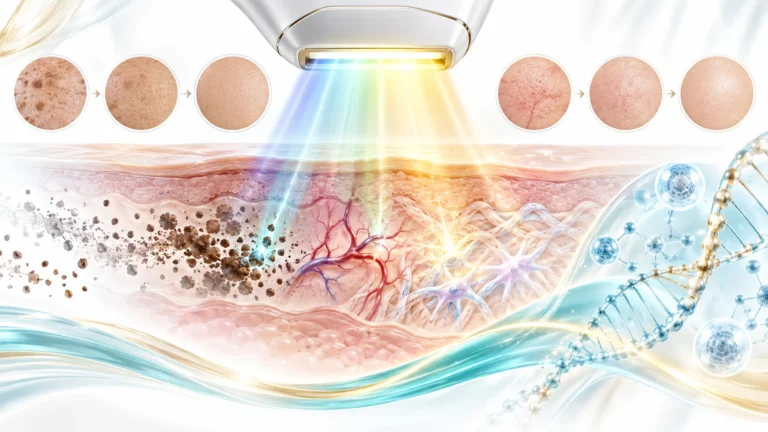
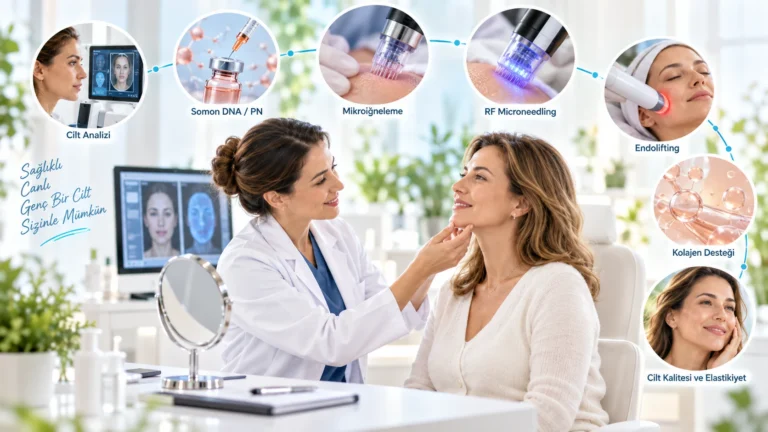
Red Light / photobiomodulation can be evaluated for non-invasive support via cellular energy and dermal response; Salmon DNA / PN-PDRN with the goal of skin quality and regenerative signaling; RF microneedling for dermal remodeling and scar/texture concerns; and Endolifting with the goal of subdermal tissue, firmness, and contouring in selected areas. The most suitable combination varies depending on skin thickness, laxity, pigment, wrinkle type, and recovery time expectations.
Are hair and nail changes also part of the same plan?
In hair loss and brittle nails, causes such as protein, ferritin, zinc, B12/folate, thyroid, and rapid weight loss should be evaluated. Biotin is addressed only in the context of genuine need; high-dose biotin can interfere with certain laboratory tests. Since skin, hair, and nail findings can carry similar nutritional signals, evaluating them together may be beneficial.
Safety
Depending on the IV ingredients and dosage, kidney function, G6PD status when necessary, mineral balance, drug interactions, and total supplement burden are evaluated. In skin rejuvenation procedures, active infection, pregnancy, bleeding risk, pigmentation tendency, medications used, and procedure-specific contraindications are also reviewed.
Our approach at our Bodrum clinic
We evaluate the skin rejuvenation plan not solely through IV drip composition, but together with the skin’s level of photoaging, wrinkle type, laxity, pigment, hydration, hair/nail findings, nutrition, and lifestyle. If there is a deficiency or micronutrient need, we incorporate oral/IV support into the plan; we individually select methods such as Salmon DNA, Red Light, Endolifting, or RF microneedling according to the target tissue.
Frequently asked questions
Does IV vitamin C increase collagen?
Vitamin C is essential for collagen synthesis. Correcting a deficiency is important for tissue biology; however, the magnitude of the aesthetic contribution of high-dose IV in individuals with adequate vitamin C levels should be evaluated based on the individual’s situation and the context of application.
Does oral collagen or IV support make more sense?
These are not the same intervention. There are direct skin RCTs for oral collagen peptides. IV micronutrient support, on the other hand, is planned based on the individual’s deficiency, absorption, and clinical needs. In some individuals, both may be evaluated with different objectives.
Related content
You can review the Skin rejuvenation and wrinkle treatments, Salmon DNA / PN-PDRN, Red Light / photobiomodulation, Endolifting, Amino acid and micronutrient support, and IV vitamin C pages.
References
2025 oral collagen RCT meta-analyses; 2026 oral/topical peptide systematic review and meta-analysis; NIH Vitamin C professional fact sheet.
For the general planning, component selection, and safety approach of IV applications, you can review the IV and Infusion Applications main guide.
Written and medically reviewed by: Dr. Kerem Çağlayan
Last medical review: September 10, 2026