Quick answer
The most important step in chronic wound treatment is to identify both the cause of the wound and the factors slowing healing. Circulation, infection, pressure, neuropathy, glucose control, edema, nutrition, and the wound bed are evaluated. After basic wound care is established, ozone, photobiomodulation, negative pressure, and other advanced adjunctive modalities can be added to the treatment plan for appropriate wound types.
Key points
- A chronic wound is not merely a problem on the skin surface; circulation and systemic health can directly affect healing.
- In the diabetic foot, circulatory evaluation, infection control, pressure reduction, and appropriate debridement are fundamental steps.
- The treatment rationale differs among venous, arterial, neuropathic, and pressure ulcers.
- There are clinical studies reporting positive outcomes in wound healing for ozone and photobiomodulation; selecting the appropriate patient and protocol is important.
- Serial wound measurement and photographic monitoring help evaluate the true rate of healing.
What is a chronic wound?
A wound failing to progress through the expected healing process suggests that circulatory disorders, diabetes, repetitive pressure, infection, edema, neuropathy, or other systemic causes may be playing a role. Therefore, rather than merely changing the dressing product, the underlying causes hindering healing must be reevaluated.
Most common wound types
- Diabetic foot ulcers
- Venous leg ulcers
- Arterial/ischemic wounds
- Pressure ulcers
- Traumatic and surgical wounds
- Infected wounds
- Wounds developing after radiation or other treatments
What is assessed during the initial evaluation?
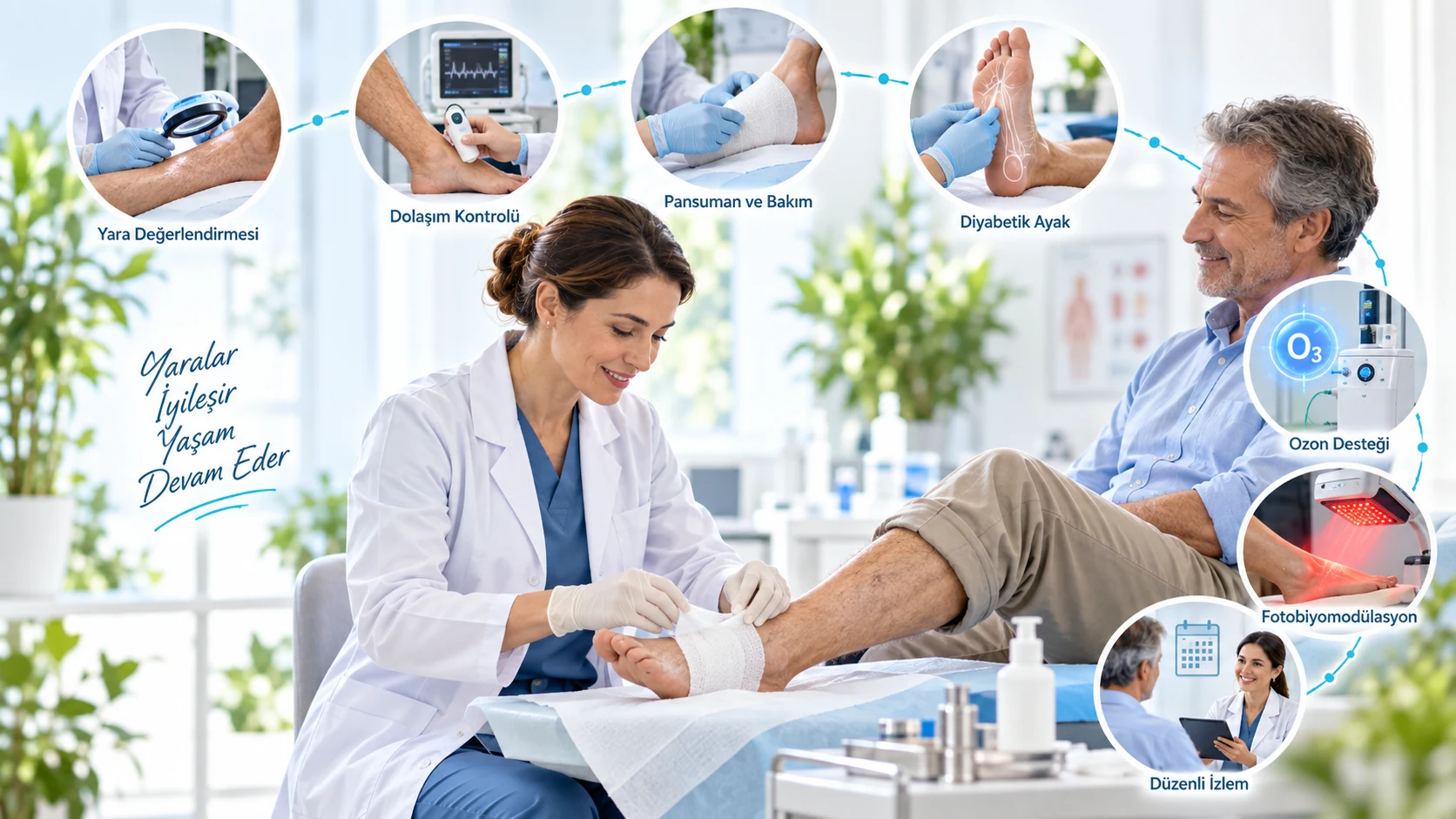
The duration, location, length-width-depth of the wound, wound bed, necrosis, exudate, odor, surrounding skin, pain, and systemic symptoms are recorded. In foot wounds, pulses, capillary refill, skin temperature, color, findings of neuropathy, and pressure points are evaluated.
Depending on clinical need, ABI/TBI, vascular Doppler, laboratory tests, and imaging in cases of suspected osteomyelitis or deep infection may be performed. Adjunctive parameters such as the perfusion index on pulse oximetry can provide additional information during serial monitoring; they are not used alone in place of a vascular diagnosis.
Why is circulation important?
Without adequate arterial blood flow, wound healing can become difficult. In the presence of rest pain, a cold or pale extremity, diminished pulses, discoloration, or non-healing distal wounds, evaluation of arterial circulation is a priority. In venous wounds, however, edema control and compression therapy in suitable patients are fundamental components of healing.
Infection evaluation
Antibiotics are not required for every chronic wound. Spreading redness, increased temperature, swelling, tenderness, purulent discharge, foul odor, fever, or systemic deterioration increase the likelihood of infection. In cases of suspected deep infection or osteomyelitis, appropriate sampling, imaging, and surgical evaluation when necessary are performed.
Debridement and wound bed preparation
Removing necrotic, devitalized, or healing-inhibiting tissue using an appropriate method can help prepare the wound bed. The debridement method is selected based on circulation, wound type, depth, infection, and pain level. In the presence of severe ischemia, vascular status should be particularly evaluated prior to aggressive debridement.
Pressure reduction and off-loading
In diabetic neuropathic foot wounds, continuous weight-bearing on the same area can significantly slow healing. Appropriate off-loading, footwear/orthosis modification, and redistribution of pressure points are critical components of treatment.
Dressings and local wound care
Dressing selection is made according to the amount of exudate, wound bed, surrounding skin, infection risk, and stage of healing. A single product is not the best option for every wound. As the wound progresses, dressing requirements may also change; therefore, serial evaluation is important.
The role of ozone therapy
There are clinical studies and meta-analyses regarding the use of ozone in the field of diabetic foot and chronic wounds. Some studies have reported positive results in wound area reduction, healing time, and certain clinical outcomes. Because the methods, doses, and wound characteristics used in studies differ, the most appropriate protocol is evaluated according to the wound type.
In our clinic, ozone is addressed alongside fundamental steps such as circulation, infection control, glucose management, off-loading, debridement, and appropriate dressings. In particular, the targets of local applications such as ozone bagging, ozonated water, and ozonated oil are distinguished from one another.
Photobiomodulation / Red Light
Photobiomodulation is investigated in wound care due to the effects of red and near-infrared light on cellular repair and inflammation-related processes. There are studies reporting positive outcomes in diabetic foot and various wound types. Because wavelength, irradiance, energy density, and application frequency can influence results, it is important that the protocol is measurable.
Related guide: Red Light Therapy and Photobiomodulation.
Negative pressure and other advanced methods
Negative pressure wound therapy can be used in certain surgical, deep, or complex wounds to prepare the wound bed and manage exudate. Hyperbaric oxygen, topical oxygen, and specific biological wound products may also be considered in selected wound groups. Method selection is made based on wound type, circulation, infection, and previous treatment response.
Nutrition and metabolic status
Inadequate protein intake, uncontrolled hyperglycemia, anemia, and certain micronutrient deficiencies can affect healing capacity. Especially in diabetic wounds, glucose control and adequate nutrition are as important as local wound therapy.
Our approach in our Bodrum clinic
We do not approach a wound solely with the question “which product will be applied?”. Circulation, neuropathy, infection, pressure, glucose control, nutrition, the wound bed, and the person’s overall health status are evaluated together. The size and appearance of the wound are monitored serially with standardized photographs and measurements as much as possible.
After establishing basic wound care, the goal of ozone, photobiomodulation, negative pressure, or other supportive modalities is specifically determined for the appropriate patient. The goal is not to add a method routinely, but to identify the true obstacle to healing and create a personalized plan directed toward it.
When is emergency evaluation required?
Rapidly spreading redness, fever, foul-smelling dense discharge, blackening/gangrene, new-onset severe pain, a cold-pale extremity, rapidly progressing swelling, altered consciousness, or signs of sepsis require emergency medical evaluation. In suspected deep infection or critical ischemia in a diabetic foot, treatment must not be delayed.
Frequently asked questions
Can ozone support wound healing?
Positive results have been reported in some clinical studies and meta-analyses. The most appropriate use is the accurate determination of the wound type and the integration of ozone into foundational wound care, such as circulation, infection control, debridement, and dressing.
Can Red Light be used on every wound?
Not every wound is the same. If there is circulatory impairment, infection, suspicion of malignancy, or deep tissue involvement, these are evaluated first. PBM can be planned as a supportive modality in appropriate wound types with the correct dose and regular monitoring.
Can dressings alone be sufficient in a diabetic foot?
Sometimes, in small and superficial wounds, local care may produce prompt results; however, focusing solely on dressings without evaluating pressure, neuropathy, circulation, and glucose control can overlook the underlying barrier to healing.
Should wounds be monitored with photographs?
Yes. Serial photographs taken from the same angle, lighting, and preferably with a measurement scale can help monitor changes in the wound area more objectively.
Related content
- Diabetic foot and chronic wound
- Ozone and wound care in diabetic foot
- Ozone bagging
- Topical ozone and wound treatment
- Red Light therapy and PBM
- Ozone therapy
- Insulin resistance and metabolic health
References
- Chen P, et al. IWGDF Guidelines on interventions to enhance healing of foot ulcers in people with diabetes. Diabetes Metab Res Rev. 2024. PMID: 37232034.
- Silva Filho MLE, et al. Ozone therapy as a treatment for diabetic foot ulcers: a systematic review and meta-analysis. J Wound Care. 2024. PMID: 39630555.
- Effects and parameterization of low-level laser therapy in diabetic ulcers: an umbrella review. 2025. PMID: 39982518.
Written and medically reviewed by: Dr. Kerem Çağlayan
Last medical review: September 10, 2026
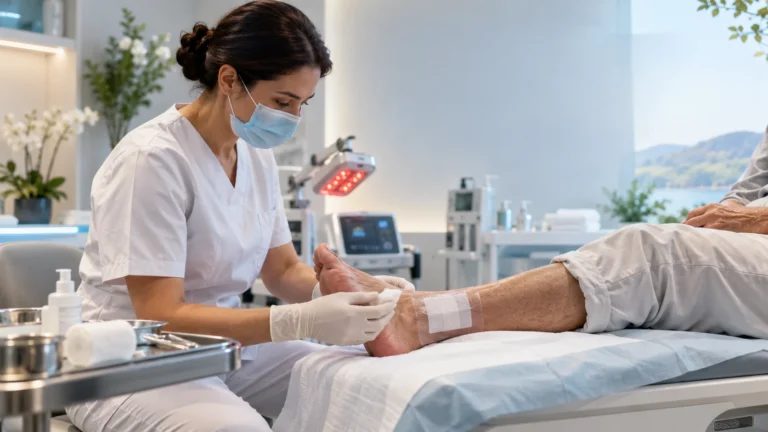
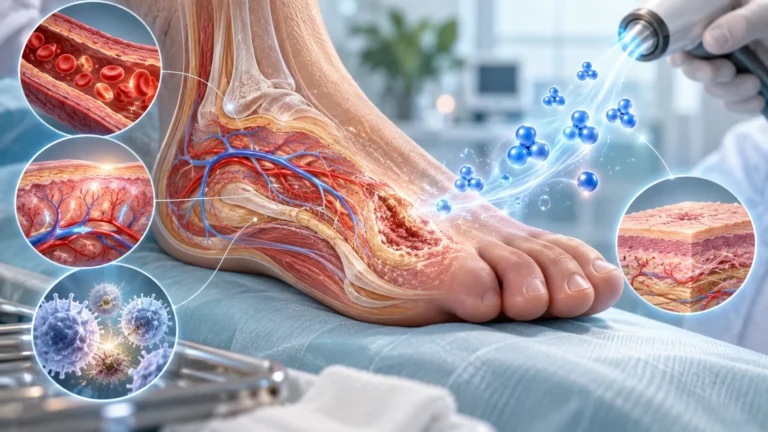
Image note: The page image is a representative clinical visual generated with artificial intelligence.
Disclaimer: This content is for general medical information purposes only; it does not substitute for personal diagnosis or treatment advice.
Clinical evaluation in Bodrum: You can use the Bodrum Clinic and Appointment and Contact pages to discuss whether the application is appropriate for you.