Who is it evaluated for?
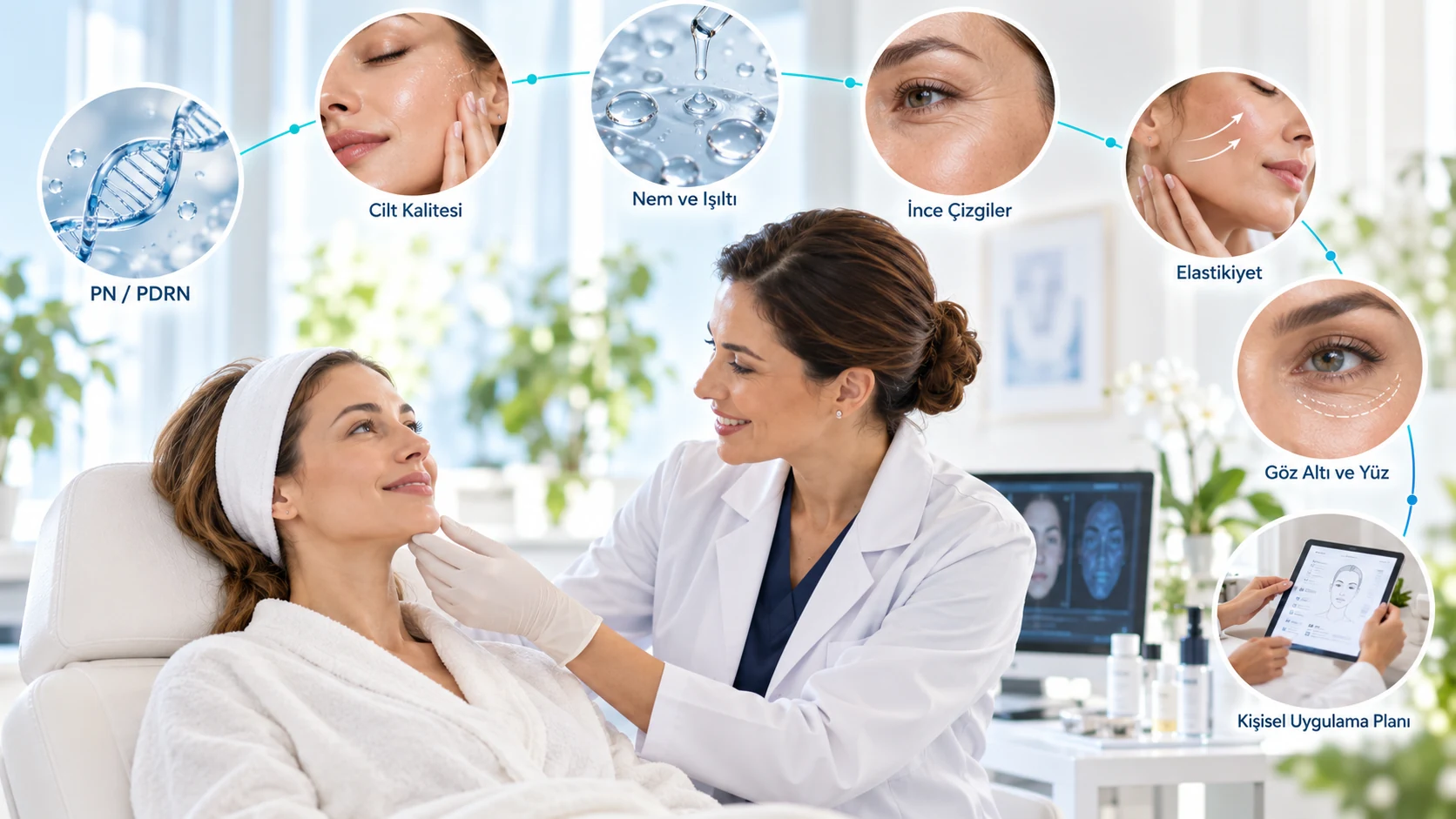
PN/PDRN treatments can be evaluated in individuals seeking support for decreased hydration, fine lines, periocular skin quality, or overall tissue appearance.
How is it planned?
The product’s PN or PDRN content, concentration, application area, skin type, and the individual’s goals are evaluated together. The number of sessions and the need for combination are planned in accordance with the product characteristics and clinical response.
Key points
- “Salmon DNA” is a commercial/popular term; whether the actual product is PN or PDRN should be checked.
- PN and PDRN may differ in terms of molecular length, biological characteristics, and formulation.
- Positive results have been reported in clinical studies on skin texture, elasticity, hydration, fine lines, and certain scar measurements.
- They do not share the exact same target with skinboosters, RF microneedling, CO₂ laser, and Endolifting; they can be complementary modalities in the appropriate individual.
- Product authenticity, sterility, injection technique, and realistic clinical goals are important for safety and results.
What is Salmon DNA?
The term “Salmon DNA” is mostly used for polynucleotide or PDRN products purified from fish-derived DNA. However, the commercial name alone does not explain the true content of the product. Prior to application, the product’s PN or PDRN structure, concentration, excipients, manufacturing/sterilization standard, and intended use should be evaluated.
What is the difference between PN and PDRN?
PN refers to longer polynucleotide chains, whereas PDRN refers to shorter DNA fragments. Both groups are associated with tissue repair, fibroblast activity, and regenerative signaling; however, their pharmacological and physical properties are not completely identical. For a detailed comparison, you can review the guide What is the Difference Between PN and PDRN?.
How is it thought to work?
PN/PDRN products are thought to be able to support processes related to fibroblast activity, extracellular matrix, hydration, and tissue repair. For PDRN, the adenosine A2A receptor and pathways related to tissue healing have also been investigated. The clinical outcome may be influenced by the product formulation, injection technique, and the individual’s baseline skin characteristics as much as the molecule type.
In which areas can it be evaluated?
- Fine lines and skin texture
- Periocular fine lines and loss of quality
- Dryness and hydration support
- Neck and décolletage skin quality
- Acne scars or post-procedure tissue support
- Combined plans with other skin rejuvenation modalities
How can it contribute to the appearance of wrinkles?
Randomized trials and systematic reviews have reported that certain PN/PDRN protocols provide positive changes in measurements of fine lines, skin texture, elasticity, and patient satisfaction. Because deep dynamic expression lines, prominent volume loss, or advanced laxity are different anatomical issues, different treatment layers may be required in the same individual.
Periocular area
The periocular area is one of the regions where PN products are frequently evaluated due to its thin skin structure. Positive results have been reported in some studies addressing fine lines, dryness, and skin quality. In this region, product volume, injection depth, and tendency toward edema are particularly taken into account.
What is the difference from a Skinbooster?
The term skinbooster is mostly used for hyaluronic acid-based products focused on hydration and skin quality. PN/PDRN, on the other hand, is positioned through different biological mechanisms. Which option is more appropriate may vary depending on dryness, fine lines, elasticity, tissue quality, and the individual’s recovery expectations.
Direct comparison guide: Salmon DNA or Skinbooster?
Can it be used in combination with RF microneedling, CO₂ laser, and Endolifting?
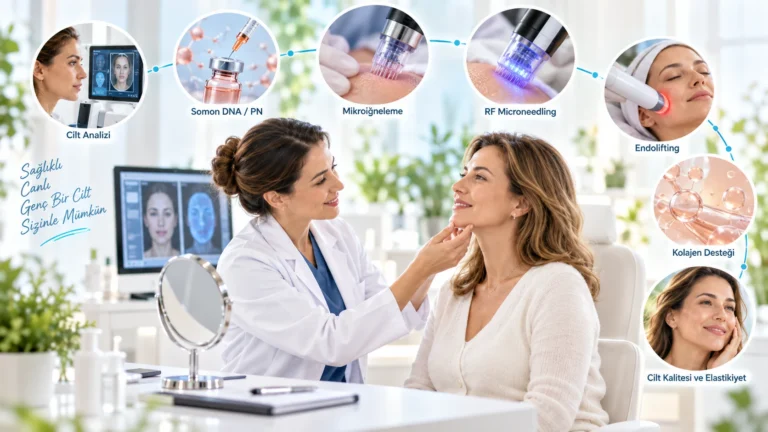
These modalities target different tissue layers. While PN/PDRN is used more toward skin quality and regenerative support, RF microneedling can address dermal remodeling, CO₂ laser resurfacing, and Endolifting subdermal tightening and contour goals. A staged combination can be planned in the appropriate individual; the goal is not to perform more procedures, but to address different issues with the correct methods.
Related comparison: Endolifting or RF Microneedling?
Can it be used together with Red Light?
Since photobiomodulation is a non-invasive method, it can be evaluated within the same overall plan alongside PN/PDRN applications in selected protocols to support skin quality or post-procedure recovery. Timing is determined according to the skin’s condition and other procedures performed. For detailed information: Red Light and Skin Rejuvenation.
How many sessions are required?
Protocols may vary depending on the product, concentration, application area, skin quality, and goal. The session plan is personalized by evaluating the response to initial applications, recovery time, and individual expectations. More frequent application does not always mean better results.
Side effects and safety
Redness, tenderness, temporary swelling, bruising, or small bumps may be seen at the injection site. Sterility, the use of original and traceable products, appropriate injection plane, and anatomical knowledge are important. If there is an active infection, unexplained skin lesion, or a history of severe allergies, an evaluation is performed prior to the procedure.
Our approach in our Bodrum clinic
Rather than the name “Salmon DNA,” we focus on which skin problem the individual is seeking a solution for and the actual content of the product used. Fine wrinkles, hydration, elasticity, the eye contour, scars, pigment, or laxity are not the same problem.
We create a personalized plan by comparing PN/PDRN application with options such as skinboosters, microneedling, RF, Endolifting, CO₂ laser, and Red Light. The goal is to provide a measured and sustainable improvement in skin quality while preserving a natural appearance.
Frequently asked questions
Does Salmon DNA add volume like fillers?
Its main goal is not to create volume like conventional fillers. It is mostly used for skin quality, hydration, and biostimulation; different methods may be required for noticeable volume loss.
Can Salmon DNA help with wrinkles?
In some randomized studies and systematic reviews, favorable results have been reported in measurements of fine wrinkles and skin quality. The expected contribution may vary depending on the type of wrinkle, the product used, and the application protocol.
Is PN or PDRN more suitable?
Both have different biological and physical properties. The choice is made based on the formulation of the product, the application area, and the targeted skin issue; direct comparative studies continue to define these differences in more detail.
Can Salmon DNA and skinboosters be performed in the same session?
In some individuals, they may be included in the same overall treatment plan; however, whether they will be administered in the same session or at close intervals is determined based on the product, skin structure, and expected edema/recovery time.
Related content
- Difference between PN and PDRN
- Salmon DNA or Skinbooster?
- Skin rejuvenation and wrinkle treatments
- Skin aging and wrinkles
- Endolifting
- Comparison of Endolifting and RF microneedling
- Red Light therapy
- Red Light and skin rejuvenation
References
- The Effectiveness of Polynucleotides in Esthetic Medicine: A Systematic Review. PMID: 39645667.
- Polynucleotides and Polydeoxyribonucleotides for Skin Rejuvenation, Postoperative Scar Prevention, and Wound Healing: A Systematic Review of Randomized Clinical Trials. 2026. PMID: 42572627.
- Comparison of Polynucleotide and Polydeoxyribonucleotide in Dermatology: Molecular Mechanisms and Clinical Perspectives. 2025. PMID: 40871045.
Written and medically reviewed by: Dr. Kerem Çağlayan
Last medical review: September 10, 2026
Image note: The page image is a representative clinical visual generated with artificial intelligence.
Disclaimer: This content is for general informational purposes; it does not substitute for personalized procedure or treatment recommendations.
Clinical evaluation in Bodrum: you can use the Bodrum Clinic and Appointment and Contact pages to discuss whether the procedure is suitable for you.