Who is it evaluated for?
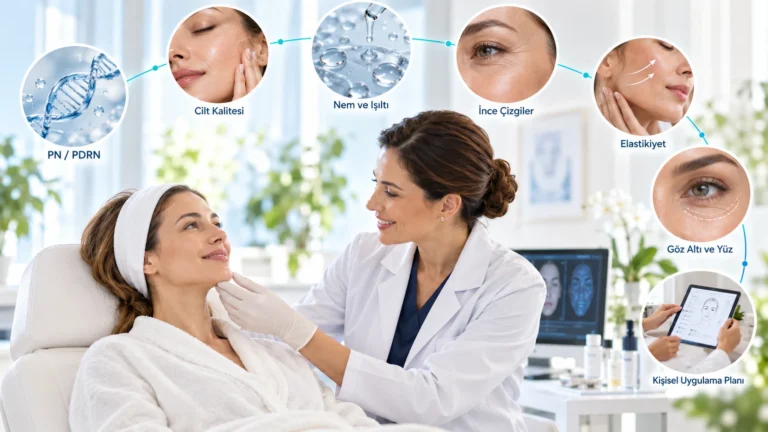
A targeted evaluation can be performed in individuals who notice fine lines, loss of elasticity, tone irregularity, dryness, pore appearance, or changes in facial contour. The goal is not to apply a single procedure to everyone, but to determine which skin layer and which concern is the priority.
How is it planned?
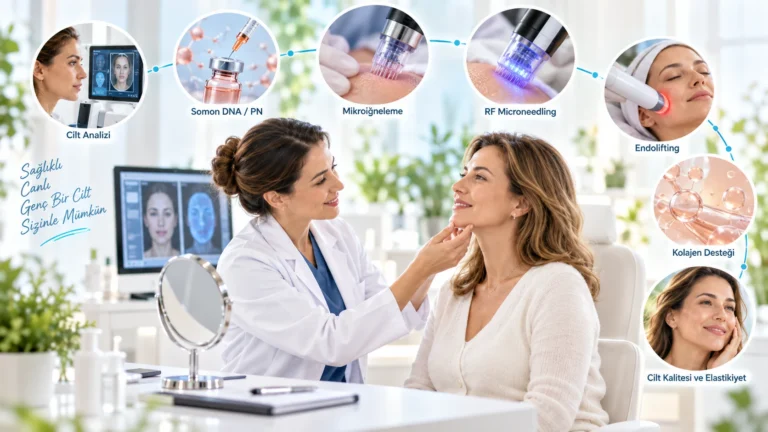
Skin type, pigment tendency, loss of volume, laxity, previous procedures, and the individual’s recovery time expectations are evaluated together. Methods such as PN/PDRN, skin boosters, RF microneedling, lasers, photobiomodulation, or Endolifting can be planned alone or in stages depending on the target.
Why does skin age?
With age, collagen and elastin organization changes, epidermal renewal may slow down, and dermal support may decrease. Sun exposure, smoking, air pollution, irregular sleep, hormonal changes, and repetitive facial expressions can accelerate this process. Changes in fat compartments, connective tissue, and bone structure also play a role in facial appearance.
Which findings should be evaluated together?
- Fine lines and superficial wrinkles
- Skin laxity and loss of elasticity
- Dryness and decreased hydration
- Sun-related spots and uneven tone
- Pore and texture irregularity
- Acne scars
- Signs of aging around the eyes and in the neck area
- Loss of volume and changes in facial contour
Which methods can be evaluated?
Depending on the target, methods such as microneedling, RF microneedling, fractional lasers, PN/PDRN applications, skin boosters, PRP/iPRF, photobiomodulation, and Endolifting in selected patients can be evaluated. These methods are not exact substitutes for one another; superficial skin quality and subdermal laxity may not be addressed with the same method.
Salmon DNA / PN-PDRN
PN and PDRN products are increasingly being investigated in the areas of skin quality, hydration, elasticity, and fine lines. Positive results have been reported in 2024–2026 systematic reviews. However, because there are differences among products, administration protocols, and study designs, data continue to evolve regarding which protocol is most appropriate for which individual.
Microneedling and RF microneedling
Microneedling and RF microneedling target controlled tissue response and collagen remodeling. Current reviews have reported positive results in skin texture, photoaging, and wrinkle measurements; the treatment plan should be personalized based on skin type, device specifications, energy, and recovery time expectations.
Red light / photobiomodulation
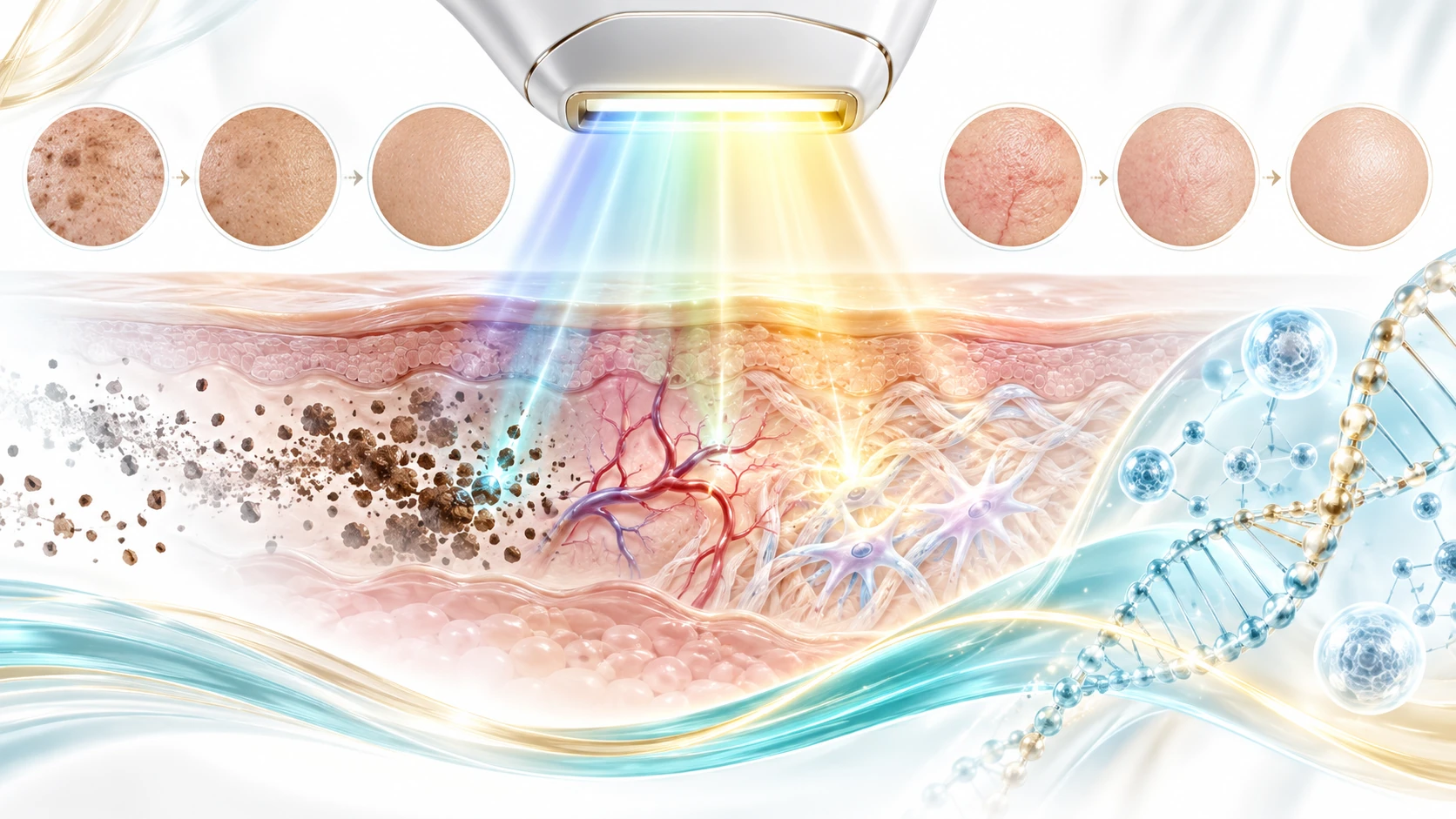
Red and near-infrared light are being investigated as a supportive method in skin health through mechanisms associated with cellular response and tissue repair. A low recovery time can be an advantage; the expected contribution depends on the device’s wavelength, power density, dose, and treatment regimen.
Endolifting
Endolifting is a minimally invasive laser approach primarily evaluated for subdermal laxity, contour, and selected local tissue targets. For fine superficial wrinkles or hydration goals, it may be more appropriate to plan it in combination with different methods.
When is a dermatologic evaluation required?
If there are newly developing, bleeding, or color- or shape-changing lesions; non-healing wounds; active infection; or uncontrolled dermatologic disease, a dermatologic evaluation should be performed before planning an aesthetic procedure.
Our approach at our Bodrum clinic
First, we translate the expectation of “rejuvenation” into an anatomical target: skin surface, dermis, pigment, scars, subdermal laxity, or loss of volume. Then, by evaluating recovery time, skin type, previous procedures, expectations, and risks together, we create a plan that is as simple and staged as possible.
For a detailed comparison of methods, you can review the Skin Rejuvenation and Wrinkle Treatments guide; for PN/PDRN, the Salmon DNA: PN and PDRN guide; and for light therapies, the Red Light Therapy and Photobiomodulation guides.
References
- Foppiani JA, et al. Microneedling for Facial Rejuvenation: A Systematic Review. Aesthetic Plast Surg. 2025. PMID: 40542236.
- The Effectiveness of Polynucleotides in Esthetic Medicine: A Systematic Review. PMID: 39645667.
- Polynucleotides and Polydeoxyribonucleotides for Skin Rejuvenation, Postoperative Scar Prevention, and Wound Healing: A Systematic Review of Randomized Clinical Trials. 2026. PMID: 42572627.
Written and medically reviewed by: Dr. Kerem Çağlayan
Last medical review: September 10, 2026
Disclaimer: This content is for general informational purposes; it does not replace a personalized diagnosis or procedure recommendation.