Key points
- MASCC/ISOO recommends defined intraoral PBM protocols to prevent oral mucositis under specific head and neck radiotherapy or chemoradiotherapy and hematopoietic stem cell transplantation conditions [1].
- In a 2026 meta-analysis of 30 randomized trials evaluating 1,748 participants, the risk ratio (RR) for severe oral mucositis was found to be 0.46, and 0.35 for severe oral pain. Due to the risk of bias in the studies, the overall certainty of evidence is low or very low [2].
- Clinical studies in radiation dermatitis and post-breast cancer lymphedema point to a possible benefit; it does not replace standard rehabilitation and oncologic care [3–5].
- PBM and photodynamic therapy (PDT) are not the same method. PDT aims to produce local cell damage using a specific photosensitizer and appropriate light [7].
- The target tissue, irradiance, energy density, application frequency, device safety, and the patient’s oncologic status are just as important as the wavelength [6].
What is photobiomodulation (PBM)?
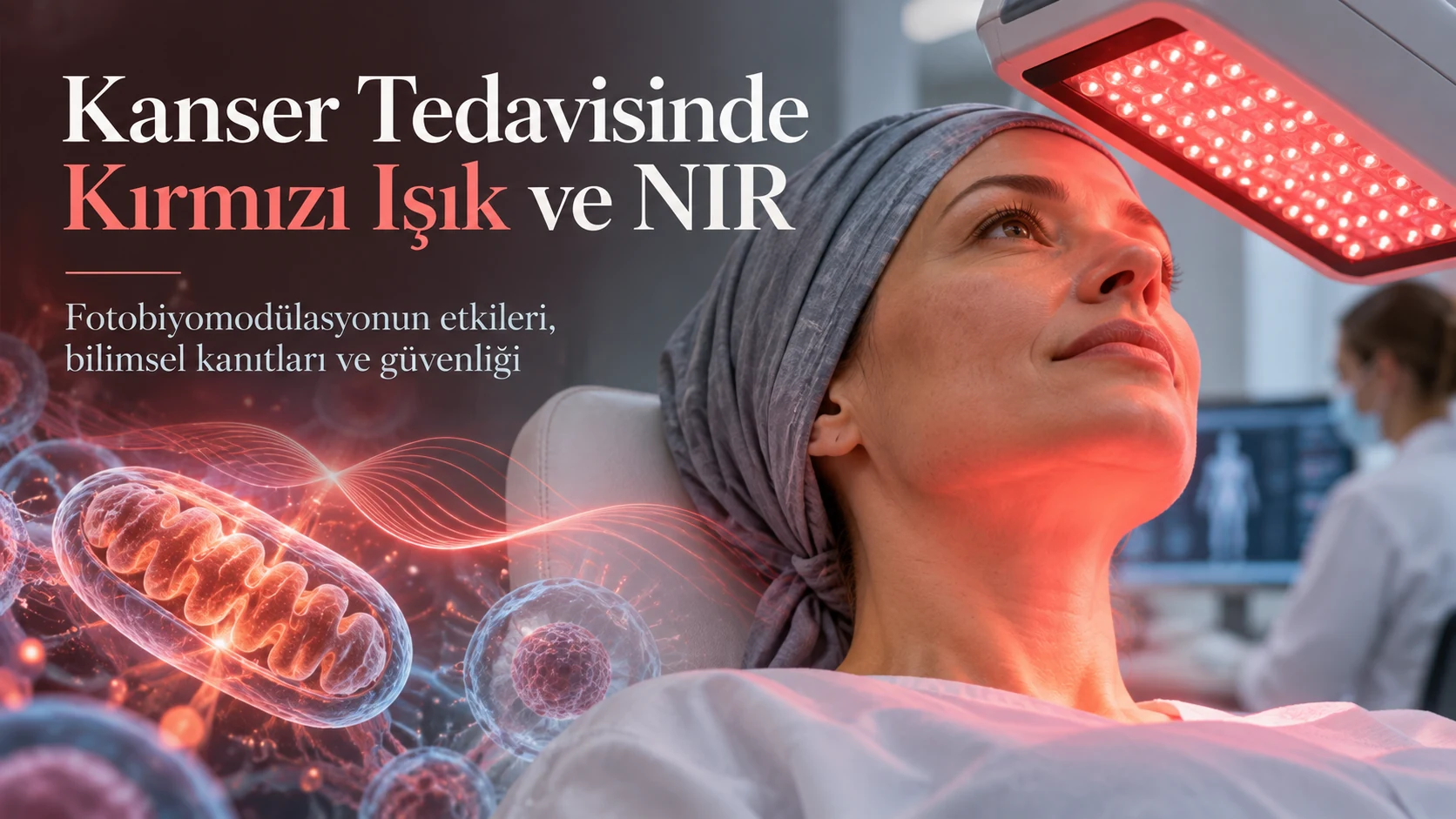
PBM (photobiomodulation) refers to biological effects that can occur in cellular signaling pathways as a result of delivering light in the red and near-infrared spectrum to tissues using laser or LED sources. The term low-level laser/light therapy (LLLT) is also encountered in the literature. The goal of the treatment is not to burn cells or destroy tumors with light, but to modulate responses related to inflammation, pain, repair, and function in selected tissues [6,9].
Difference between red light (RLT) and near-infrared (NIR)
Visible red light is frequently used in clinical and consumer devices approximately in the 630–670 nm range, while NIR is used, for example, in the 800–850 nm band. NIR is invisible to the eye and can reach deeper under certain conditions. However, effective penetration depends on melanin, hemoglobin, water absorption, light scattering, device geometry, and the application site. For this reason, conclusions such as “NIR is always more effective” or “higher power is more beneficial” are not correct [6,9].
How can it act at the cellular level?
The most frequently studied hypothesis is the alteration of cellular response via cytochrome c oxidase in the mitochondrial electron transport chain and other light-sensitive biological targets. Effects have been observed on ATP production, nitric oxide-related signaling, low-level reactive oxygen species, and inflammation-related pathways. Some studies indicate that membrane receptors and different photoacceptors may also be important. Mechanisms may vary from tissue to tissue; clinical outcomes cannot be explained solely by “increased ATP” [9].
The response to PBM is dose-dependent and sometimes biphasic: an insufficient dose may be ineffective, while an excessive dose may not provide additional benefit. Directly translating mitochondrial changes identified in cell culture into survival or tumor response in a cancer patient is not scientifically sound.
Clinical evidence in oncology: In which areas is it effective?
1. Oral mucositis: the strongest area of supportive use
In patients receiving radiotherapy or chemoradiotherapy to the head and neck region, painful sores can develop in the oral and pharyngeal mucosa. This condition can impair nutrition, swallowing, and treatment tolerance. The MASCC/ISOO 2020 guideline recommends defined intraoral PBM protocols to prevent mucositis in head and neck radiotherapy, concurrent chemoradiotherapy, and selected stem cell transplantation conditioning regimens [1].
The systematic review by Pedroso and colleagues, published on March 25, 2026, includes 30 randomized clinical trials and 1,748 patients. PBM reduced the risk of severe mucositis compared to the control group (RR 0.46; 95% confidence interval 0.29–0.71). For severe oral pain, the RR was found to be 0.35 (95% CI 0.23–0.53). These correspond to an approximate 54% and 65% relative risk reduction; they do not imply definitive protection in an individual patient. Because a large proportion of the studies had a risk of bias, the certainty of the results is low [2].
2. Radiation dermatitis: positive but protocol-dependent findings
Particularly during breast cancer radiotherapy, redness, irritation, pain, and more severe reactions may develop on the skin. A 2024 systematic review/meta-analysis evaluated eight studies (five randomized) and reported that grade 2–3 acute radiodermatitis was less common in the PBM group. However, there is marked heterogeneity among the studies; different light sources and dosage regimens limit the generalizability of the findings [3]. A LED-focused systematic review published in 2026 also reported promising but methodologically heterogeneous results across six studies [4].
In appropriate patients, PBM should be considered in conjunction with existing skin care, radiotherapy team recommendations, and infection/skin integrity monitoring.
3. Lymphedema after breast cancer: what does the new meta-analysis say?
PBM has been investigated as an adjunct to physical therapy for upper extremity lymphedema developing after breast surgery and/or radiotherapy. A 2026 meta-analysis pooling nine randomized trials and 312 patients reported a reduction in the volume and circumference of the affected arm, as well as improvements in grip strength and pain. The standardized effect size for volume was −0.78, and the mean difference for arm circumference was −3.61 cm [5]. However, results are limited to short/intermediate-term data, adverse event reporting is inadequate, and the optimum dose is not standardized. Compression, exercise, skin care, and specialized lymphedema rehabilitation remain the cornerstone of care.
4. Dry mouth (xerostomia) and saliva production
In the 2026 meta-analysis, PBM was associated with a statistically significant improvement in salivary flow (SMD 0.75), but no significant difference was demonstrated in patient-reported dry mouth complaints (SMD −0.07; p=0.646). The outcome in quality of life assessment also did not reach the threshold of statistical significance [2]. An improvement in the quantity of saliva and the relief of a person’s sensation of dryness are not the same clinical outcome.
5. Chemotherapy-induced peripheral neuropathy
Numbness, burning, tingling, and loss of function may develop in the hands and feet after chemotherapy. There are early studies evaluating the supportive use of PBM for nerve function and neuropathic complaints. In the WALT evaluation, this area is listed as an investigational clinical indication [6]. However, the available data are insufficient to define PBM as a standalone, proven standard treatment for cancer treatment-related neuropathy; the chemotherapy regimen used, the grade of neuropathy, and alternative causes must be evaluated.
6. Pain, fibrosis, trismus, and other late effects
The WALT expert document discusses PBM parameters for difficulty swallowing, reduced mouth opening (trismus), late fibrosis, lymphedema, taste alteration, and certain skin/mucosal complications. Each of these topics does not possess the same strength of evidence as oral mucositis [6]. The decision for clinical use should be made on the basis of the targeted endpoint and the multidisciplinary care plan.
Does PBM alter the course of cancer? Is the survival claim true?
Based on current knowledge, it cannot be said that PBM treats cancer or prolongs long-term survival in cancer patients. In a long-term follow-up analysis of 120 breast cancer patients, no statistically significant difference was detected between the PBM and placebo groups in terms of disease-free survival, cancer-free survival, or overall survival. While the study provides reassuring safety data in selected supportive care settings, it does not constitute definitive safety evidence for a broader range of cancer types and tumor sites [8].
The effects of PBM on tumor cells and their microenvironment can vary depending on the wavelength, dose, cell type, and biological context used. Some cell culture studies report conflicting results. While evaluating the supportive use of PBM in patients with a cancer diagnosis, the WALT expert group recommends not applying direct irradiation over an active tumor focus [6].
Why should PBM not be confused with photodynamic therapy (PDT)?
| Feature | PBM (photobiomodulation) | PDT (photodynamic therapy) |
|---|---|---|
| Primary target | To support tissue response, pain relief, and repair | To induce oxidative damage in target cells via a photosensitizer |
| Photosensitizing drug | Generally not required | Requires the use of an appropriate agent matched with light |
| Oncologic role | Supportive care for selected side effects | Direct treatment for specific localized cancers or precancerous lesions |
| Limit of evidence | Different level of evidence for each indication | Limited to approved indications, selected agent, and tumor location |
The US National Cancer Institute (NCI) defines PDT through the activation of a light-sensitive substance with appropriate light; it is used in specific skin, esophageal, and lung cancer indications. Light penetration depth and the potential for damage to healthy tissue are among the limitations of this technique [7]. Turning on a home-use red light panel alone does not equate to administering PDT.
Is PBM more effective with curcumin, resveratrol, EGCG, or methylene blue?
These molecules are addressed in experimental PDT/phototherapy studies due to their distinct photochemical and redox properties. However, the ability of a molecule to interact with light does not mean that the “anticancer effect” of red light is “enhanced” when taken as an oral supplement or administered intravenously. There are no standardized human protocols demonstrating the clinical benefit and safety of using these combinations alongside PBM in cancer treatment. Methylene blue, in particular, is a pharmacological agent with drug interactions and its own specific contraindications. Any light–molecule pairing should not be attempted independently of oncology treatment [7].
Dose and device selection for clinical application: What should be looked at?
Wavelength in the literature, irradiance in mW/cm², energy density (fluence) in J/cm², spot size, application duration, target tissue, and session frequency must be reported together. In the WALT document, supportive oncologic applications include distinct protocols across the approximately 600–1,000 nm band for different clinical goals; these are not a single recipe applicable to every patient [6].
For example, the MASCC/ISOO oral mucositis prevention guideline defines intraoral laser protocols with specified details such as 632.8 nm or 660 nm. These protocols cannot be indiscriminately transferred to high-power LED panels. Eye protection, device calibration, photosensitizing medications, and treatment field safety must also be reviewed [1,6].
In whom should greater caution be exercised?
- Active malignancy or treatment field: Coordination with the oncologist must be maintained; direct application to the tumor focus should be avoided.
- Photosensitivity: Diseases and medications associated with light sensitivity should be specifically queried.
- Eye exposure: Powerful light sources should not be looked at directly; eye protection appropriate for the manufacturer and wavelength should be used.
- Infection, ulcer, and open wound: Etiology, local care, and necessary medical treatment should be evaluated first.
- Active chemotherapy / radiotherapy: Dose, application timing, and the area to be irradiated should be determined with the care team. Supplements and photosensitizers should not be added on one’s own.
Sleep, mood, and brain health: How much evidence is there in terms of oncology?
The potential effects of PBM on neurobiology, sleep, and mood are being investigated; however, these data are not at a level that would justify routine PBM application in cancer patients. In particular, it would not be accurate to directly attribute circadian rhythm studies conducted on bright light therapy to red/NIR PBM. Different light applications, devices, biological targets, and dosing regimens are involved.
Practical evaluation for patients
When evaluating PBM, the fundamental question should not be “does red light cure cancer?”, but rather “which treatment complication do we want to reduce in this individual, with which validated protocol, and for which measurable endpoint?” For example, a professional application focusing on the risk of oral mucositis in head and neck chemoradiotherapy is a completely different clinical decision from a device sold online that indiscriminately delivers light to the whole body.
Frequently asked questions
Can a cancer patient receive red light therapy?
In certain patients, it can be administered under the supervision of the oncology team and for an appropriate indication. There are safety uncertainties regarding direct application to the active tumor site; disease type, treatment field, application goal, and device must be evaluated together.
Does red light reduce the effectiveness of chemotherapy?
Human data suggest that specific PBM protocols can be used in supportive care; however, it has not been proven to be without interactions across every tumor and drug regimen. Application during the oncologic treatment process without oncologist approval is not recommended.
Does red light kill cancer cells?
Standard PBM application is not a cancer treatment designed to kill cancer cells. PDT using a photosensitizer is a different method applied for oncologic treatment purposes in selected situations.
Is 850 nm always better than 660 nm?
No. NIR can penetrate deeper into certain tissues; however, the dose delivered to the target tissue and a clinical protocol appropriate for the indication are more important than the wavelength alone.
Can oral mucositis be prevented at home with a red light panel?
Controlled intraoral laser protocols in current mucositis guidelines have not been shown to provide the same clinical effect and safety with home-use panels.
Brief summary of the scientific evidence level
- Relatively established: Oral mucositis prophylaxis in selected oncology patient groups; dependent on specific guideline protocols.
- Promising and emerging: Acute radiation dermatitis, post-breast cancer lymphedema, and pain; varying results and non-standardized protocols exist.
- Early research: Chemotherapy-induced peripheral neuropathy, certain late tissue complications, and neurocognitive outcomes.
- Unproven: Direct anticancer effect, tumor eradication, or survival increase with PBM; uncontrolled “PDT combination” with dietary supplements.
Related content
- Red Light and Pain: The use of photobiomodulation in the musculoskeletal system
- Curcumin: Clinical research, formulation, and safety
- Red Light and skin biology
References and further reading
- Elad S, et al. MASCC/ISOO clinical practice guidelines for the management of mucositis secondary to cancer therapy. Cancer. 2020. DOI: 10.1002/cncr.33100.
- Pedroso MNM, et al. Effects of photobiomodulation on oral mucositis, oral pain, xerostomia, salivary flow rate, and quality of life in patients with head and neck cancer: a systematic review and meta-analysis. Support Care Cancer. 2026;34:364. DOI: 10.1007/s00520-026-10575-4.
- Effects of photobiomodulation therapy for acute radiation dermatitis in patients with cancer: A systematic review and meta-analysis. Radiother Oncol. 2024. DOI: 10.1016/j.radonc.2024.110589.
- Light-emitting diode therapy for the prevention and treatment of radiodermatitis in women with breast cancer: systematic review. Lasers Med Sci. 2026. DOI: 10.1007/s10103-026-04803-w.
- Qian et al. Effects of photobiomodulation therapy on upper limb lymphedema secondary to breast cancer: a systematic review and meta-analysis. Front Oncol. 2026. DOI: 10.3389/fonc.2026.1802643.
- Robijns J, et al. Photobiomodulation therapy in management of cancer therapy-induced side effects: WALT position paper 2022. Front Oncol. 2022;12:927685. DOI: 10.3389/fonc.2022.927685.
- National Cancer Institute (NCI). Photodynamic Therapy to Treat Cancer. NCI clinical information page.
- Robijns J, et al. A long-term follow-up of early breast cancer patients treated with photobiomodulation during conventional fractionation radiotherapy in the prevention of acute radiation dermatitis. Lasers Surg Med. 2022. DOI: 10.1002/lsm.23608.
- Light buckets and laser beams: mechanisms and applications of photobiomodulation (PBM) therapy. GeroScience. 2025. DOI: 10.1007/s11357-025-01505-z.
Written and medically reviewed by: Dr. Kerem Çağlayan
First published: October 8, 2026
Last medical review: October 8, 2026
Warning: This article is for general medical informational purposes only; it is not a personal diagnosis or treatment recommendation. PBM or PDT should not be used as a substitute for oncological treatment.