What is a skinbooster?
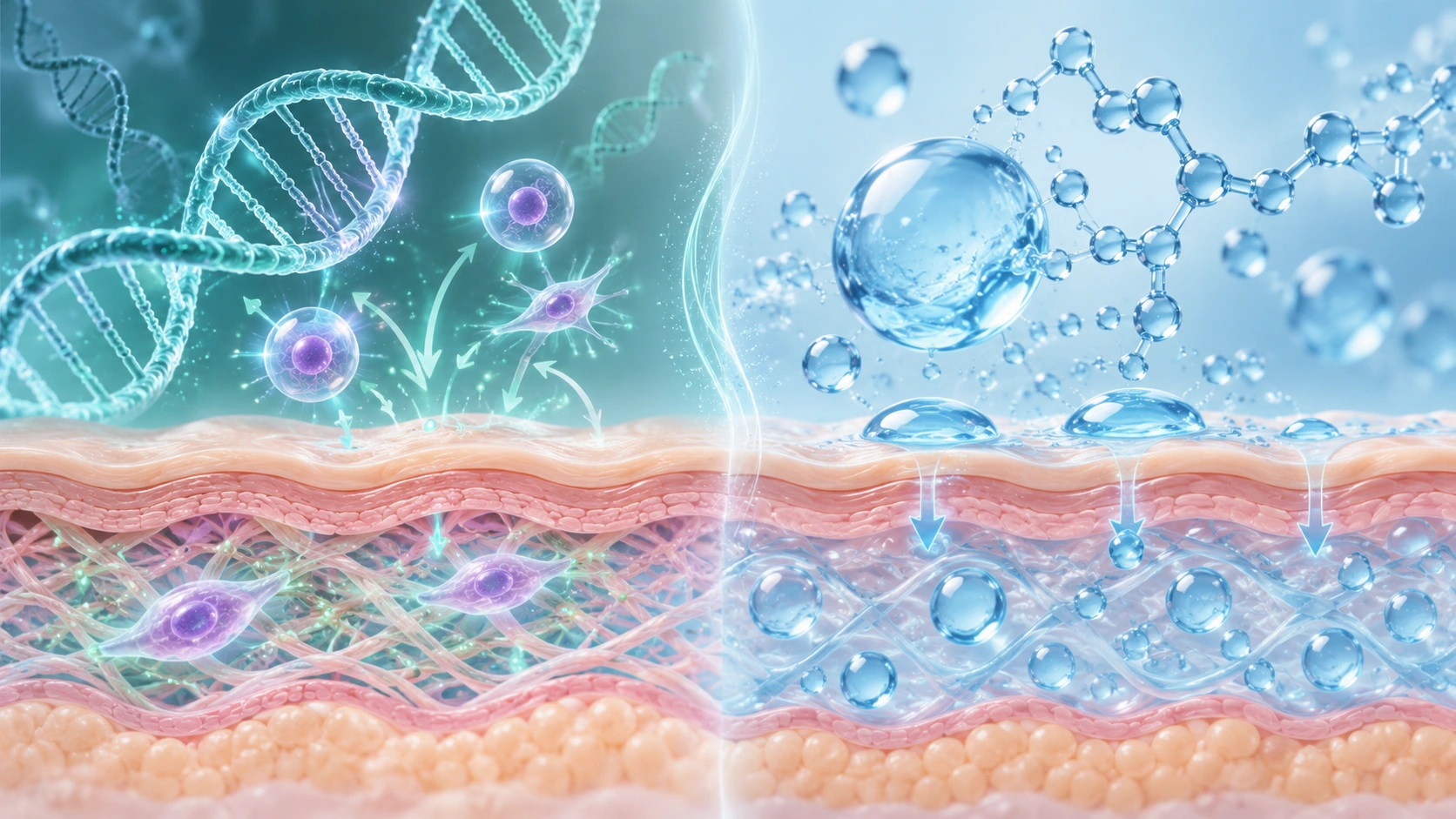
The term skinbooster is mostly used for intradermal products containing low or moderately cross-linked or non-cross-linked hyaluronic acid. Rather than providing noticeable volume like a classic filler, the goal is to support characteristics such as hydration, skin texture, elasticity, and radiance. The rheological properties and contents of the products may differ from one another.
What does PN/PDRN target?
In polynucleotide and PDRN products, effects on skin quality, tissue repair, elasticity, and fine lines are being investigated. A 2026 systematic review shows that randomized studies generally report positive results, but that the total sample size and protocol standardization are still evolving.
Is there a direct comparison?
In a small randomized, double-blind split-face study conducted in the periocular area, PN was compared with non-cross-linked hyaluronic acid. While no significant difference was observed between general aesthetic improvement scores, higher improvement rates were reported on the PN side in certain elasticity, hydration, roughness, and pore measurements. This study is intriguing but was conducted with 27 individuals; it should not be generalized to all facial areas and all products.
In which situation might which one make more sense?
- Significant dryness and need for hydration: An HA-based skinbooster may be a more direct option.
- Fine lines, elasticity, and skin quality: PN/PDRN or HA can be evaluated separately or sequentially depending on skin characteristics.
- Volume loss: A skinbooster or PN/PDRN does not replace a classic dermal filler; the need for volume is evaluated separately.
- Eye area: Product selection should be made taking into account tissue thickness, tendency toward edema, and anatomical risks.
Can they be used together?
There are small studies investigating the sequential or combined use of PN and HA. This approach may target skin quality and hydration through different mechanisms in some individuals. However, available data are not extensive enough to conclude that “a combination is always better”; the plan should be individualized according to skin needs.
Our approach at our Bodrum clinic
We prefer to determine the skin concern before the product name. Dryness, fine lines, loss of elasticity, pigmentation, laxity, and volume loss are not the same problem. Following a skin assessment, PN/PDRN, hyaluronic acid-based skinboosters, or other skin rejuvenation methods are selected based on the target.
Frequently asked questions
Is salmon DNA better than a skinbooster?
There is no single superior option for every patient and every goal. Available small direct comparisons suggest that both approaches can support certain skin quality measurements; the appropriate choice varies depending on the skin concern and product characteristics.
Are both of them fillers?
Both can be administered via injection, but they do not serve the same purpose as a classic volumizing dermal filler. In particular, the term “skinbooster” can vary widely among products.
References
- Periocular randomized split-face comparison of PN and hyaluronic acid
- Systematic review of randomized studies on PN/PDRN, 2026
- Investigation of sequential application of PN-HPT and hyaluronic acid
Written and medically reviewed by: Dr. Kerem Çağlayan
Last medical review: September 10, 2026