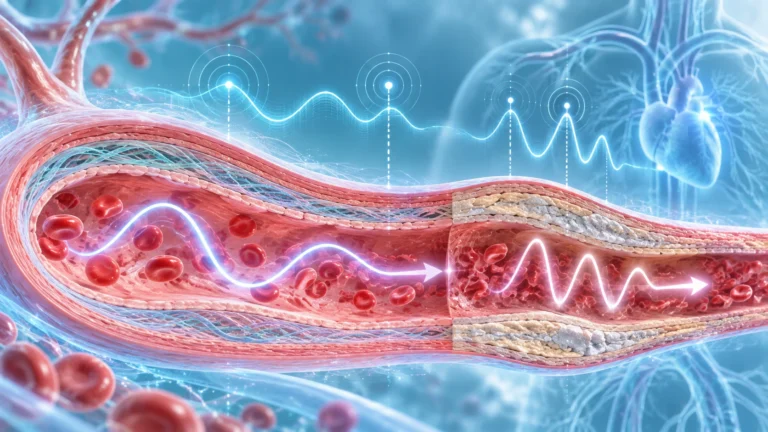

Quick answer
Sermorelin is a synthetic peptide containing the first 29 biologically active amino acids of human growth hormone-releasing hormone (GHRH). By stimulating the GHRH receptor in the pituitary gland, it can increase the individual’s own growth hormone secretion. In the past, it had clinical use in pediatric growth and GH axis evaluations; today, it has regained interest in adults within the context of the GH–IGF-1 axis and healthy aging.
Key points
- Sermorelin is not growth hormone itself; it stimulates endogenous GH secretion from the pituitary gland.
- Its effect depends on the pituitary gland’s response capacity and it is not the same molecule as CJC-1295 or ipamorelin.
- Modern clinical data for use in adults for body composition, sleep, or longevity purposes are not as strong as historical pediatric use.
- There is no standard and approved route of administration in the form of an “IV anti-aging serum.”
What is sermorelin?
Sermorelin is a peptide that mimics the short but biologically active portion of natural GHRH. It aims to increase pulsatile GH secretion by stimulating the pituitary GHRH receptor. In this respect, it is pharmacologically different from the external administration of growth hormone.
How does it affect the GH–IGF-1 axis?
An increase in GH secretion can affect IGF-1 production in the liver and other tissues. This axis is related to muscle-bone metabolism, adipose tissue, energy balance, and tissue repair. However, an increase in GH or IGF-1 levels cannot be said to automatically mean better healthspan or a longer life in a healthy adult.
Historical clinical use
Sermorelin was historically used in the evaluation of the growth hormone axis in children and in certain growth disorders. This historical experience provides important information regarding the molecule’s human pharmacology. Today, wellness/longevity use in adults is a different clinical question and must be evaluated with its own outcome data.
Difference from CJC-1295 and Ipamorelin
Sermorelin is a GHRH analog. CJC-1295 also targets the GHRH axis but has forms designed to be longer-acting. Ipamorelin, on the other hand, influences GH secretion via ghrelin/GHSR. Therefore, although they are mentioned under the same “GH peptide” heading, their pharmacologies are different.
For what purposes does it come to the forefront in adults?
Sleep, body composition, muscle mass, recovery, and age-related GH changes are the most frequently discussed topics. While there is a biological rationale in these areas, modern large randomized studies demonstrating long-term clinical outcomes in healthy adults are limited. Therefore, the individual’s actual endocrinological status and measurable goals are important.
Route of administration and product quality
Sermorelin has historically been used via injection. Compounded products may come to the forefront today; these do not undergo the same pre-approval evaluation as licensed commercial products. There is no established clinical protocol where IV sermorelin is accepted as a standard longevity infusion.
Safety
Injection site reactions, headache, edema, and changes in glucose metabolism may be seen. In all interventions affecting the GH–IGF-1 axis, active malignancy, uncontrolled metabolic disease, and endocrinological causes should be carefully evaluated.
Our approach in our Bodrum clinic
In the evaluation of sermorelin, instead of “increasing GH” first, we determine why this axis is being targeted. Sleep, muscle strength, body composition, metabolic health, pituitary function, and clinical symptoms are addressed together. If a true GH axis disorder is suspected, standard endocrinological evaluation is the priority; if it comes to the forefront for longevity purposes, available human data and product standards are also evaluated.
Frequently asked questions
Is sermorelin growth hormone?
No. It is a peptide that attempts to increase the individual’s own growth hormone secretion by stimulating the GHRH receptor.
Is sermorelin used for anti-aging purposes?
It attracts interest for this purpose; however, modern clinical data showing long-term healthspan or lifespan benefits in healthy adults are limited.
Is IV Sermorelin standard?
No. It is not a standard IV longevity protocol.
Related content
References
- Historical clinical literature on sermorelin and GHRH testing/treatment.
- Dominikowski A, et al. The emerging landscape of performance-enhancing peptides modulating the GH-IGF1 axis. Front Endocrinol. 2026. PMID: 42395176.
- U.S. FDA. Compounding and the FDA: Questions and Answers.
Written and medically reviewed by: Dr. Kerem Çağlayan
Last medical review: September 10, 2026
Disclaimer: This content is for general medical informational purposes only; it does not substitute for personal diagnosis or treatment recommendations.