What does this score mean?
The Trust Index is an editorial methodology score that indicates the extent to which the scientific findings evaluated on this page can be trusted, rather than the success rate of the treatment. Study design, risk of bias, sample size, precision, direct applicability, reproducibility, transparency, and clinical relevance are evaluated together.
What did the study investigate?
It investigated whether ozonated major autohemotherapy added to standard treatment in acute ischemic stroke affects neurological, functional, cognitive, and biomarker outcomes.
How was it conducted?
62 patients were randomized into standard treatment, oxygen, and ozone autohemotherapy groups; following a five-day intervention, NIHSS, Barthel, MoCA, and various oxidative stress/neuronal injury markers were evaluated.
What was found?
A more pronounced improvement in some neurological and functional scores as well as biomarkers was reported in the ozone group; no serious safety signals were reported.
Limitations of the study
Single-center study with a small sample size; delayed registration, reporting uncertainties, and limited use of contemporary reperfusion therapies reduce generalizability.
What does it mean clinically?
The findings present a signal worthy of investigation regarding complementary therapy; they do not provide evidence sufficient to replace time-critical standard reperfusion therapies in acute stroke.
What do we not know yet?
It is not yet known whether the results will be replicated in larger, prospectively registered, multicenter studies that reflect contemporary thrombolysis/thrombectomy practice.
Source
Complete citations and links for the sources are preserved in the detailed evaluation section of this page.
Written and medically reviewed by: Dr. Kerem Çağlayan · Information about ozone therapy · All Scientific Research
Detailed evaluation
Research evaluation · September 15, 2026
A randomized controlled study published in Frontiers in Medicine on July 25, 2025, evaluated the relationship of ozonated major autohemotherapy added to standard treatment with neurological, functional, and cognitive outcomes in acute ischemic stroke. The study was conducted with 62 patients, and the patients were divided into three groups: standard treatment, oxygen administration, and ozone autohemotherapy.
How was the study conducted?
Patients were selected from adults experiencing their first ischemic stroke, presenting to the hospital within 24 hours of symptom onset, and having an NIHSS score between 4 and 15. All groups received standard stroke treatment. In the ozone group, 100 mL of autologous blood was treated with a medical ozone-oxygen mixture and reinfused over approximately 30 minutes, and the procedure was repeated once daily for 5 days.
Clinical endpoints of the study included NIHSS, Barthel Index, and MoCA; biomarkers included NSE, S100β, SOD, MDA, GSH-Px, HIF-1, and Nrf-2. The study registration is available on ClinicalTrials.gov under the identifier NCT06525792.
What was the most notable finding?
According to the authors’ report, neurological and functional recovery in the ozone group was more pronounced than in the other two groups. In the abstract, an approximate 30% reduction in the NIHSS score, an approximate 25% increase in the Barthel Index, and an approximate 20% improvement in the MoCA score were reported. Additionally, a decrease in NSE and S100β levels associated with neuronal/glial damage was observed.
These results suggest that ozone autohemotherapy following acute ischemic stroke may be worthy of investigation not only in terms of symptom scores, but also regarding activities of daily living and cognitive performance.
Why are Nrf2 and HIF-1 important?
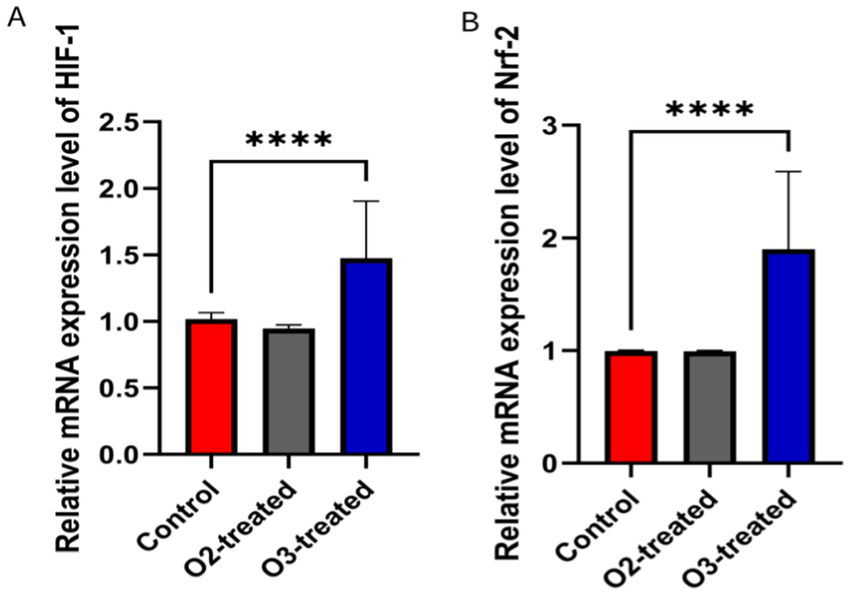
In the ozone group, an increase in HIF-1 and Nrf-2 expression, a decrease in MDA, and an increase in GSH-Px were reported. Nrf2 is an important regulator of cellular antioxidant defense, and HIF-1 of cellular adaptation to hypoxia. Therefore, the study presents a biological signal supporting the hypothesis that controlled oxidative stimulation may activate endogenous defense responses.
However, these biomarker changes alone do not prove a causal mechanism; their relationship with clinical benefit must be confirmed in larger and independent studies.
What was reported regarding safety?
During the five-day treatment period, no significant differences between groups were reported in indicators of liver, kidney, and myocardial injury. Self-resolving ecchymosis at the puncture site developed in 8 patients in the ozone group and 6 patients in the oxygen group. No significant increase in hemorrhagic transformation or infection was detected at the three-month follow-up.
Important limitations of the study
While the findings are intriguing, the study is single-center with a small sample size. In addition, ClinicalTrials.gov registration was completed after the study was finished; while the registered primary outcome was SOD, numerous clinical and biological outcomes are highlighted in the published article. The ozone dose being reported as “45%” in the article also requires clarification in terms of clinical reproducibility.
The presence of a statement in the statistics section of the article regarding gut microbiota and metabolomic correlation analysis, which was not the subject of the study, also requires careful evaluation of reporting quality. These points do not invalidate the results; however, they warrant caution when interpreting effect sizes.
What does this mean for acute stroke practice?
There is a promising signal of an adjunctive therapy, but it cannot be said to replace standard care. In acute ischemic stroke, reperfusion therapies such as thrombolysis and/or mechanical thrombectomy in eligible patients remain time-critical. Ozone autohemotherapy should only be evaluated as a complementary method under investigation in selected patients that does not delay these standard approaches.
The fact that only 3 patients in this study received thrombolysis and no patients underwent mechanical thrombectomy also limits the direct generalizability of the results to contemporary reperfusion practice.
Quality of evidence
Low–moderate, hypothesis-generating. The randomized and controlled design is an important strength; however, due to sample size, single-center structure, late registration, and reporting uncertainties, the results need to be confirmed by larger, pre-registered, and independent studies. A comprehensive 2026 umbrella review also emphasizes that the overall certainty of evidence for ozone therapies is low or very low across many indications and that stronger RCTs with standardized dosing/administration are needed.
References
- Cheng H, Lu R, Du J, Zhao X, Zhuang Z. A clinical study on ozone autohemotherapy for the treatment of acute ischemic stroke. Front Med (Lausanne). 2025;12:1595568. PMID: 40786087; PMCID: PMC12331603.
- ClinicalTrials.gov NCT06525792. A Clinical Study on Ozone Autohemotherapy for the Treatment of Acute Ischemic Stroke.
- Wu X, Li Z, Liu X, et al. Major ozonated autohemotherapy promotes the recovery of upper limb motor function in patients with acute cerebral infarction. Neural Regen Res. 2013;8(5):461-468. doi:10.3969/j.issn.1673-5374.2013.05.010.
- Cacciatore S, Abbatecola G, Calvani R, Veronese N. Effectiveness and Safety of Ozone Therapy in Humans: An Umbrella Review of Systematic Reviews with Meta-Analyses of Randomized Clinical Trials. Med Sci (Basel). 2026;14(2):289.
Featured image: Cheng et al., Figure 5, Frontiers in Medicine (2025), CC BY.
This content is a scientific literature evaluation; it does not replace emergency assessment and time-window-dependent standard treatments in acute stroke.