What is postherpetic neuralgia?
Shingles develops with the reactivation of the varicella-zoster virus in the nerve ganglia. After the rash heals, pain resulting from damage to the nerve can last for weeks or months. Advanced age, severe acute pain, and widespread rash in particular may increase the risk of PHN.
How can laser help?
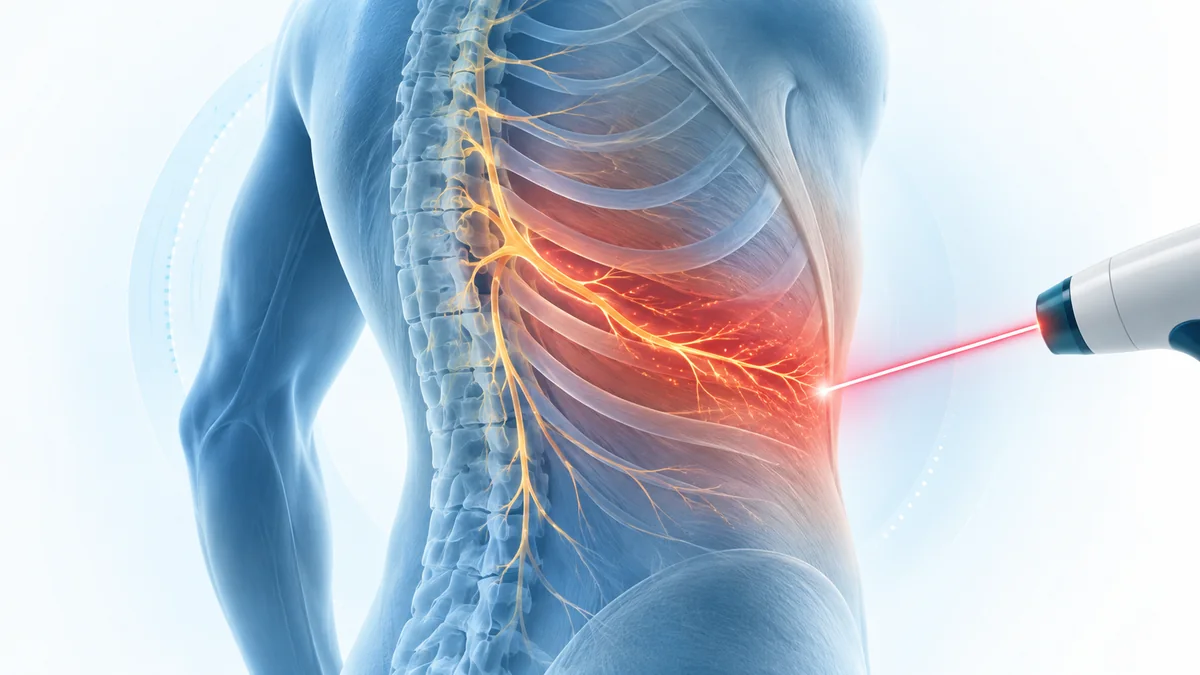
There are biological mechanism studies suggesting that photobiomodulation may modulate inflammation, mitochondrial activity, and pain transmission in nerve tissue. However, mechanism and clinical efficacy are not the same thing. Direct evidence in PHN is insufficient.
The role of 980 nm
Although 980 nm has been used in peripheral and myofascial pain fields, there is insufficient 980 nm-specific randomized clinical data for PHN. The application should only be considered as an experimental/adjunctive option in addition to standard neuropathic pain treatments.
The role of 1470 nm
Due to its superficial thermal effect, 1470 nm requires special caution on skin with pain and sensory impairment. There is no direct clinical efficacy data for PHN, and neuropathic sensory loss may increase the risk of thermal damage.
What does the scientific evidence say?
Level of evidence: C. The 2026 systematic review evaluated laser photobiomodulation for trigeminal neuralgia and PHN, finding positive studies in trigeminal neuralgia but identifying no eligible RCTs for PHN. The existence of studies on different light therapies during the acute herpes zoster phase does not mean that the efficacy of 980/1470 nm in chronic PHN has been proven.
In whom can it be considered?
- In selected patients seeking an additional non-invasive option alongside standard neuropathic pain treatments
- During the period when skin integrity is fully restored and there is no active shingles infection
- When sensory loss and thermal risk are carefully evaluated
Our approach at our Bodrum clinic
Our approach at our Bodrum clinic is first to evaluate whether the pain is genuinely postherpetic neuralgia and assess the degree of allodynia and sensory loss; and to address gabapentinoids, topical agents, and other neuropathic pain modalities according to their level of evidence. If laser is considered, the limited nature of existing evidence is clearly explained to the patient, and particular caution is exercised due to the superficial thermal load of 1470 nm.
When is a different evaluation required?
In cases of active vesicular rash, periocular shingles, new motor loss, fever, or immunosuppression, the priority is infectious and neurological evaluation.
Frequently asked questions
Does post-shingles pain resolve with laser?
There is insufficient clinical evidence to state this. In PHN, laser can be evaluated as an experimental/adjunctive option; it does not replace standard treatment.
980 nm or 1470 nm?
There is no direct sufficient evidence of efficacy for either wavelength in PHN. In sensory impairment, the thermal effect of 1470 nm also requires special caution.
Can it be applied while active shingles is present?
In active shingles infection, the priority is antiviral treatment and appropriate medical management. Superficial laser application is not routine standard treatment.
References
- PMID 41629512 — Laser photobiomodulation in trigeminal neuralgia and postherpetic neuralgia: systematic review/meta-analysis; no eligible RCTs were found for PHN.
- PMID 39786789 — UVA1 adjunct treatment in acute herpes zoster; this represents a different light therapy and a different clinical stage.
Information
This content is for general health information purposes; it is not a personalized diagnosis or treatment recommendation.