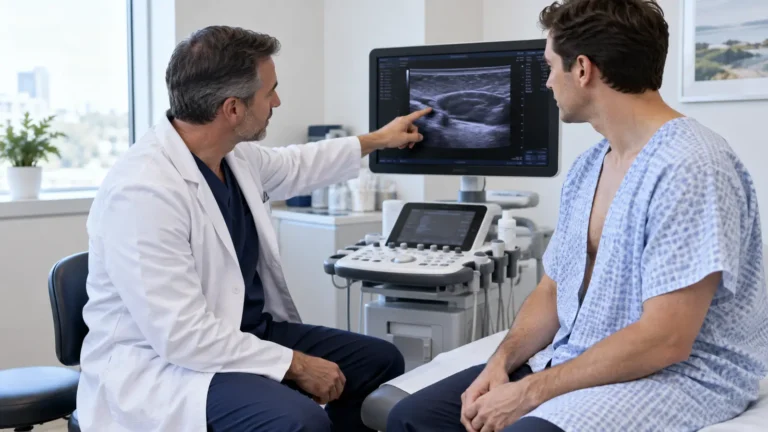

How is ozone evaluated in pain treatment?
Medical ozone has been investigated particularly in certain musculoskeletal and spine-related pains. What is important in the clinical approach is to consider the source of the pain, the anatomical target, accompanying neurological findings, and the person’s current treatment plan together, rather than evaluating ozone as a general painkiller.
Areas where clinical data is stronger
Knee osteoarthritis
Positive results in terms of short-term pain and function have been reported in randomized trials and systematic reviews regarding intra-articular ozone. A 2024 umbrella review showed that there are methodological differences across studies; therefore, it is important to better define in which patient profiles and with which protocols the results are more pronounced. In comparisons with hyaluronic acid, PRP, and other injection methods, results vary depending on the application and patient selection.
Radicular pain due to lumbar disc herniation
Studies on intradiscal and paravertebral ozone applications report signals of clinical benefit in terms of pain and function in selected lumbar disc herniation patients. Technical differences among studies make appropriate patient selection and experienced application especially important.
Other pain areas where research is evolving
Different ozone applications are also being investigated in migraine, fibromyalgia, non-specific neck/back pain, neuropathic pain, and certain myofascial pain presentations. The potential role of the application in these areas should be individualized together with the mechanism of pain, accompanying problems, and current treatment options.
Which points are important before the procedure?
- Whether the pain is mechanical, inflammatory, neuropathic, visceral, or malignancy-related,
- red flags such as loss of strength, bladder/bowel dysfunction, fever, trauma, unexplained weight loss,
- anticoagulant/antiplatelet use and infection risk,
- the anatomical target of the application and whether imaging guidance is required,
- sterility, dose/concentration, and the interventional experience of the practitioner.
The place of ozone in a multimodal pain plan
Pain treatment often does not rely on a single method. Exercise and rehabilitation, appropriate pharmacological treatment, management of sleep and psychosocial factors, and interventional methods when necessary are addressed together. Medical ozone may be evaluated as a complementary or interventional component of this holistic plan in selected patients.
Our approach at our Bodrum clinic
We plan ozone administration according to the source of the pain. In knee, low back, neck, or myofascial pain, we determine the target tissue through examination and imaging when necessary; we evaluate the method, dose, and session plan in which ozone will be used together with the individual’s functional goals.
References
- Ozone umbrella review for knee osteoarthritis – 2024
- Intradiscal ozone meta-analysis for lumbar disc herniation – 2024
- Systematic review for low back pain
For a holistic evaluation of pain, you can review the Pain Treatment page; for ozone methods, the Ozone Therapy page.