
What does this score mean?
The Confidence Index does not reflect the success rate of the treatment, but rather the editorial confidence in the clinical conclusion that can be drawn from the available data. Study design, sample size, peer-reviewed publication status, direct clinical comparison, and safety data were evaluated together.
Bottom line: Although the differences reported in favor of orforglipron are intriguing, the two drugs were not compared in the same randomized trial. Therefore, the analysis is a hypothesis-generating comparison, not a true superiority trial.
What did the analysis compare?
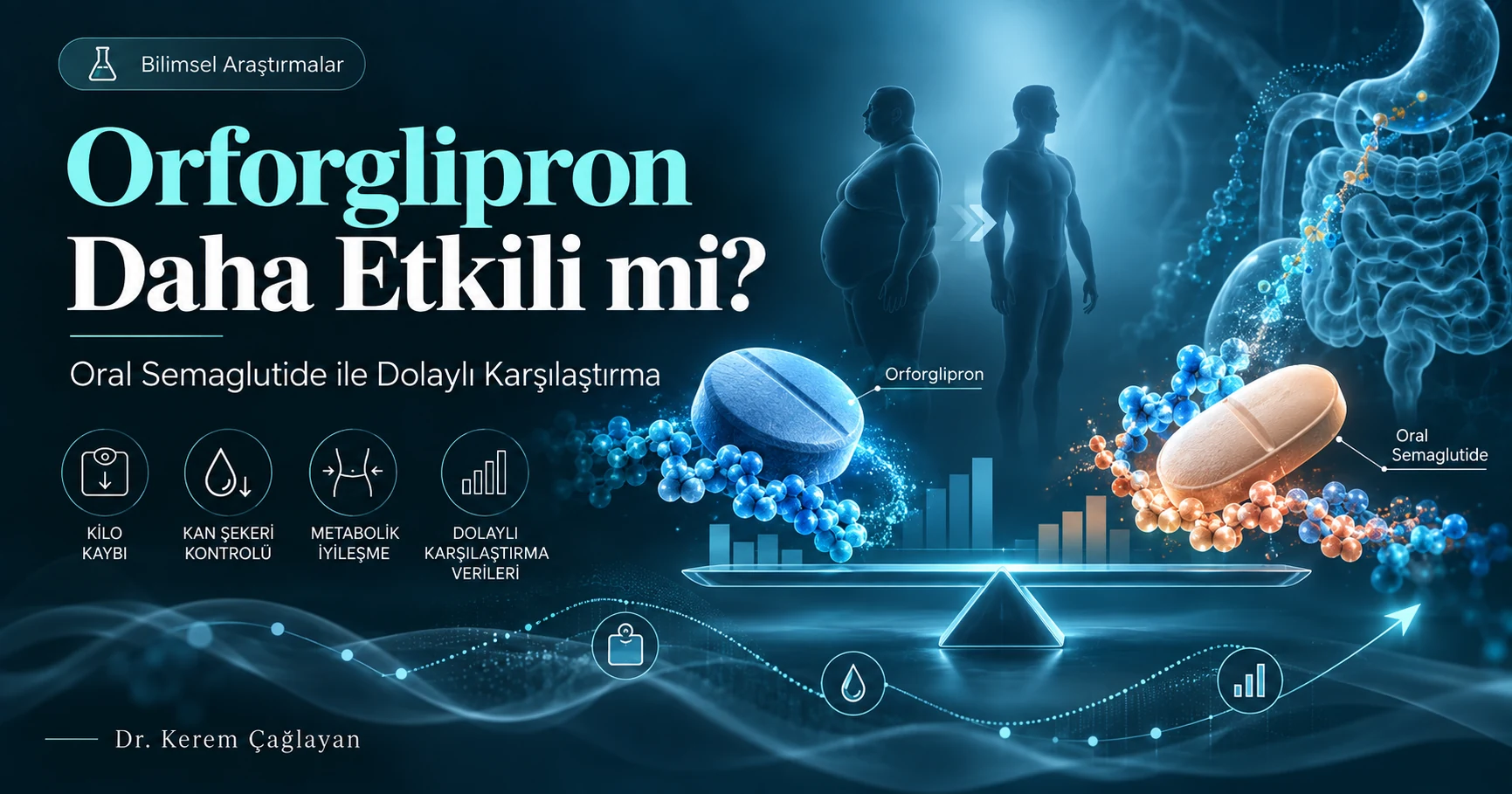
Eli Lilly statistically compared results from its own oral GLP-1 receptor agonist orforglipron with those from Novo Nordisk’s 25 mg oral semaglutide program in an indirect manner. This method aims to compare treatment effects by attempting to balance patient groups from two separate clinical trials as much as possible.
Reported differences
For 17.2 mg orforglipron, the analysis yielded results favoring approximately 1.5–2.4 percentage points greater weight loss and 0.3–0.6 percentage points greater HbA1c reduction compared to oral semaglutide.
Why is it not a head-to-head study?
The two treatments were not compared under the same protocol, at the same sites, during the same time frame, or with the same randomization system. Indirect methods can balance known variables such as age, baseline HbA1c, and body weight; however, they cannot eliminate differences that were unmeasured or not fully reported in publications.
Therefore, the results of indirect analyses do not support the statement that “orforglipron is definitively superior to oral semaglutide.” For the most reliable answer, a direct randomized head-to-head trial is required.
Why is it still important?
Oral obesity and diabetes medications can be critical for a large patient population that does not want injections or seeks different options for treatment access. While orforglipron represents a small-molecule, non-peptide oral GLP-1 approach, semaglutide is a peptide-based GLP-1 analog; their pharmacological and administration profiles differ.
Clinical commentary
Average weight loss alone is not sufficient to prefer one drug over the other. Gastrointestinal tolerability, treatment discontinuation rates, cardiovascular and renal outcomes, drug–food interactions, dosing convenience, cost, and long-term safety must be evaluated together.
Lesson for scientific communication
Indirect comparisons by pharmaceutical companies are valuable for understanding clinical development strategy; however, the marketing message must be separated from the level of clinical evidence. “It appears better” and “proven to be better in a randomized trial” are not the same statement.
References
Reuters, September 29, 2026. Lilly touts oral drug advantage in indirect diabetes analysis.
Medical assessment: This content was prepared for the purpose of evaluating scientific research; it is not a personal diagnosis or treatment recommendation. Investigational drugs should not be interpreted as licensed treatments. · All Scientific Research