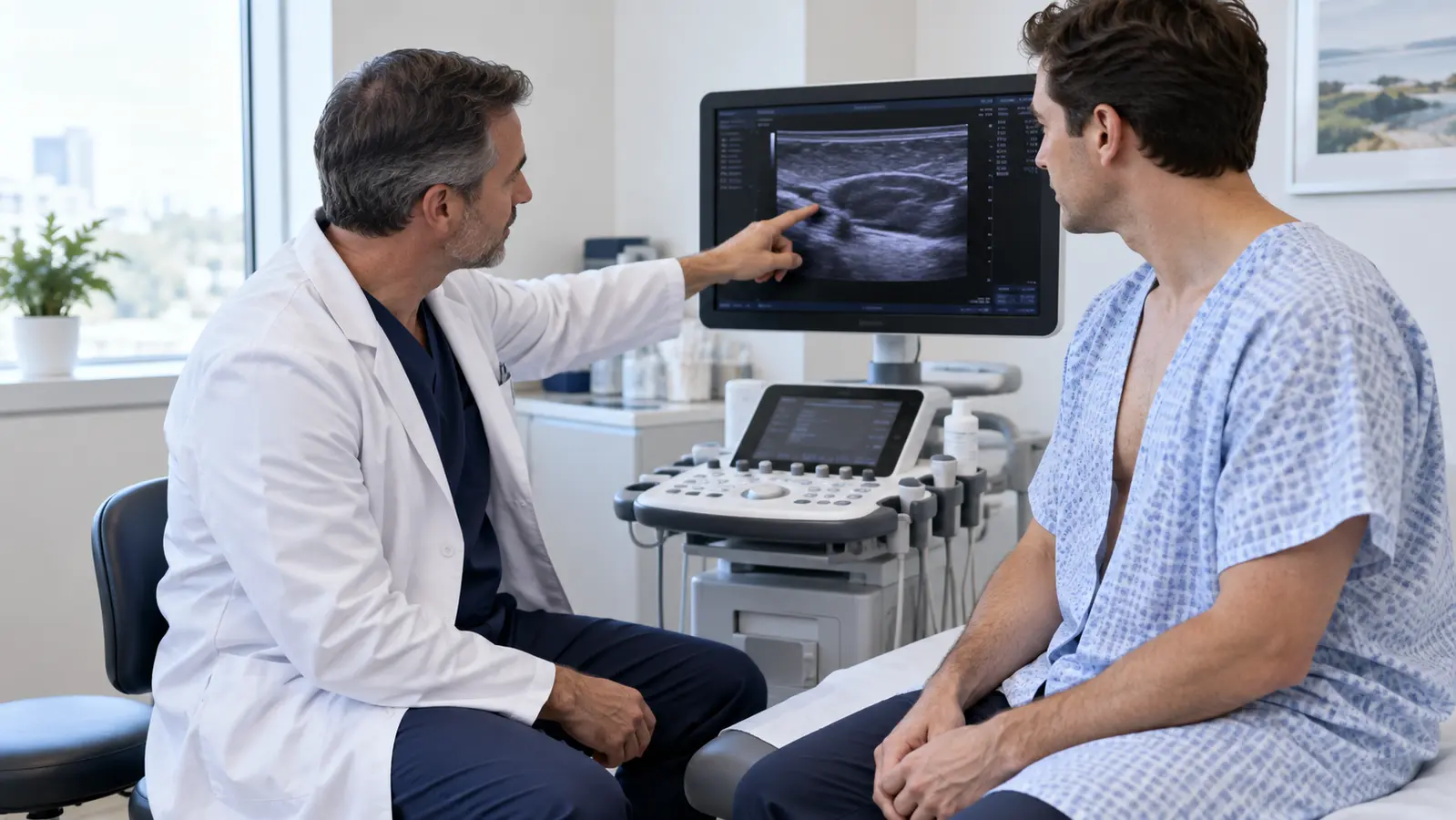
Gynecomastia is characterized by an increase in glandular tissue in the male breast area, whereas pseudogynecomastia is primarily characterized by an increase in adipose tissue. This distinction directly determines the choice of treatment. In our clinic, we do not approach every patient with a one-size-fits-all aesthetic procedure; rather, the structure of the breast tissue, fat-to-gland ratio, skin elasticity, hormonal status, and the individual’s expectations are evaluated together. In addition to clinical examination, we also utilize ultrasound evaluation to further clarify the distinction between true gynecomastia and pseudogynecomastia, observe the distribution of glandular and adipose tissue, and determine the appropriate treatment plan.
Minimally invasive methods can be utilized especially in cases where adipose tissue is predominant, the condition is mild to moderate, and skin excess is limited. Conversely, surgical evaluation is the priority in the presence of prominent glandular tissue, long-standing fibrotic gynecomastia, advanced skin excess, or a suspicious mass.
Personalized Approach for Male Gynecomastia in Bodrum
Gynecomastia evaluation in our clinic does not focus solely on reducing chest circumference. Our goal is to make the male chest contour natural, symmetrical, and harmonious with the individual’s body structure. Therefore, the first step is to differentiate true gynecomastia from pseudogynecomastia and evaluate the underlying cause.
Endolifting / Interstitial Laser
In selected cases where adipose tissue is predominant and the goal is to support skin quality, laser energy delivered through fine fibers can be utilized. The aim is to target local adipose tissue, create controlled tissue heating, and support skin contraction.
Intratissue Lipolytic Applications
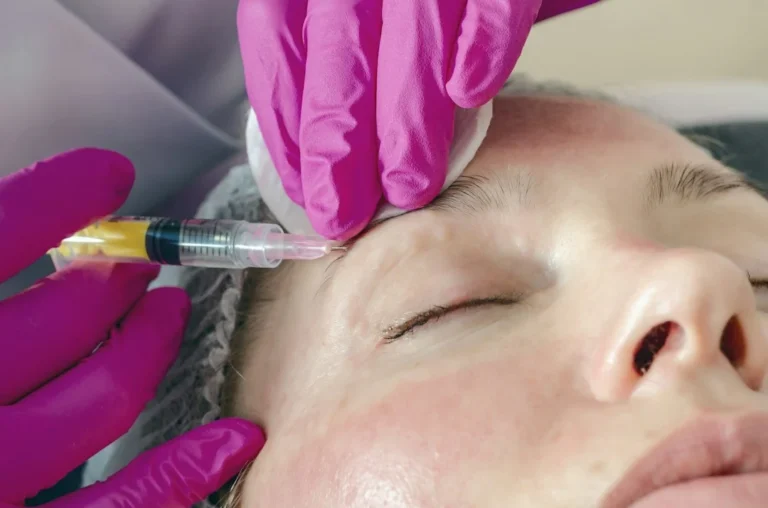
In selected pseudogynecomastia cases, injection-based lipolytic approaches targeting local adipose tissue can be evaluated. These applications may be considered especially for small and localized fat deposits; product content, anatomical area, and safety profile must be thoroughly evaluated by the physician.
Ozone Support Applications
Ozone therapy is not the primary treatment for gynecomastia. In our clinic, it may be evaluated in selected cases as a complementary approach to support local tissue healing, microcirculation, and post-procedure recovery.
How Is Endolifting Used in Gynecomastia?
Laser-assisted lipolysis is being investigated as a minimally invasive option, especially for male chest contour problems where adipose tissue is prominent. In a recent randomized controlled trial conducted with a 1470 nm laser, laser-assisted lipolysis was reported to yield favorable results in terms of patient-reported outcomes and aesthetic results compared to conventional liposuction. However, because the study had a small sample size, these data do not imply that the method replaces surgery in every patient.
In our clinic, we evaluate the Endolifting approach particularly:
- in pseudogynecomastia where adipose tissue is predominant,
- in mild or moderate contour irregularities,
- in cases without significant skin sagging,
- in eligible patients seeking a more minimally invasive method.
We evaluate it in these cases. A surgical opinion may be required in prominent glandular tissue or advanced gynecomastia.
Intratissue Lipolytic Serum Applications
Injection lipolysis is a method aimed at reducing localized adipose tissue. In the literature, local fat reduction in different parts of the body has been reported with deoxycholic acid and phosphatidylcholine/deoxycholate-based applications; there are also a limited number of cases and small series for pseudogynecomastia. However, data in this area are not as robust and standardized as for the submental region.
For this reason, we do not use intratissue lipolytic applications as a method “suitable for every gynecomastia.” We evaluate them not to dissolve glandular breast tissue, but as an adjunctive contouring treatment in selected cases where the adipose component is predominant. Anatomical safety, standardization of the substance to be administered, and post-procedure follow-up are essential.
The Role of Ozone Applications
Ozone therapy is not a primary reduction method in male gynecomastia, and there is no strong direct clinical evidence for this indication. In our clinic, we evaluate the role of ozone from the perspective of post-procedure tissue recovery, local circulation, and regenerative support in patients deemed necessary. The primary contouring treatment is planned via Endolifting or another appropriate method.
Why Is the Difference Between Gynecomastia and Pseudogynecomastia Important?
In true gynecomastia, there is an increase in glandular tissue behind the nipple. In pseudogynecomastia, the primary cause of enlargement is adipose tissue. Although the two conditions may look similar from the outside, their treatments are not the same. Fat-reducing methods do not eliminate glandular tissue.
We do not leave this distinction solely to visual assessment. By supporting the clinical examination with ultrasound evaluation, we assess the ratio of glandular tissue to adipose tissue, the glandular component behind the nipple, and structural features that may affect the treatment plan. This allows for a more accurate determination of whether Endolifting, lipolytic intratissue applications, or another approach is appropriate.
Therefore, during the examination:
- the consistency and distribution of the breast tissue,
- whether it is unilateral or bilateral,
- the presence of disc-shaped glandular tissue behind the nipple,
- excess skin and the degree of sagging,
- weight changes and body fat percentage,
- medications and factors that may affect hormonal balance
are evaluated together.
When Do We Perform Hormonal and Laboratory Evaluation?
In newly developing, rapidly growing, painful, unilateral, distinctly asymmetrical, or unexplained gynecomastia, underlying endocrine or systemic causes should be investigated. Depending on the clinical condition, tests such as testosterone, estradiol, LH, FSH, prolactin, TSH, hCG, and liver-kidney function tests may be requested. In the presence of suspicious physical examination findings, imaging and, if necessary, further evaluation should be performed.
How Do We Evaluate Success in Our Clinic?
In gynecomastia treatment, we do not evaluate success solely by the question “how much did it shrink?” What matters to us is that the male chest contour looks natural, symmetry between both sides is achieved, the sub-nipple transition is smooth, the skin settles evenly on the chest wall, and the patient feels more comfortable in daily life.
We believe a combined approach is important in appropriate patient selection. In patients where adipose tissue is predominant, Endolifting aims for contouring and skin contraction, while local adipose components can be supported with lipolytic intratissue applications in selected areas; ozone can be considered for post-procedure support. We follow up the results through standardized photography, circumferential measurements, physical examination, and patient satisfaction.
Who May Be More Suitable for a Minimally Invasive Approach?
- Pseudogynecomastia or mixed type with a predominant fat component
- Mild to moderate increase in breast volume
- Individuals with sufficient skin elasticity
- Patients with relatively stable body weight
- Individuals with realistic expectations
In Whom May Surgical Evaluation Be More Appropriate?
- Prominent and fibrotic glandular tissue
- Advanced gynecomastia
- Excess and sagging skin
- Long-standing cases that significantly disrupt contour
- Suspicious mass or imaging findings
Frequently Asked Questions
Does Endolifting completely eliminate true gynecomastia?
No. Endolifting specifically targets the fat component and skin contraction. When prominent glandular tissue must be completely removed, surgical excision may be more appropriate.
Do lipolytic serums dissolve glandular tissue?
No. Lipolytic applications target adipose tissue; they are not an excision method for glandular breast tissue.
How many sessions are required?
The number of sessions varies depending on breast volume, fat component, skin elasticity, and the method used. The treatment plan is individualized after the examination.
When are results seen?
Initial contour changes may be noticed early on; however, the resolution of tissue edema and the completion of remodeling can take weeks to months. The final assessment should not be rushed.
Can gynecomastia recur?
If the underlying hormonal, medication, or weight-related cause persists, regrowth may occur. For this reason, it is important not only to perform a local procedure but also to identify the underlying cause.
Medical information: This page is intended for general informational purposes. No procedure should be planned without determining the cause of gynecomastia and the tissue type. Minimally invasive methods are not suitable for every patient; surgical evaluation may be required in cases of prominent glandular tissue.
Scientific References
- Kanakis GA, et al. EAA clinical practice guidelines—gynecomastia evaluation and management. Andrology. 2019. PMID: 31099174.
- Management of gynecomastia in adolescence and adults: SIAMS clinical practice guidelines. 2026. PMID: 42258023.
- Evaluation of Aesthetic Outcomes After Laser-assisted Liposuction for Gynecomastia. Plast Reconstr Surg Glob Open. 2026. PMID: 41710183.
- Thomas MK, et al. Injection Lipolysis: A Systematic Review of Literature and Experience in 1269 Patients. J Cutan Aesthet Surg. 2018. PMID: 30886477.