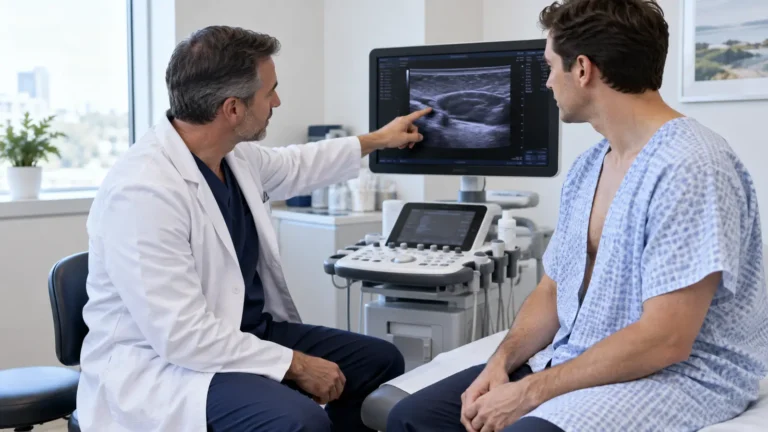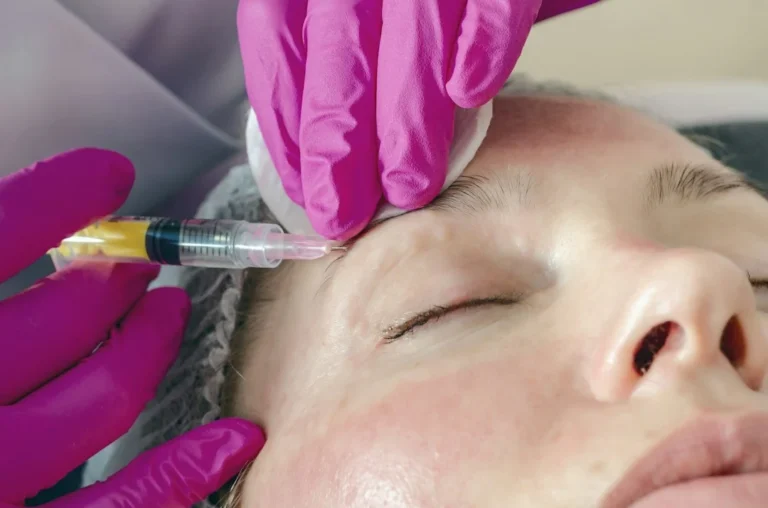
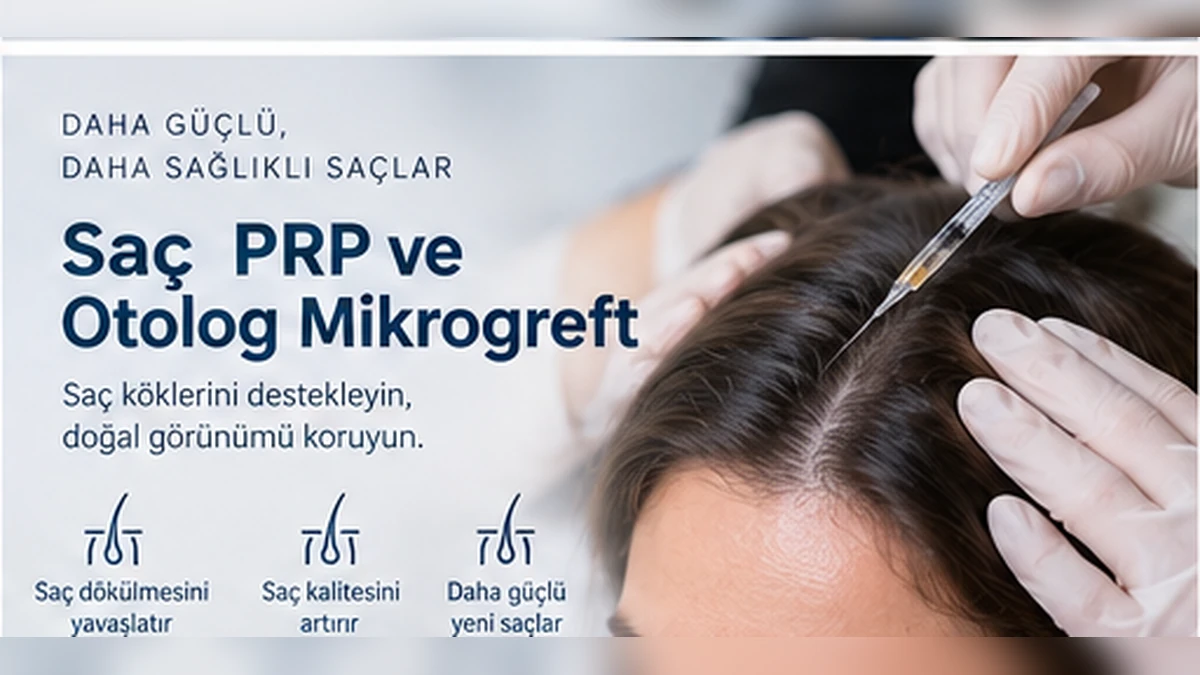
Hair health requires evaluating not only the hair strand itself, but also the hair follicle, the scalp, circulation, inflammatory load, hormonal-metabolic balance, and nutritional status together. In our clinic, we address hair loss and reduced hair quality not through a single procedure, but within a cause-oriented, personalized regenerative plan.
Androgenetic alopecia, telogen effluvium, postpartum hair loss, intense stress, rapid weight loss, iron or vitamin deficiencies, thyroid disorders, hormonal changes, and scalp problems can develop through distinct mechanisms. For this reason, prior to treatment, the type, duration, pattern, and accompanying factors of hair loss are evaluated, supported by laboratory investigations when necessary.
Personalized Hair Health Approach in Bodrum
The goal of our hair health program is not merely to reduce shedding. In eligible patients, the objective is to support the biological microenvironment of the hair follicle, improve scalp quality, preserve the diameter and resilience of existing hair, and strengthen the conditions that support the hair growth cycle.
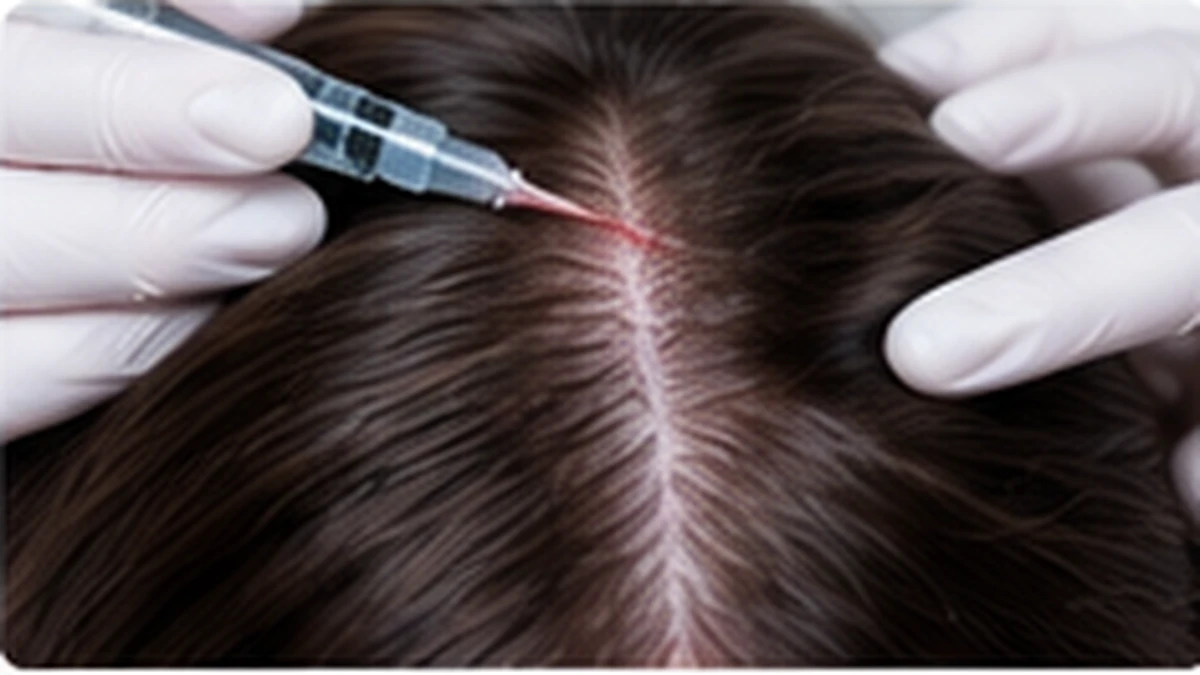

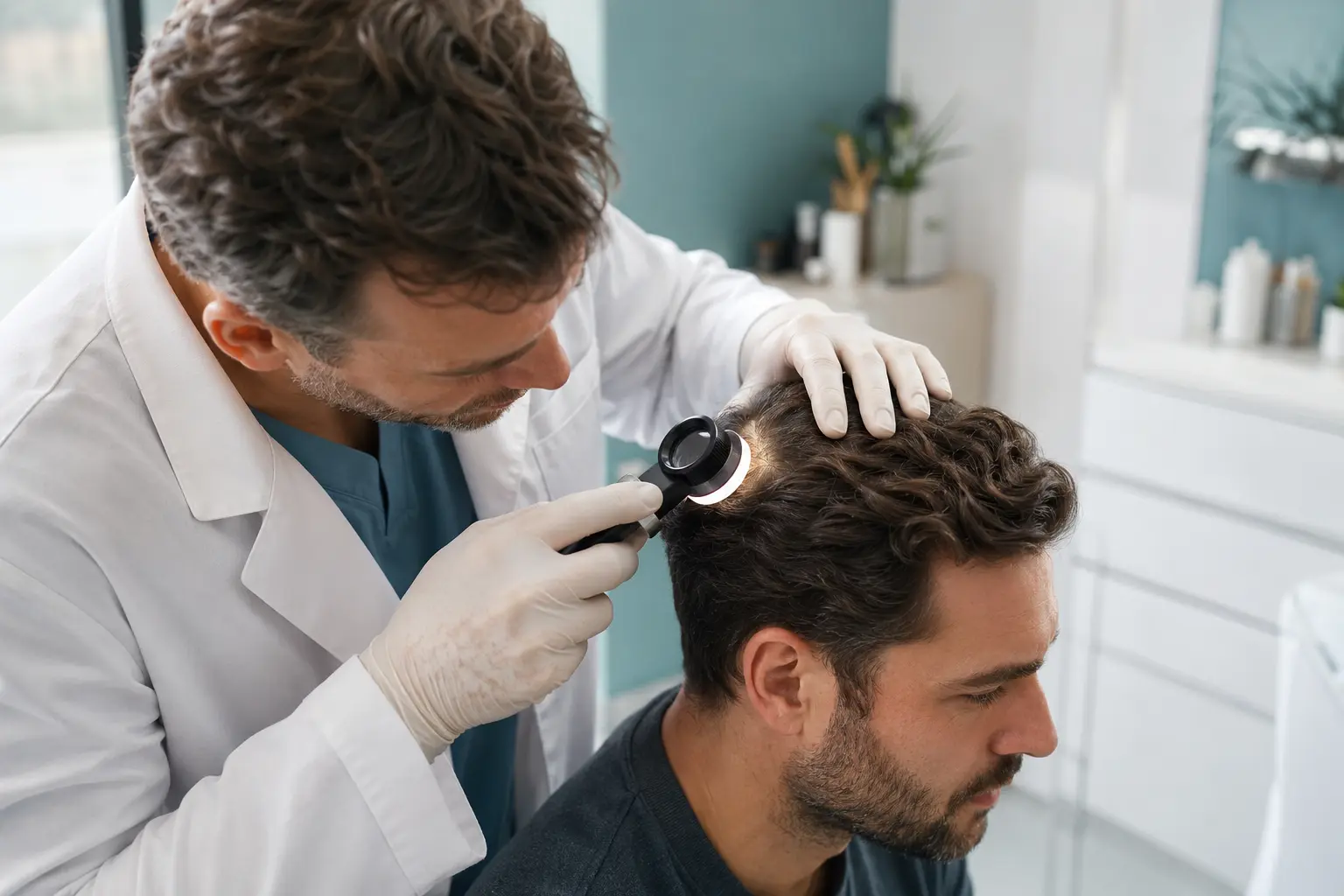

Why a Combination Plan Instead of a Single Method?
The cause of hair loss and the current biological capacity of the follicle vary from person to person. While PRP and Red Light are planned together for some patients, mesotherapy combined with nutritional and metabolic adjustments may take priority in others. The selection of regenerative modalities is made in conjunction with the type of hair loss, its duration, age, scalp findings, family history, medications used, hormonal status, and laboratory results.
What Do We Examine in a Hair Health Evaluation?
- Onset, duration, and pattern of hair loss
- Clinical evaluation regarding androgenetic alopecia, telogen effluvium, and other types of hair loss
- Scalp quality, inflammation, scaling/dandruff, oiliness, and sensitivity
- Ferritin, iron, thyroid functions, vitamin D, B12, folate, and other laboratory parameters deemed necessary
- Nutrition, protein intake, rapid weight loss, and metabolic factors
- Hormonal changes and, in appropriate candidates, relevant endocrine evaluation
- Stress, sleep, chronic illnesses, and medications used
How Is PRP Used in Hair Health?
PRP is prepared from the individual’s own blood and aims to utilize the growth factors contained in platelets. Meta-analyses of randomized trials in androgenetic alopecia have reported increases in hair density; however, preparation protocols and administration schedules are heterogeneous across studies. For this reason, rather than viewing PRP as a standard “single-session solution,” we evaluate it as a regenerative option that may require serial follow-up in appropriate patients.
How Does Red Light Support the Hair Follicle?
Low-level light therapy / photobiomodulation is based on applying low-energy red or near-infrared light to the scalp. A 2024 systematic review and meta-analysis reported significant improvements in hair density, particularly in androgenetic alopecia. Clinical outcomes depend on parameters such as wavelength, light intensity, total energy dose, application duration, and session frequency.
Who Can Be Considered for Mesotherapy?
Mesotherapy allows for local application to the scalp via microinjections. Although systematic reviews report positive results, the ingredients and protocols used are heterogeneous; therefore, it is not accurate to speak of a single standard hair mesotherapy protocol. The content and objective of the procedure should be determined by the physician on an individual basis.
Where Does SVF Stand in Hair Treatment?
Unlike PRP, SVF is an adipose-derived heterogeneous cellular and stromal fraction. Although there are studies in systematic reviews reporting increases in hair density, protocols are not yet standardized, and larger, well-designed clinical trials are needed. For this reason, we position SVF not as a “guaranteed hair regrowth” method, but as one of the advanced regenerative options that can be considered in appropriate patients.
The Role of Ozone Therapy
We do not substitute ozone applications for the primary treatment of hair loss. In selected patients, we consider it a complementary approach to support the local tissue environment of the scalp and post-procedure recovery. The clinical evidence for ozone’s direct effect on hair growth is not as strong as that for PRP or photobiomodulation.
How Is a Treatment Plan Created in Our Clinic?
- Identifying the cause: The type of hair loss and accompanying factors are evaluated.
- Baseline record: When necessary, the baseline condition is documented with standardized photographs and clinical measurements.
- Personalized protocol: Suitable options among mesotherapy, PRP, Red Light, ozone, and selected regenerative therapies are planned.
- Metabolic support: Deficiencies and systemic factors affecting hair biology, if present, are addressed separately.
- Follow-up: Response is monitored through serial photographs, shedding rate, and scalp findings; the protocol is updated when necessary.
Who Can Seek Evaluation?
Individuals experiencing male or female pattern hair loss, hair thinning, heavy shedding, decreased hair quality, hair loss following childbirth or rapid weight loss, or those seeking scalp support before/after hair transplantation or a personalized hair health program may apply for an evaluation.
Frequently Asked Questions
What is the most effective method for hair?
A single method is not the most effective for everyone. Treatment selection varies depending on the cause of hair loss, the condition of the follicles, age, genetics, and accompanying factors.
Can PRP, mesotherapy, and Red Light be administered together?
In appropriate patients, different methods can be combined at different stages of the same treatment plan. The frequency and sequence of the combination are planned on an individualized basis.
When are the results evaluated?
Because the hair growth cycle is slow, the response is evaluated over months, not days. In the early period, shedding amount and scalp quality can be monitored, while in later follow-up, changes in density and hair diameter can be observed.
Are blood tests required for hair loss?
The same panel is not required for every patient. Based on medical history and examination, ferritin-iron status, thyroid, vitamin D, B12, folate, and other metabolic or hormonal parameters may be ordered.
Medical disclaimer: This page is intended for general informational purposes. It is not appropriate to initiate any procedure or supplement without determining the cause of hair loss. A personalized treatment plan is established after an examination and the necessary diagnostic workup.
Scientific References
- Kieling L, et al. Is autologous platelet-rich plasma capable of increasing hair density in patients with androgenic alopecia? Ana Bras Dermatol. 2024;99(6):847-862. PMID: 39013743.
- Low-Level Laser and LED Therapy in Alopecia: A Systematic Review and Meta-Analysis. Dermatol Surg. 2024. PMID: 39404126.
- Gupta AK, et al. Systematic review of mesotherapy: a novel avenue for the treatment of hair loss. J Dermatolog Treat. 2023;34(1):2245084. PMID: 37558233.
- Mantovani GP, et al. Adipose-derived stromal vascular fraction (SVF) for the treatment of androgenic alopecia: a systematic review. Acta Biomed. 2023;94(5):e2023236. PMID: 37850761.