Which data are meaningful?
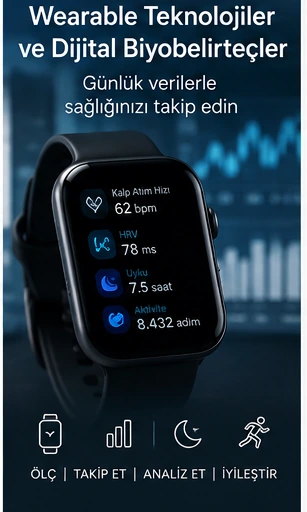
Resting heart rate, daily steps and activity, sleep duration and regularity, HRV trends, exercise intensity, and recovery indicators can be monitored alongside personal health goals. Because algorithms vary among devices, scores from different brands should not be compared directly.
The most important point: trend
A single night’s low sleep score or a single day’s drop in HRV is usually not meaningful on its own. The change over weeks and months relative to an individual’s own baseline is more valuable.
Our approach at our Bodrum clinic
We interpret wearable data together with medical history, sleep, physical activity, blood pressure, metabolic measurements, and clinical tests when necessary. The goal is not to become dependent on the score provided by the device, but to make the physiological impact of behaviors more visible.
HRV guide → · Sleep and healthy aging →
Last medical review: September 13, 2026