What does this score mean?
The Confidence Index does not indicate the treatment’s success rate, but rather editorial confidence in the clinical conclusion that can be drawn from the available data. Study design, sample size, peer-reviewed publication status, direct clinical comparison, and safety data were evaluated together.
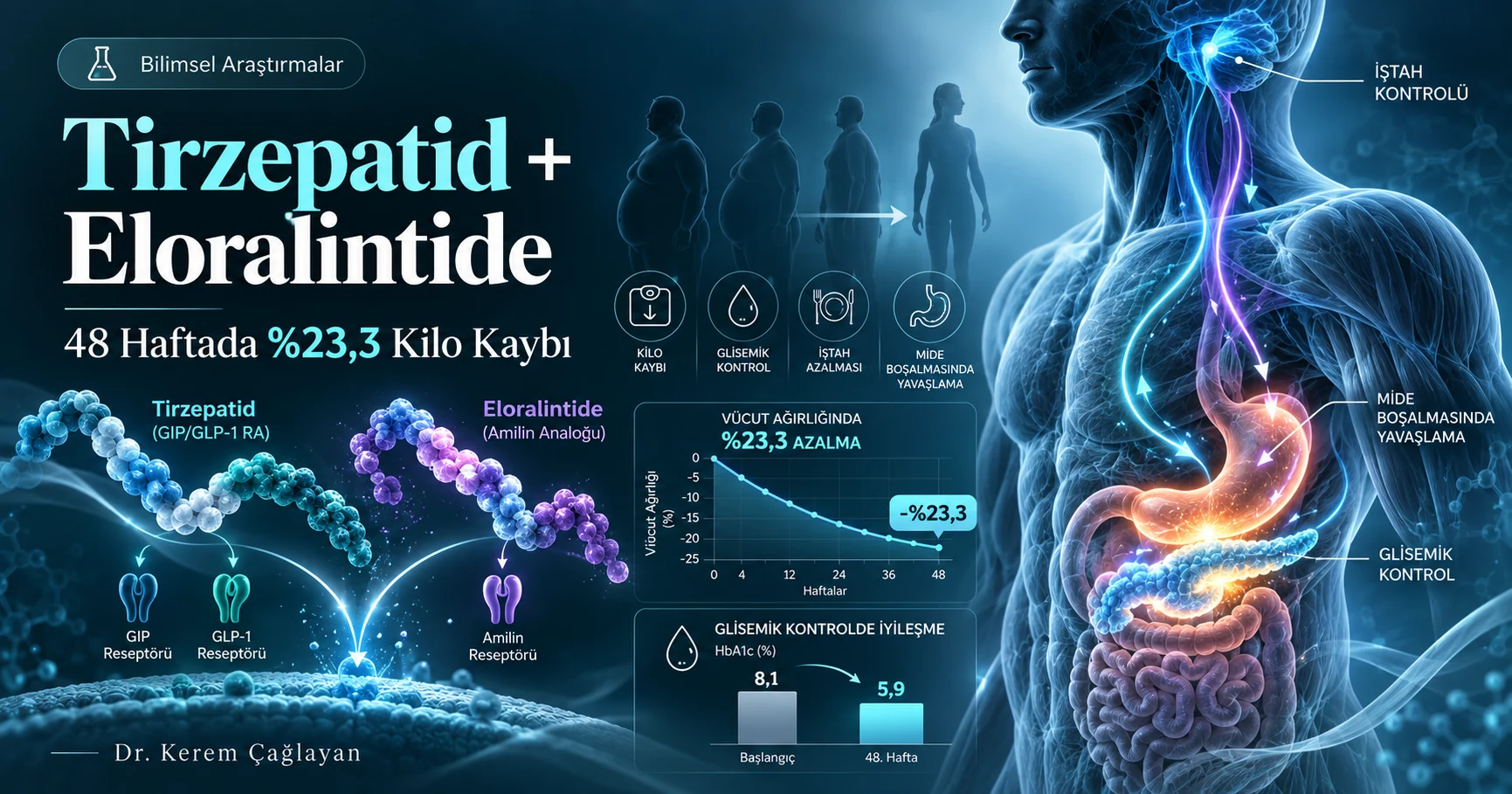
Bottom line: The combination of the amylin receptor agonist eloralintide with the GIP/GLP-1 agonist tirzepatide yielded greater mean weight loss and a larger HbA1c reduction than tirzepatide 15 mg in individuals with obesity and type 2 diabetes; however, tolerability remains the primary concern.
What is EloraTZP?
EloraTZP is an investigational combination utilizing the selective amylin receptor agonist eloralintide together with the GIP/GLP-1 receptor agonist tirzepatide. The objective is to simultaneously target appetite and energy intake via distinct neuroendocrine pathways.
How was the study conducted?
The 48-week phase 2b trial evaluated 367 adults with obesity or overweight alongside type 2 diabetes. Various doses of eloralintide + tirzepatide, eloralintide monotherapy, tirzepatide 15 mg, and placebo arms were compared. Baseline mean body weight was approximately 105 kg, and HbA1c was approximately 8.1%.
Key findings
In the highest-dose combination arm—eloralintide 9 mg + tirzepatide 15 mg—the mean change in body weight at 48 weeks was -23.3%. In the arm receiving tirzepatide 15 mg alone, weight loss was -14.8%. In the same arm, the reduction in HbA1c reached 2.9 percentage points with the combination, compared to 2.4 percentage points in the tirzepatide arm.
Across other combination doses, weight loss ranged from approximately 13.2% to 19.9%. This dose-response profile indicates that efficacy is not merely driven by “adding another drug,” but is also strongly influenced by the specific dose combination utilized.
Tolerability: the fundamental question facing success
The most common adverse events were gastrointestinal and occurred primarily during the dose-escalation phase. Discontinuation rates due to adverse events ranged from 10.8% to 27.0% across the combination arms; in the tirzepatide 15 mg arm, this rate was reported as 2.9%. Consequently, these very high rates of weight loss will gain clinical value if they can be replicated alongside improved tolerability.
Study limitations
Comparisons with tirzepatide represent key secondary endpoints of the study; a phase 2b program does not yet constitute registrational phase 3 evidence. Additionally, top-line results from a corporate announcement do not substitute for the full confidence intervals and detailed subgroup findings provided in a complete peer-reviewed publication.
What does this mean clinically?
The results demonstrate that obesity pharmacotherapy is expanding toward GLP-1/GIP + amylin combinations. Achieving a mean weight loss exceeding 20% in a population with type 2 diabetes is particularly notable, given that individuals with diabetes typically achieve less weight loss in obesity trials compared to participants without diabetes.
Nonetheless, EloraTZP is not a routine therapeutic option today. Phase 3 trials must replicate this efficacy, establish strategies to manage gastrointestinal adverse effects, and demonstrate long-term safety.
Next step
Lilly announced plans to initiate the EloraTZP phase 3 program in the fourth quarter of 2026. Phase 3 will be decisive regarding optimal dosing, treatment persistence, and real-world clinical benefit.
References
Eli Lilly, September 30, 2026. Phase 2b EloraTZP results.
Reuters, September 30, 2026. Experimental Lilly combination drug tops Zepbound in weight-loss trial.
Medical assessment: This content was prepared for the purpose of evaluating scientific research; it is not a personal diagnosis or treatment recommendation. Drugs in the research phase should not be interpreted as licensed treatments. · All Scientific Research