
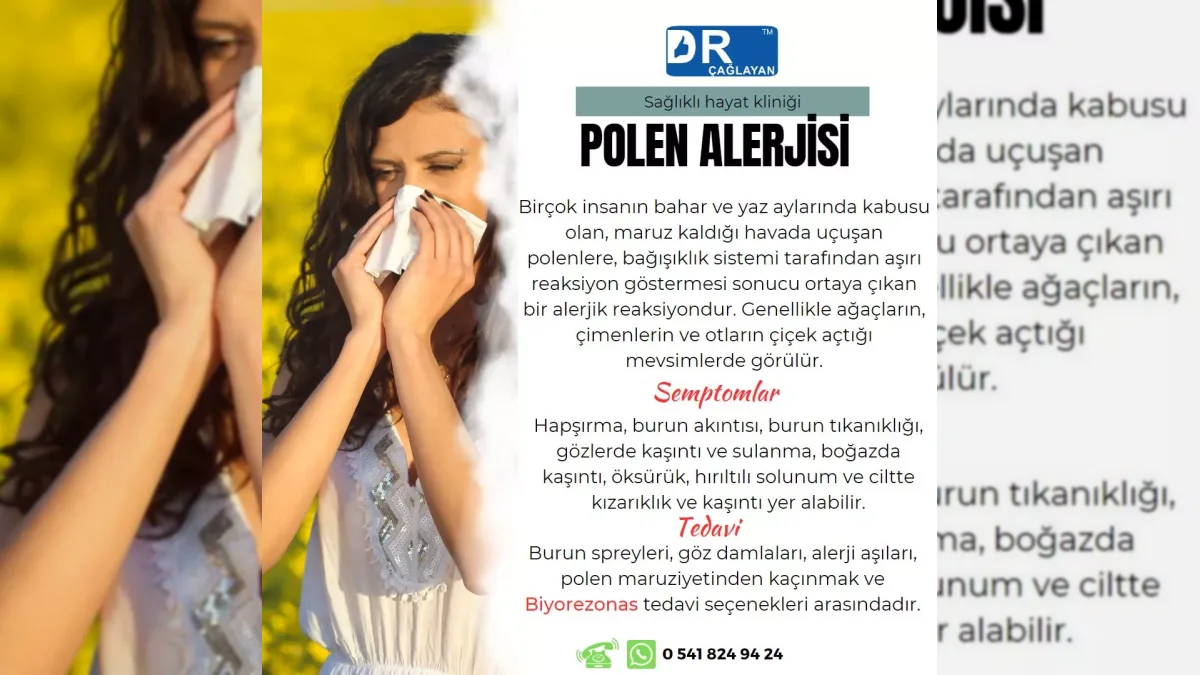
When do symptoms increase?
It varies depending on the pollen type and season. On windy and dry days, the airborne pollen load can increase. The recurrence of symptoms at certain times of the year is an important diagnostic clue.
How is the diagnosis made?
Diagnosis begins with history and physical examination. When it is necessary to clarify which allergen is responsible, skin prick tests or specific IgE tests can be used. Not every nasal congestion is an allergy; infection, nonallergic rhinitis, polyps, or structural causes should also be evaluated.
Evidence-based treatment options
- Reducing exposure: Keeping windows closed on high-pollen days, cleaning face and hair after coming indoors, and appropriate environmental measures can help.
- Nasal irrigation: Saline can reduce the symptom burden in some people.
- Intranasal corticosteroids: They are among the most effective primary options, especially in moderate-to-severe allergic rhinitis.
- Antihistamines: They can reduce sneezing, itching, and runny nose; nasal or oral forms can be used.
- Allergen immunotherapy: In appropriate patients, allergy shots or sublingual tablets for specific allergens can provide long-term control.
About bioresonance
There is insufficient scientific evidence for bioresonance to be used as a diagnostic method in pollen allergy in place of standard skin tests or specific IgE, or to replace proven allergy treatments. If it is to be used, it should be approached as a complementary approach and with the limitations of evidence clearly stated.
When to consult a physician?
If there is wheezing, shortness of breath, nocturnal cough, or respiratory complaints with exercise, an evaluation for asthma is required. In symptoms that are recurrent or significantly impair quality of life, an evaluation by an allergy specialist is beneficial.
Related guides
- Bioresonance allergy test: evidence and limitations
- Ozone in allergy: evidence and clinical approach