What is frozen shoulder?
Frozen shoulder, also termed adhesive capsulitis, is a condition characterized by pain and marked restriction of movement in the shoulder capsule. Particularly external rotation and elevation movements may decrease. The stage of the disease, accompanying diabetes or thyroid disease, and the presence of other shoulder pathologies influence the treatment plan.
How can laser help?
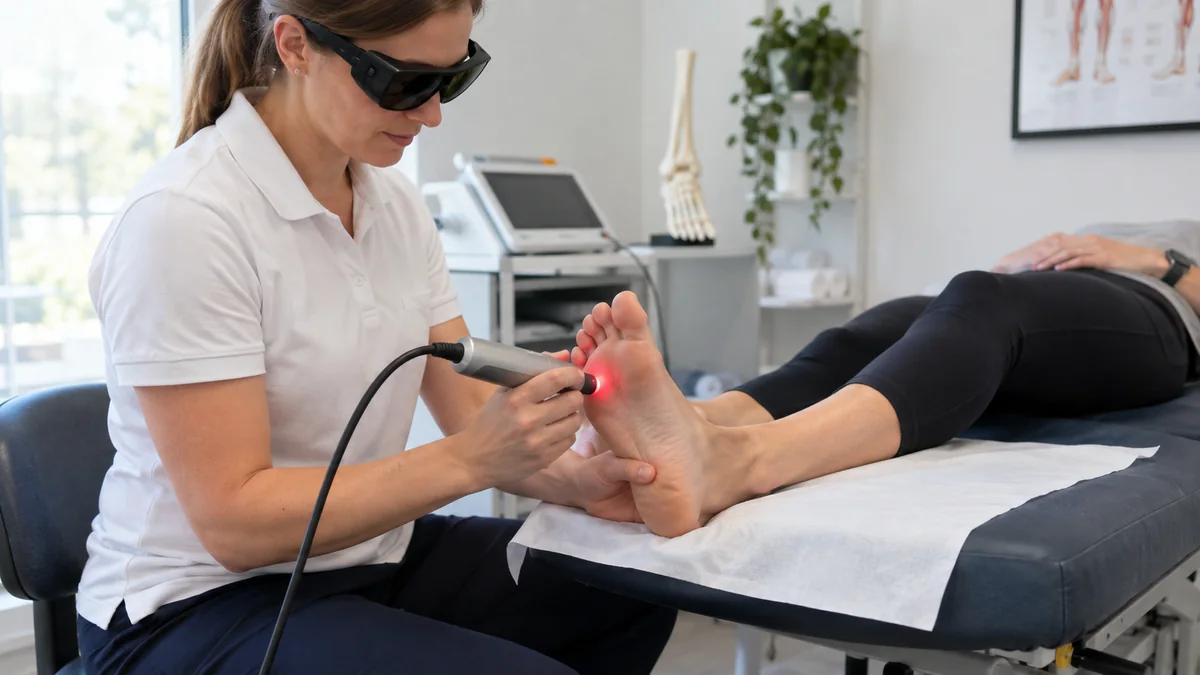
The effects of HILT and photobiomodulation on pain modulation, the local inflammatory response, and tissue metabolism have been investigated. The goal is to reduce pain and make mobilization and exercise more tolerable; it cannot be claimed that capsular restriction resolves with laser alone.
The role of 980 nm
It can be considered the primary wavelength for the muscles, tendons, and periarticular tissues around the shoulder. A significant portion of clinical HILT studies derives from 980 nm or similar NIR wavelengths.
The role of 1470 nm
Because 1470 nm has a more superficial and thermal character, it is not the routine primary wavelength in frozen shoulder; if there is a superficial accompanying target, it can be used selectively while monitoring skin temperature.
What does the scientific evidence say?
Evidence level: A. Data at the systematic review and meta-analysis level exist regarding HILT in frozen shoulder. Although improvements in pain and disability are generally reported, devices, doses, and accompanying rehabilitation protocols differ. Therefore, laser should not be presented as a definitive standalone solution.
Is laser sufficient on its own?
In most cases, no. Depending on the pain stage, gentle movement, capsular mobility in subsequent periods, shoulder girdle strengthening, and gradual increase of daily use are planned. The outcome should be monitored with range of motion and function.
Our approach in our Bodrum clinic
Our approach in our Bodrum clinic is first to clarify the diagnosis of frozen shoulder and the stage of the disease, and then to evaluate the 980 nm laser as an option supporting rehabilitation. 1470 nm is addressed selectively only for superficial targets.
When is a different evaluation required first?
If there is sudden loss of strength following trauma, suspected dislocation, infection, rapidly developing swelling, or neurological signs, the cause should be investigated first.
Frequently asked questions
Does frozen shoulder release with laser?
Laser can support pain and exercise tolerance; the primary gain in range of motion is generally achieved with stage-appropriate mobilization and exercise.
980 nm or 1470 nm?
In frozen shoulder, 980 nm is the more rational primary wavelength. 1470 nm is considered only as an adjunct for selected superficial targets.
References
Disclaimer
This content is for general health information purposes; it is not a personalized diagnostic or treatment recommendation.