
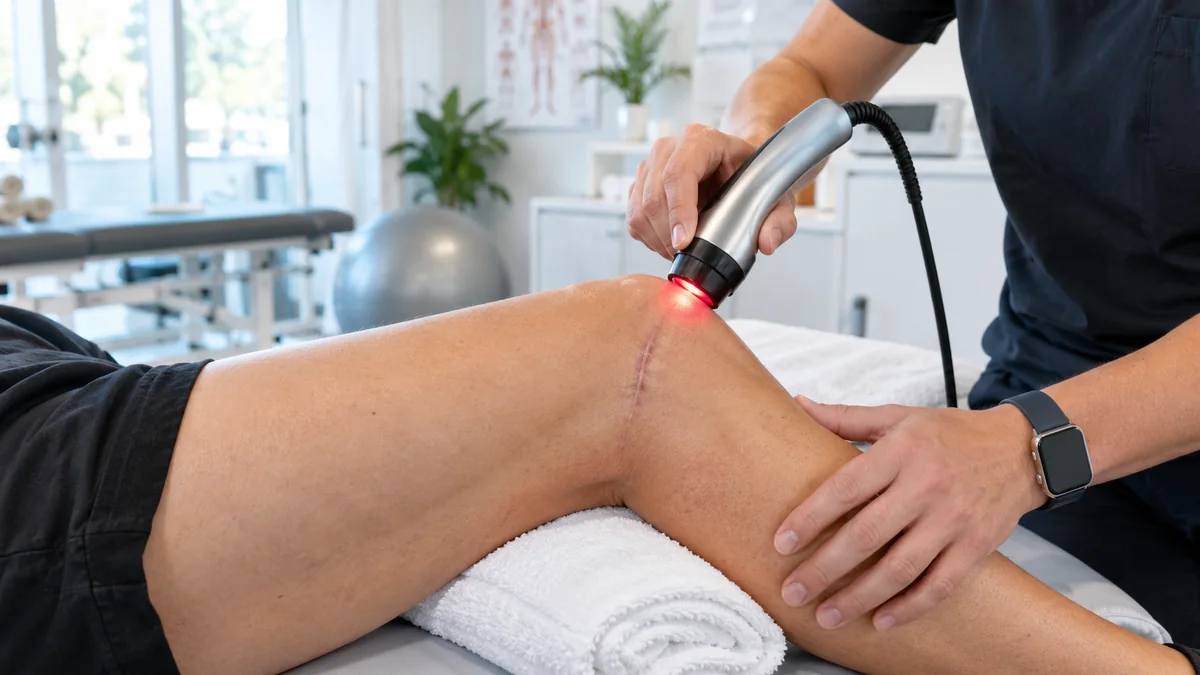
Why does post-scar pain occur?
Superficial nerve branches, fibrotic tissue, adhesions, and local tenderness can contribute to pain. Active infection, seroma, or surgical complications must be ruled out first.
980 and 1470 nm
980 nm is closer to the near-infrared PBM approach, but the wavelengths in scar studies are mostly around 808–830 nm. 1470 nm has a more superficial thermal effect, and there is no direct efficacy data for scar pain.
Scientific evidence
Level of evidence: C. There are clinical studies in the field of scars and postoperative pain; sample sizes are small, protocols are heterogeneous, and they cannot be directly generalized to 980/1470 nm.
Our approach at our Bodrum clinic
First, wound healing, infection, neuroma, and surgical complications are evaluated. In appropriate cases, laser may be added to the scar mobilization and desensitization program.
References
- PMID 42026334 — PBM for burn, hypertrophic and post-surgical scars, scoping review.
- PMID 42456438 — PBM for postoperative pain and wound healing after cesarean section, systematic review.