What is patellar and quadriceps tendinopathy?
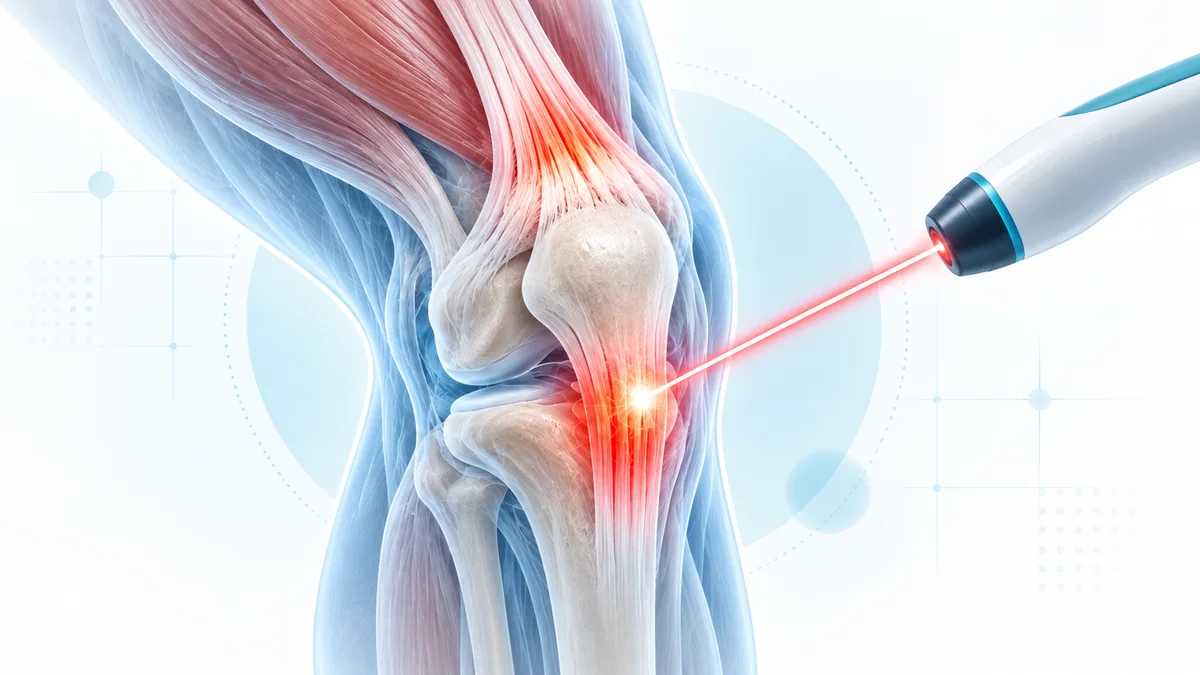
Patellar tendon pain is felt in the tendon region below the kneecap, while quadriceps tendon pain is felt above the kneecap. A rapid increase in sports load, jumping, and repetitive knee extension are common causes.
How can laser help?
The goal is to reduce pain and increase participation in controlled tendon loading. The foundation of tendon rehabilitation is progressive strengthening.
The role of 980 nm
It is the more rational primary wavelength in terms of tendon thickness and depth.
The role of 1470 nm
Because it has a more superficial thermal character, it may be considered selectively only for very superficial insertional targets; there is no direct clinical evidence.
What does the scientific evidence say?
Level of evidence: B-. The general tendinopathy meta-analysis shows results in favor of HILT; however, subgroup data are not sufficient to establish a definitive protocol for the patellar and quadriceps tendons.
Our approach at our Bodrum clinic
At our Bodrum clinic, a differential diagnosis of patellofemoral pain, bursitis, and osteoarthritis is performed for anterior knee tendon pain. Laser is added to load management and tendon strengthening.
When is a different evaluation required?
In the event of a sudden tearing sensation, severe loss of strength in active knee extension, or significant swelling after trauma, tendon rupture must be ruled out.
References
- PMID 41964853 — HILT for tendinopathy, systematic review/meta-analysis.
- PMID 42286680 — HILT for patellofemoral pain; adjacent clinical data in anterior knee pain.
Information
This content is general health information.