What does this score mean?
The Confidence Index is not a treatment success rate, but an editorial methodology score indicating the extent to which the scientific finding evaluated on this page can be relied upon. Study design, risk of bias, sample size, precision, direct applicability, reproducibility, transparency, and clinical relevance are evaluated together.
What did the study investigate?
It investigated whether NK cell function changes in midlife and obesity, and the link between metabolic stress and immune aging.
How was it conducted?
NK cell functions were evaluated in a human cohort of 122 individuals; young/middle-aged mice and a high-fat diet model were added to this.
What was found?
A decrease in NK cell response was observed in middle-aged men; in mouse models, age and diet-induced obesity were associated with similar functional impairments.
Limitations of the study
The human component is observational and some functional sub-analyses have small sample sizes; advanced mechanistic experiments rely predominantly on male mice.
What does it mean clinically?
The data suggest that midlife obesity should be investigated not only metabolically but also in terms of immune surveillance; it does not show that a specific treatment reduces the risk of infection or cancer.
What do we not know yet?
The extent to which weight loss or specific lifestyle interventions restore NK function, and whether this translates into clinical outcomes, remains unclear.
Source
Full citations and links to sources are preserved in the detailed evaluation section of this page.
Written and medically reviewed by: Dr. Kerem Çağlayan · Weight management and metabolic health · All Scientific Research
Detailed evaluation
Research evaluation · September 18, 2026
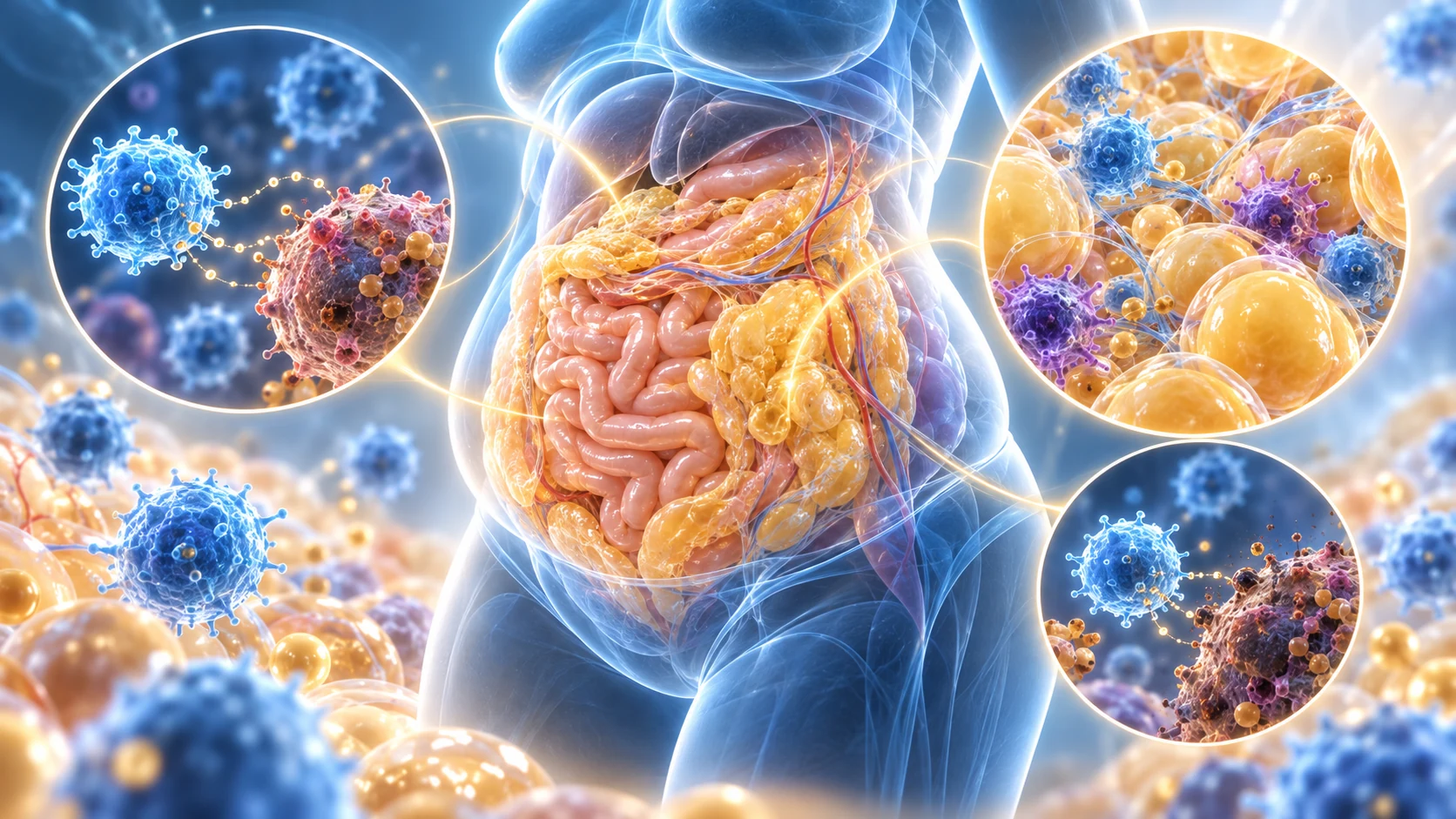
The study titled “Natural Killer Cell Dysfunction Is Emerging During Midlife Obesity,” published in Aging Cell, indicates that increased adiposity in midlife should be evaluated not only through glucose and lipid metabolism, but also through the immune surveillance capacity of natural killer (NK) cells.
How was the study conducted?
Researchers evaluated the degranulation marker CD107a and IFN-γ production in NK cells obtained from young (ages 18–40) and middle-aged (ages 41–65) healthy adults. Although the total human cohort consisted of 122 individuals, the sample size was smaller in functional sub-experiments. In addition to the human data, young and middle-aged male mice, as well as young mice fed a high-fat diet for 16 weeks, were used.
Key findings
In NK cells from middle-aged male donors, CD107a response and IFN-γ production were lower compared to young men. The same pattern was not evident in women. In middle-aged mice, an increase in white adipose tissue and a decrease in energy expenditure were accompanied by a reduction in NK cell count/maturation. In young mice, obesity induced solely by a high-fat diet also impaired NK cell function.
Why is it important in terms of longevity?
NK cells are cytotoxic lymphocytes involved in the recognition of virus-infected cells and certain tumor cells. Therefore, the suppression of NK function by visceral adiposity and chronic metabolic stress provides a mechanistic rationale for considering midlife obesity not only from the perspective of insulin resistance and dyslipidemia, but also from the perspective of immune surveillance.
Limitations
The human part is observational; the sample size of the functional sub-analyses is small. The advanced mechanistic section was conducted predominantly in male mice. The study does not demonstrate that weight loss improves NK function or that any treatment reduces infection/cancer risk.
Quality of evidence
Human observational data + strong preclinical mechanistic support. It is not evidence of a clinical treatment outcome.
Source
- Biao R, Wang X, Fu J, et al. Natural Killer Cell Dysfunction Is Emerging During Midlife Obesity. Aging Cell. 2026;25(9):e70707.
This content is a scientific literature evaluation and is not a substitute for individual diagnosis or treatment recommendations.