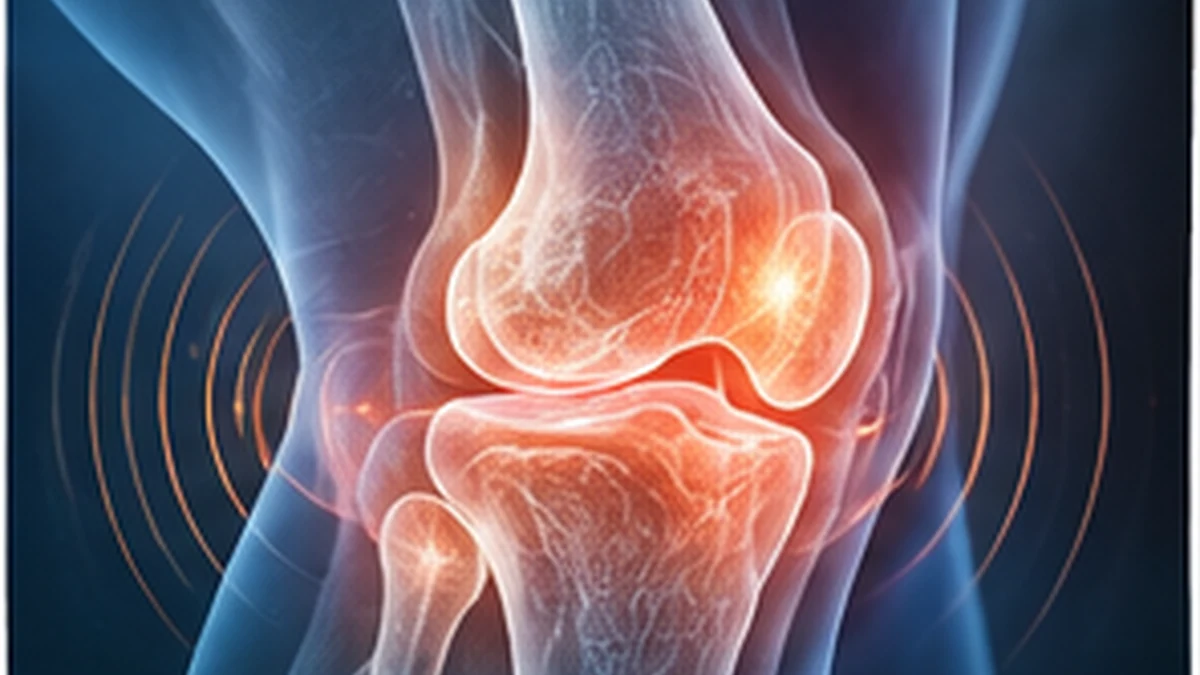
What is gonarthrosis?
Gonarthrosis is osteoarthritis of the knee joint. Articular cartilage, subchondral bone, synovium, muscle strength, and biomechanical loading can all be affected. Pain usually increases with weight-bearing; stiffness, limited range of motion, effusion, and loss of function may accompany it.
How was the 75-patient study designed?
In the study, 75 patients with radiologically confirmed stage I-III knee osteoarthritis were divided into two groups. Forty patients in the first group received standard combined therapy including nonsteroidal anti-inflammatory drugs, therapies aimed at supporting trophic processes, and physical therapy. Thirty-five patients in the second group received bioresonance in addition to the same standard therapy.
The treatment duration was 5-6 weeks. Assessments were performed before treatment, at week 3, at weeks 5-6, and at month 12 using clinical, laboratory, arthrological, and ultrasonographic parameters.
What results were reported?
The researchers reported an overall treatment response of 57.5% in the standard group and 94% in the bioresonance-added group. Higher regression rates in synovitis and tendinitis findings were also reported in the adjunctive bioresonance group. Results favoring the second group were also reported regarding the long-term course of pain at rest.
How should these results be interpreted?
That the study included long-term follow-up and examined arthrosonographic findings rather than just pain scores is valuable. However, the study was published in 2000; details regarding the randomization method, blinding, standardized scales such as modern WOMAC/KOOS, and current conservative treatment protocols are limited. Therefore, the results suggest that bioresonance may be a complementary approach worth investigating in gonarthrosis; they should not be considered sufficient on their own to change modern treatment standards.
Primary treatment approach in knee osteoarthritis
Weight management, strengthening and aerobic exercise, activity modification, appropriate analgesic/anti-inflammatory therapy, physical therapy, and, in selected patients, injection or surgical options are evaluated according to the patient’s stage. If bioresonance is used, it can be integrated into this plan with goals focused on pain, effusion, and function.
In whom can it be considered as complementary?
It may be considered in selected patients who are continuing conservative treatment, are able to monitor pain and function goals regularly, and are seeking a noninvasive adjunctive approach. In the presence of acute locking, severe instability, trauma, suspected infection, or advanced structural deformity, the priority is standard orthopedic evaluation.
Our approach at our Bodrum clinic
In knee pain, we do not look only at radiography; we evaluate the pain pattern, effusion, muscle strength, weight, walking capacity, and, when necessary, ultrasound/MRI findings together. If bioresonance is preferred, it can be added to the multimodal plan with measurable goals such as pain score, stair-climbing/walking tolerance, and function.
Pain Treatment → | Bioresonance →
References
- Maiko OYu, Gogoleva EF. Outpatient bioresonance treatment of gonarthrosis. Ter Arkh. 2000;72(12):50-53. PMID: 11201834. PubMed
Written and medically reviewed by: Dr. Kerem Çağlayan
Last medical review: September 11, 2026