What does this score mean?
The Confidence Index does not indicate the success rate of the treatment, but rather the editorial confidence in the clinical conclusion that can be drawn from the available data. Study design, sample size, peer-reviewed publication status, direct clinical comparison, and safety data were evaluated together.
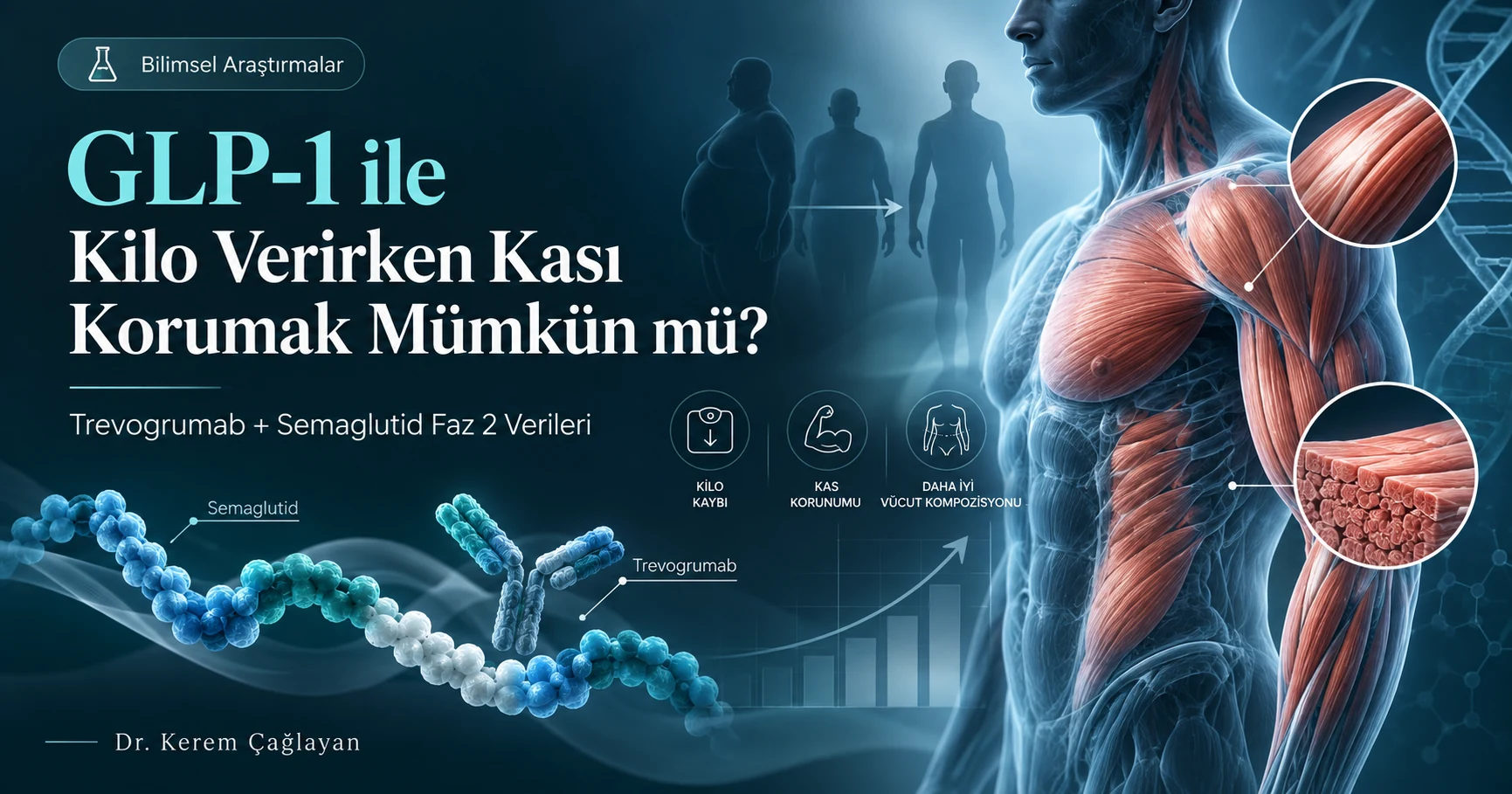
Brief conclusion: Adding trevogrumab, which targets the myostatin pathway, to semaglutide significantly reduced lean mass loss during weight loss. This highlights the concept of “quality of weight loss” in obesity treatment rather than merely the loss of kilograms.
What did the study investigate?
In GLP-1-based obesity treatments, some lean mass may also be lost while total body weight decreases. Regeneron’s phase 2 program evaluated whether adding trevogrumab, a monoclonal antibody that blocks myostatin signaling, to semaglutide could reduce this loss.
How was it done?
Approximately 1,000 adults with obesity were enrolled in the study. Participants were divided into arms receiving semaglutide alone or in combination with different doses of trevogrumab. One arm also included garetosmab, which targets the activin A pathway. Body composition and particularly lean mass change were evaluated over a 26-week period; the treatment program also included longer follow-up.
What was found?
While an approximately 6.7% reduction in lean mass was observed at 26 weeks in those receiving semaglutide alone, the reduction was approximately 3.3% in the group with weekly 75 mg trevogrumab added. According to the analysis presented by the company, this dose prevented approximately half of the muscle/lean mass loss expected with semaglutide. In thigh muscle measurements, the preservation rate was reported to be over 70%.
This finding is important because the goal of weight loss treatment is not merely reducing the number on the scale. Preserving lean mass can be critical for functional outcomes, especially in individuals with advanced age, low baseline muscle mass, protein inadequacy, or physical inactivity.
Why is safety particularly important?
The reporting of more adverse events and two deaths in the trevogrumab + garetosmab + semaglutide triplet arm is an important safety signal. It was reported that development of this triplet approach was not continued. Therefore, the finding that “muscle was better preserved” does not mean that all combinations of the program are safe.
Limitations of the study
A significant portion of the results is based on data presented at a congress and disclosed by the company; all methodological details and subgroup analyses are not yet equally accessible at the level of a full peer-reviewed article. Furthermore, lean mass and actual muscle function are not the same thing. Handgrip strength, gait speed, physical performance, fall risk, and long-term clinical outcomes must be evaluated separately.
What does it mean clinically?
This study makes a new target visible in obesity pharmacotherapy: preserving skeletal muscle as much as possible while increasing fat loss. Resistance exercise, adequate protein intake, and, when necessary, body composition monitoring remain the cornerstone approaches today, especially in GLP-1 users at risk for sarcopenia or frailty. Trevogrumab, on the other hand, is in the investigational stage and is not approved for routine clinical use.
What do we not know yet?
We do not know whether muscle preservation improves long-term physical capacity, post-treatment weight maintenance, metabolic health, or outcomes such as fractures/falls. The benefit–risk balance must be tested separately in older and sarcopenic individuals.
References
Reuters, September 30, 2026. Regeneron drug halves muscle loss in combination with Novo’s semaglutide in trial.
Medical evaluation: This content has been prepared for the purpose of evaluating scientific research; it is not personal diagnostic or treatment advice. Investigational drugs should not be interpreted as licensed treatments. · All Scientific Research