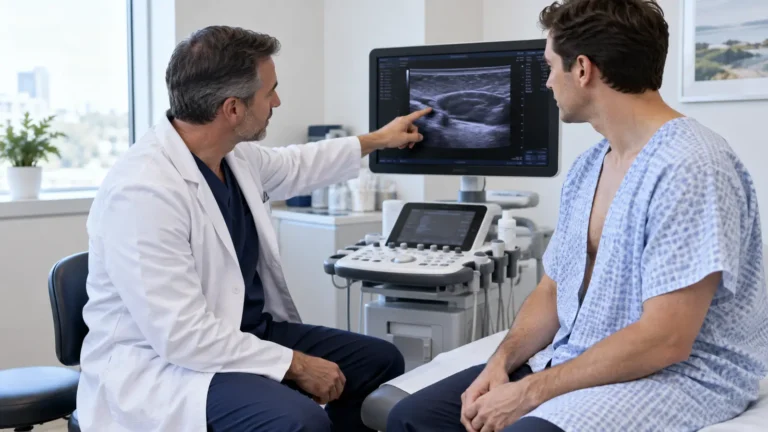

What does Deep Analysis mean?
In our clinic, “Deep Analysis” refers to the combined evaluation of medical history, lifestyle, current medications and supplements, physical examination, bioimpedance, bioresonance data, and, when necessary, laboratory/imaging methods, rather than merely a list of results from a single device.
What does bioelectrical impedance analysis provide?
BIA provides information about total body water and estimated body composition by utilizing the body’s electrical impedance. Under appropriate device and standard measurement conditions, parameters such as fat mass, fat-free mass, segmental distribution, and in some systems, phase angle can be useful in serial follow-up.
How are extensive device libraries interpreted?
Some bioresonance systems contain extensive frequency/program libraries associated with thousands of disease, pathogen, toxin, or organ headings. This scope demonstrates the device’s technical database and evaluation options. In our clinic, we interpret a frequency match not as a standalone disease diagnosis, but as a layer of clues that can be evaluated alongside the individual’s history and current clinical data.
Energy, meridian, and organ stress indicators
In-device indices such as “energy,” “meridian,” “organ stress,” or similar are measurement systems distinct from conventional laboratory biomarkers. The results can be examined alongside the individual’s symptoms, lifestyle, and other findings. If a clinically significant suspicion arises, the matter is clarified through relevant laboratory, imaging, or specialist evaluation.
Factors affecting measurement quality
- hydration and edema,
- recent food or fluid consumption,
- exercise and sweating,
- measurement position and electrode placement,
- skin and ambient temperature,
- device and the algorithm used.
Therefore, it is important to use conditions that are as similar as possible in serial measurements.
Our approach at our Bodrum clinic
We distinguish what each device measures and which results are direct clinical measurements and which are complementary layers of interpretation. The goal is not to produce a large number of results; it is to select data that is meaningful in terms of the individual’s health goals, verify it when necessary, and create a trackable plan.