What does this score mean?
The Confidence Index does not indicate the success rate of a treatment, but rather the editorial confidence in the clinical conclusion that can be drawn from the available data. Human data, study design, mechanistic validation, peer-reviewed publication, and clinical endpoints are evaluated together.
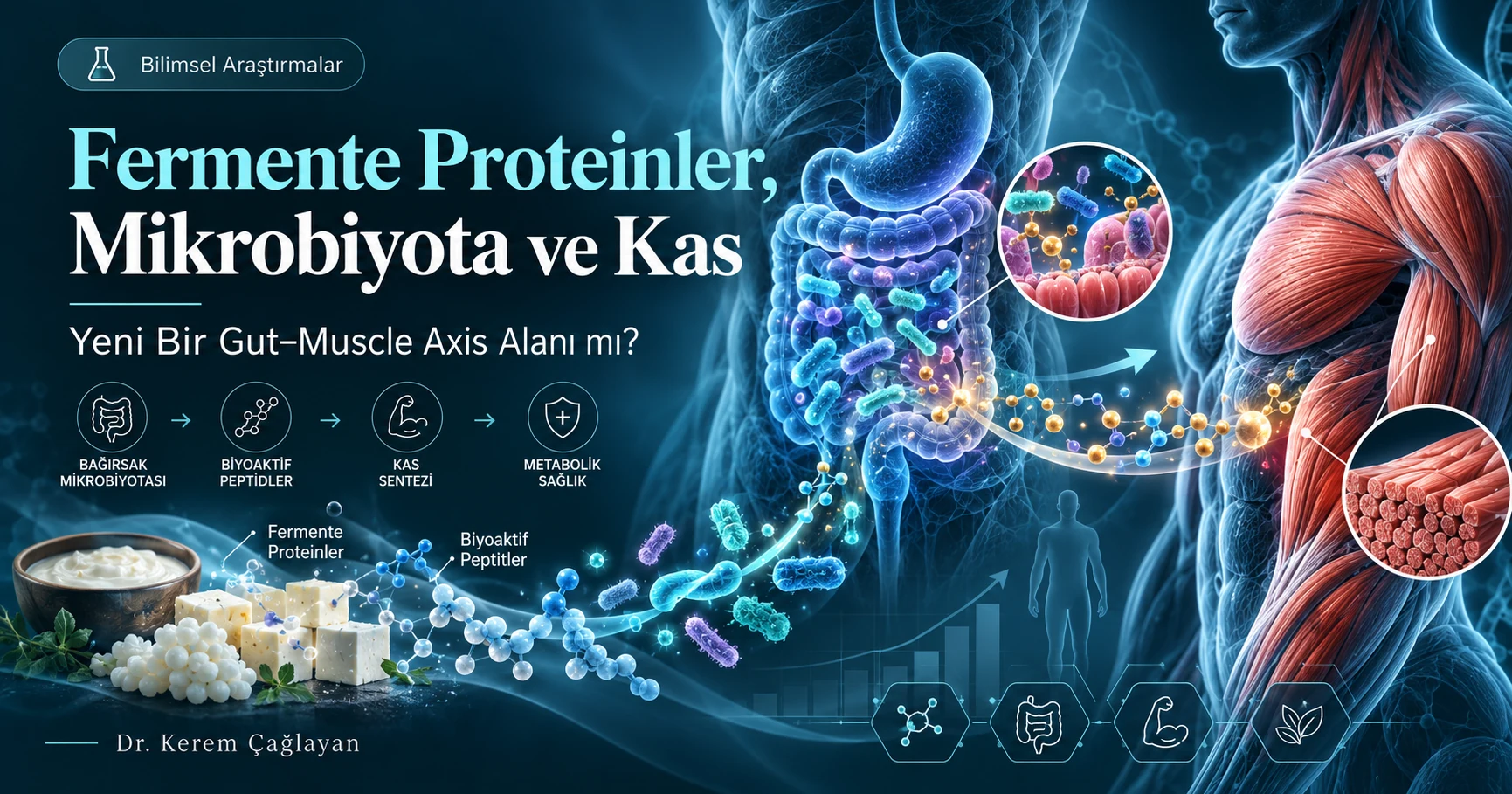
Brief conclusion: Fermented protein foods can affect muscle metabolism through protein digestibility, bioactive peptides, microbial metabolites, and the gut barrier. However, it cannot be said today that a specific fermented protein product treats sarcopenia.
What is the gut–muscle axis?
The gut–muscle axis describes the bidirectional communication between the gut microbiota and skeletal muscle via metabolites, inflammation, endocrine signals, and nutrient availability. Aging, physical inactivity, and metabolic diseases can affect both sides of this axis.
Why might fermented protein foods be different?
During fermentation, protein structures may partially break down, certain antinutritional factors may decrease, bioactive peptides and organic acids may form, and the microbial composition of the food may change. Therefore, a fermented protein matrix may behave physiologically differently from the non-fermented form of the same protein.
Prominent mechanisms
The Communications Biology review highlights four main mechanistic areas: microbial metabolite production (especially short-chain fatty acids), regulation of the gut barrier and systemic inflammation, endocrine/metabolic signaling, and changes in protein digestion–amino acid bioavailability.
These signals can converge in the muscle cell on energy-sensing and protein synthesis pathways such as PI3K/Akt, AMPK, and mTORC1. This biological framework provides a plausible mechanism for how fermented proteins might contribute to muscle adaptation.
How strong is the human data?
In human studies, some positive signals have been reported, such as metabolic regulation, inflammatory markers, gut microbial ecology, grip strength, balance, or post-exercise recovery. However, results directly regarding muscle protein synthesis, long-term muscle mass, and objective function are scarce and heterogeneous.
The review’s most important caveat
Fermented protein foods are not a single intervention. Yogurt, kefir, fermented milk, soy, or legume-based products vary widely in terms of microorganism species, fermentation time, protein content, and bioactive metabolites. Therefore, a single “fermented protein” outcome cannot be generalized to all products.
Can it be used in the treatment of sarcopenia?
As of today, there are not enough randomized controlled trials to recommend a specific fermented protein product as a treatment for sarcopenia. The strongest clinical approach for sarcopenia remains adequate protein/energy intake, resistance exercise, and the management of underlying conditions.
Why is it important for longevity?
Preserving muscle mass and function with age is critical for metabolic flexibility and independent living. If the contribution of microbiota modulation to this area is confirmed, the food matrix and fermentation format may become more important in future personalized nutrition strategies.
What should future studies measure?
Well-designed research should combine direct muscle protein synthesis, muscle mass via DEXA/MRI, dynamometry and physical performance, microbiome metagenomics, metabolomics, and standardized product characterization within the same protocol.
References
Farsi DN, Cotter PD, O’Sullivan O. Fermented protein foods as modulators of the gut-muscle axis: mechanisms, evidence, and future directions. Communications Biology. 2026;9:1252. DOI: 10.1038/s42003-026-10941-2.
Medical evaluation: This content has been prepared for the purpose of evaluating scientific research; it is not personal diagnosis or treatment advice. Preclinical and experimental findings should not be interpreted as clinical treatment efficacy. · All Scientific Research