What causes autism?
Current scientific evidence does not identify a single cause for ASD. Factors such as family history, certain genetic or chromosomal conditions, certain factors related to pregnancy and birth, and parental age may be associated with risk. These associations alone do not explain the cause of autism in an individual.
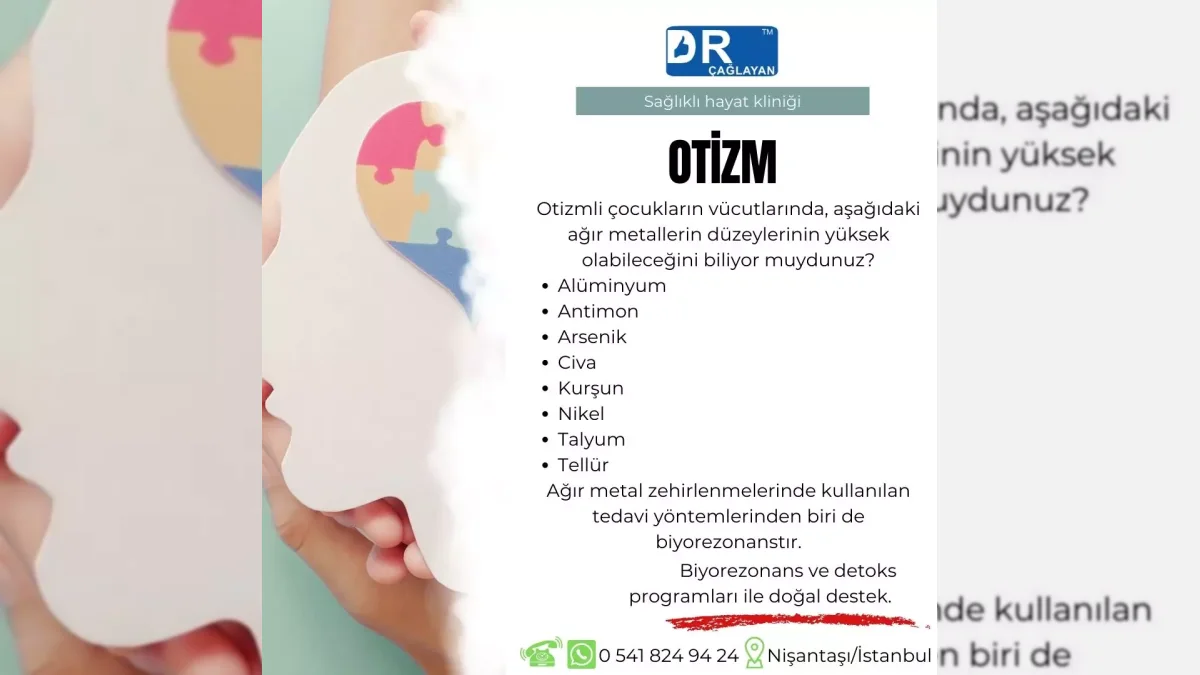
Heavy metals and autism
Autism is not diagnosed by measuring heavy metals. Hair analysis, broad “toxin panels,” or metal screenings performed without clinical suspicion are not a standard part of ASD diagnosis. If there is an actual history or clinical finding indicating lead or another toxic exposure, a physician may order validated laboratory tests for the relevant metal.
Chelation is not a treatment for autism unless heavy metal poisoning is confirmed. Unnecessary chelation can cause serious mineral imbalances, kidney problems, and other complications.
What does evidence-based support include?
The support plan varies according to the person’s age, communication level, learning profile, and daily functioning. When needed, developmental and behavioral approaches, speech-language therapy, occupational therapy, educational support, sleep and nutrition assessment, and medical management of co-occurring attention problems, anxiety, epilepsy, or gastrointestinal complaints may be addressed together.
Is there a role for bioresonance?
There is insufficient reliable clinical evidence that bioresonance diagnoses autism, removes heavy metals from the body, or treats the core symptoms of ASD. Therefore, it should not be used in place of standard developmental assessment and evidence-based support.
Our approach at our Bodrum clinic
For autistic children and adults, the goal is not to “eliminate autism,” but to scientifically and safely evaluate associated areas such as sleep, nutrition, pain, bowel complaints, attention, sensory problems, and daily functioning. If toxic exposure is suspected, we investigate it using appropriate laboratory methods; we avoid unnecessary testing and treatment.