
What does this score mean?
The Trust Index is not a treatment success rate, but an editorial methodology score indicating to what extent the scientific finding evaluated on this page can be trusted. Study design, risk of bias, sample, precision, direct applicability, reproducibility, transparency, and clinical relevance are evaluated together.
What did the study investigate?
It evaluated the clinical use of apitegromab targeting the myostatin pathway in SMA and the significance of the approach directly targeting muscle tissue.
How was it done?
The FDA’s September 11, 2026 approval and the clinical program forming the basis for the approval were evaluated together; the indication covers SMA patients aged 2 years and older currently receiving SMN2-targeted therapy.
What was found?
Apitegromab received regulatory approval for SMA. Targeting the myostatin pathway that limits muscle growth represents a novel approach that directly supports muscle function.
Limitations of the study
The clinical evidence obtained for SMA cannot be directly generalized to muscle preservation during obesity or GLP-1 therapy; this use remains in the investigational stage.
What does it mean clinically?
In terms of SMA, the evidence is strong and regulatorily confirmed; in terms of lean mass preservation during weight loss, it should be evaluated solely as an investigational hypothesis.
What do we not know yet?
Muscle preservation in obesity treatments, long-term safety, and which populations may benefit have not yet been clarified through clinical trials.
Source
The full citation and links of the sources are preserved in the detailed evaluation section of this page.
Written and medically reviewed by: Dr. Kerem Çağlayan · All Scientific Research
Detailed evaluation
Regulatory and clinical research evaluation · September 18, 2026
On September 11, 2026, the US FDA approved Isembyld (apitegromab-mstn) injection for the treatment of spinal muscular atrophy (SMA). The indication covers pediatric and adult patients aged 2 years and older currently receiving SMN2-targeted therapy.
Why a different approach?
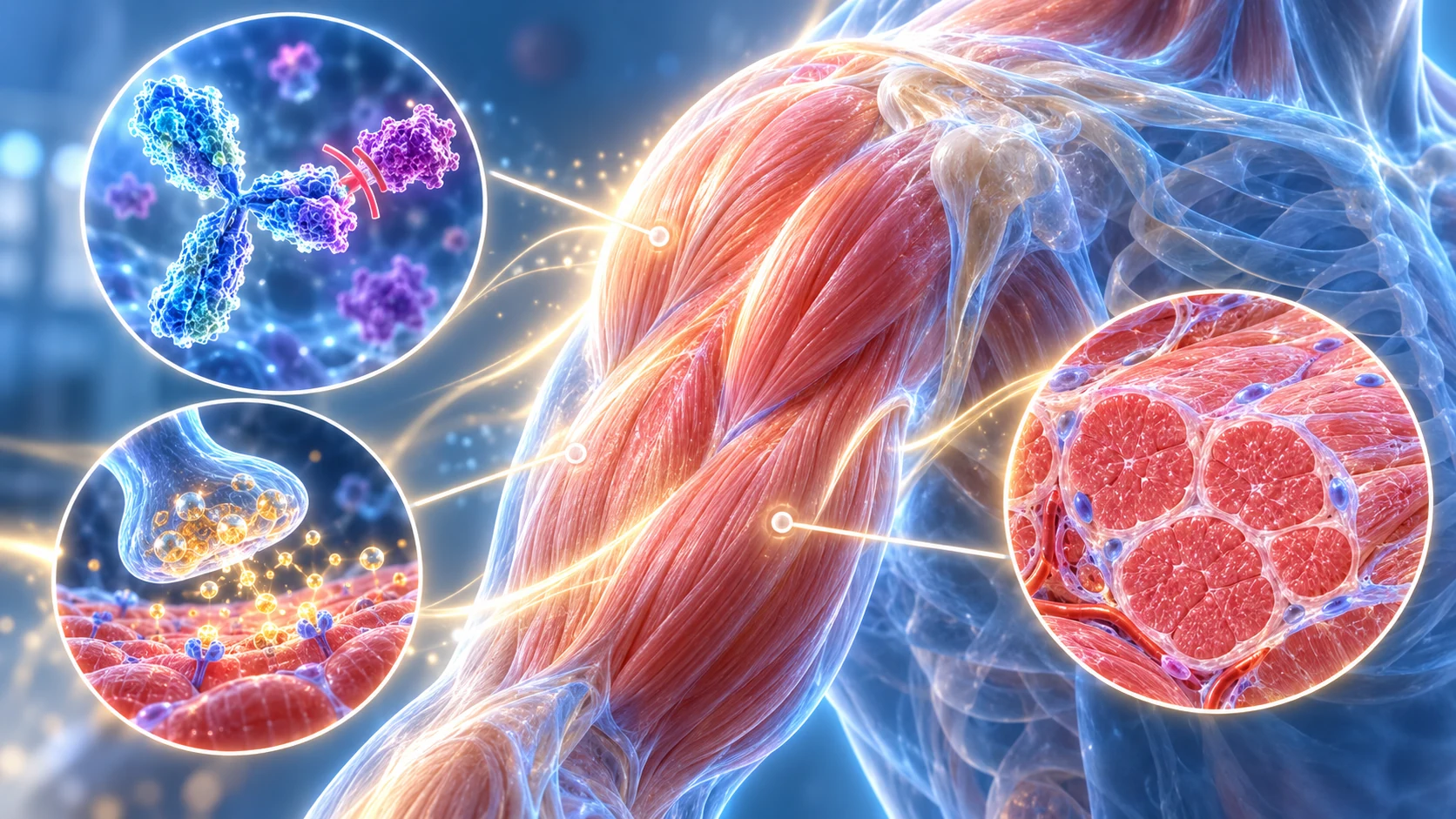
Apitegromab directly targets muscle tissue. By inhibiting the myostatin pathway that limits muscle growth, the molecule aims to provide additional muscle function support alongside existing disease-modifying therapies.
Why are longevity and obesity treatments monitoring this?
In GLP-1-based obesity treatments, a portion of total weight loss can come from lean mass. For this reason, in addition to the question “how much weight was lost?”, the question “how much muscle was preserved?” has gained importance.
The potential of apitegromab to preserve lean mass during weight loss is being investigated. However, FDA approval granted for SMA does not mean the drug is approved for the purpose of muscle preservation in individuals with obesity or those using GLP-1.
Quality of evidence
Regulatorily approved clinical evidence for SMA; muscle preservation use in obesity remains in the investigational stage.
Sources
This content is a regulatory and clinical research evaluation; it is not an off-label use recommendation.