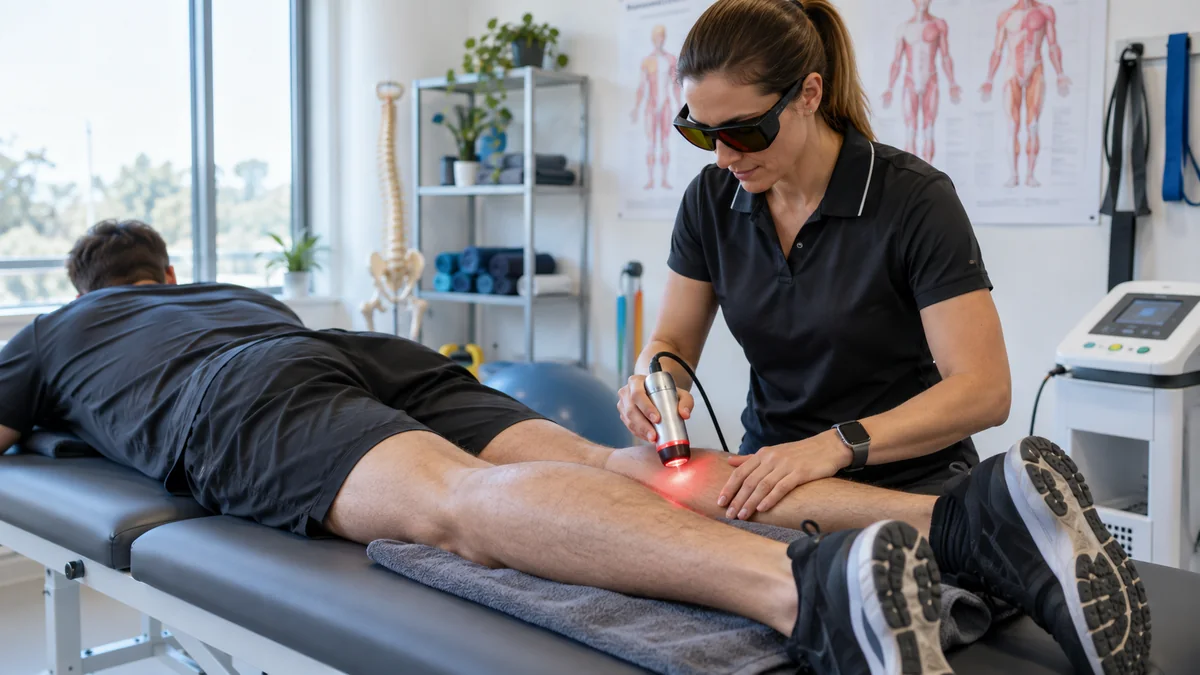
What is DOMS?
A temporary inflammatory/repair response develops in muscle fibers and connective tissue, especially after eccentric exercise. In most cases, it resolves on its own.
980 and 1470 nm
Studies in the meta-analysis are in the 660–950 nm range. Therefore, while proximity to 980 nm is biophysically meaningful, it should not be considered directly equivalent. There are no clinical data on DOMS for 1470 nm.
Scientific evidence
Level of evidence: C/B-. There is a direct DOMS meta-analysis for PBM; however, evidence specific to your 980/1470 nm device is limited.
Our approach at our Bodrum clinic
DOMS is differentiated from muscle strain or the risk of rhabdomyolysis. Laser may be added to hydration, active recovery, and appropriate exercise load.
When to be cautious?
Severe swelling, dark urine, significant loss of strength, or sharp traumatic pain in a single area should be evaluated before being considered DOMS.
References
- PMID 40700213 — Photomodulation therapy for DOMS, systematic review/meta-analysis.
- PMID 40954632 — PBM and muscle recovery, systematic review/meta-analysis.