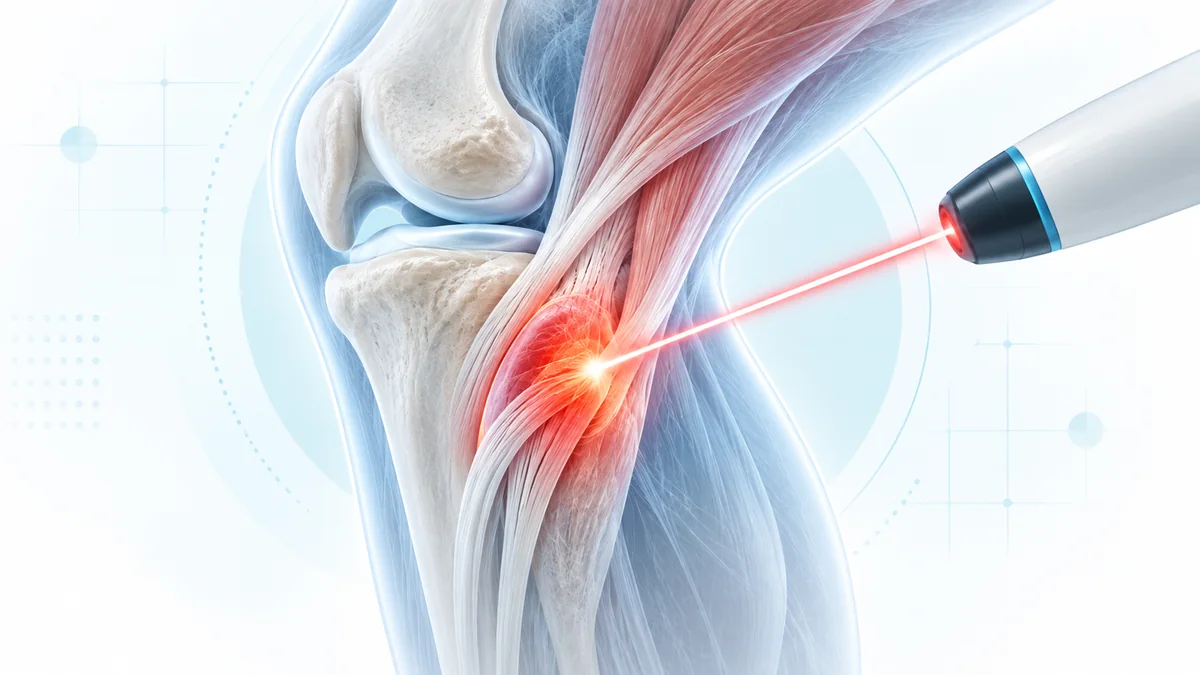
What is pes anserine pain?
Tenderness on the inner-lower part of the knee may be observed with stairs, walking, or pressure. Knee osteoarthritis, hamstring tightness, and increased load may accompany it.
The role of 980 and 1470 nm
980 nm can be considered the primary option in terms of targeting deeper soft tissue. 1470 nm can theoretically be applied in very superficial, sensitive areas; there is no direct evidence of efficacy.
Scientific evidence
Level of evidence: C+. There is indirect support from the knee and tendinopathy HILT literature; strong data specific to the pes anserine is scarce.
Our approach in our Bodrum clinic
We differentiate pes anserine pain from the medial meniscus, MCL, and knee osteoarthritis; if laser is used, we use it in conjunction with hamstring/hip strengthening and walking load adjustment.
References
- PMID 41964853 — HILT tendinopathy meta-analysis.
- PMID 41789279 — Laser therapy for orthopedic pain.
Information
This content is general health information.