
How is it thought to work?
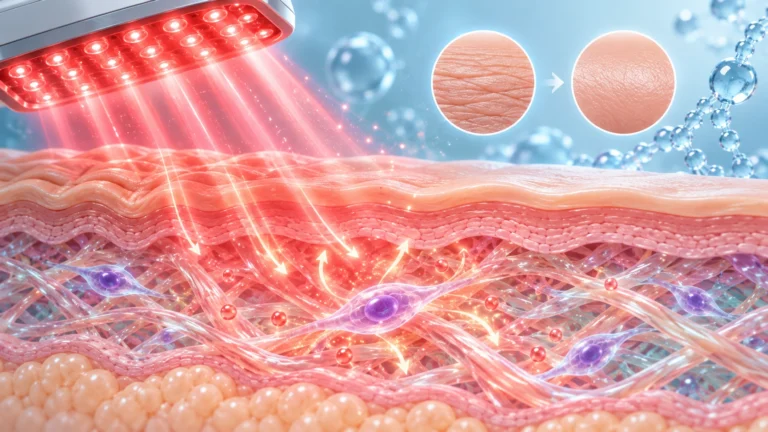
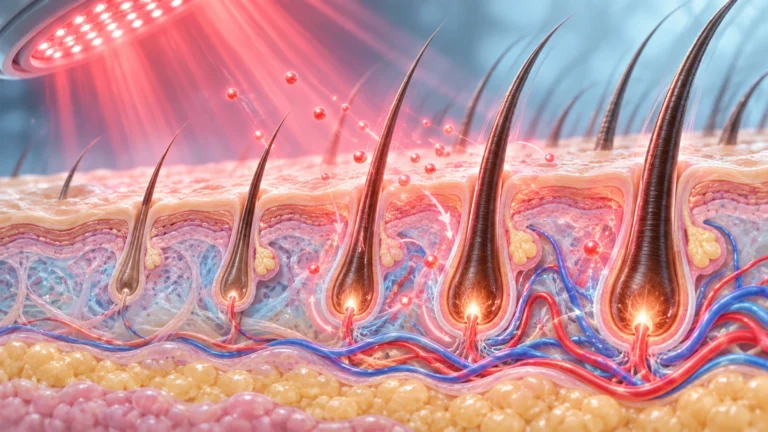
Photobiomodulation is based on the principle that low-energy red and near-infrared light affects cellular signaling pathways. Mechanisms related to energy metabolism, local circulation, and the growth cycle in the hair follicle are being investigated. These biological effects do not mean that clinical results will be the same in every individual.
Which type of hair loss has been studied the most?
The most clinical data is on androgenetic alopecia. A 2025 systematic review and meta-analysis reported that LLLT/LED applications can increase hair density, especially in androgenetic alopecia. In alopecia areata, telogen effluvium, and other types of hair loss, data is more limited and heterogeneous.
Is wavelength important?
In red light, approximately 630–660 nm is mostly used, while in near-infrared, longer wavelengths are used. However, wavelength alone is not sufficient; power density, total energy dose, session frequency, application distance, and how homogeneously the device delivers light to the scalp are also important.
Is a home device the same as a clinical device?
Home devices may have lower power or different distribution characteristics. In clinical devices, application parameters may be more controlled. However, there is no simple relationship such as “more powerful device = better outcome”; dose-response is important in photobiomodulation.
In whom might it not be sufficient on its own?
If there is iron deficiency, a thyroid disorder, severe protein deficiency, active inflammatory scalp disease, or rapidly progressive diffuse hair loss, the underlying cause should be evaluated first. In suitable patients, red light can be planned in combination with minoxidil, PRP/iPRF, mesotherapy, or other treatments.
Our approach in our Bodrum clinic
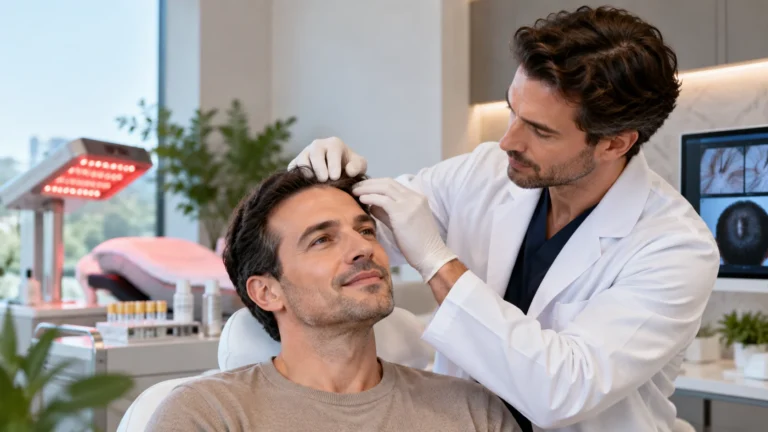
We do not prefer to start red light without determining the type of hair loss. A scalp examination, hair loss pattern, laboratory tests such as ferritin/thyroid if necessary, and medications used are evaluated. In suitable individuals, Red Light Therapy can be considered as one of the supportive options within the Hair Loss and Hair Strengthening plan.
Frequently asked questions
Does red light regrow hair?
Some studies have reported an increase in hair density and hair thickness. However, the response may vary depending on the type of hair loss, its duration, and follicular reserve; the same outcome is not expected in all patients.
How long should it be used?
Studies have generally used protocols lasting weeks to months. Because session frequency and duration vary according to device parameters, there is no single universal protocol.
References
- Low-Level Laser and LED Therapy in Alopecia: Systematic Review and Meta-Analysis, 2025
- Evidence-based consensus on photobiomodulation, 2025
Written and medically reviewed by: Dr. Kerem Çağlayan
Last medical review: September 10, 2026