
Who is it evaluated for?
An evaluation may be beneficial for individuals experiencing pain in the groin or around the hip that increases with weight-bearing, limited range of motion, decreased walking distance, or difficulty with daily activities.
How is it planned?
Through physical examination, joint-, tendon-, and lumbar-related possibilities are differentiated; X-rays or other imaging modalities are used when necessary. Exercise, weight management, pain control, injections, or surgical options are planned according to the severity of complaints and functional loss.
Key points
- Hip pain does not always originate from the hip joint; the lower back, sacroiliac region, tendons, bursae, and surrounding muscles can also produce similar complaints.
- In hip osteoarthritis, pain is typically felt in the groin, anterior thigh, or around the hip, and may be accompanied by restricted movement.
- Exercise, weight management, and appropriate analgesic therapies are part of the foundational approach in many patients.
- Injection and surgical options are evaluated according to symptom severity, imaging, functional loss, and previous treatment response.
Common causes of hip pain
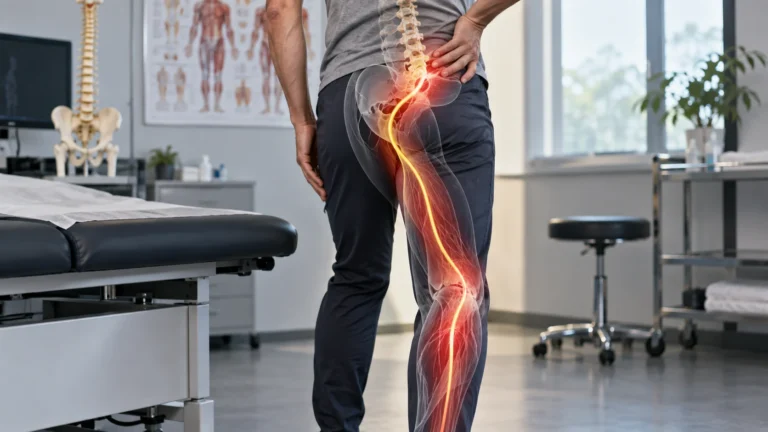
Hip osteoarthritis, gluteal tendinopathy, trochanteric pain syndrome, femoroacetabular impingement, labral issues, and referred pain from the lower back are among the common causes. The location of the pain and the movements that aggravate it help in the differential diagnosis.
How is osteoarthritis recognized?
Pain in the groin area that increases with weight-bearing, reduced range of motion—especially internal rotation—and difficulty with daily activities may suggest osteoarthritis. X-rays can support the diagnosis; however, the severity of radiographic changes does not always directly correlate with the level of pain.
Initial treatment steps
The 2024 AAOS and 2025 physical therapy guidelines emphasize the important role of exercise and physical activity in appropriate patients. If excess weight is present, weight management can help reduce joint load and support overall function. Analgesic and anti-inflammatory medications are evaluated according to the individual risk profile.
Physical therapy and exercise
A personalized program can be prepared by evaluating hip muscle strength, range of motion, gait pattern, and daily function. The goal is not only to reduce pain, but also to maintain the load-bearing capacity of the hip and the individual’s daily mobility.
Injections
Intra-articular corticosteroid injections may contribute to short-term pain control in some patients. Outcomes of hyaluronic acid, PRP, and other regenerative injections may vary according to studies and patient selection; therefore, the decision to proceed should be evaluated alongside expectations, cost, evidence level, and alternatives.
The role of ozone applications
There are various studies on intra-articular or periarticular ozone applications, and positive outcomes on pain and function have been reported in some osteoarthritis groups. However, protocols and comparison groups vary. For this reason, it can be considered not as a replacement for standard treatments, but as a complementary option in selected patients.
When is a surgical evaluation needed?
An orthopedic surgical opinion may be considered in the presence of marked functional loss, night pain, advanced structural damage, and severe impairment of daily life despite appropriate conservative treatments. The decision for surgery should not be made based on X-rays alone, but together with symptoms and function.
Which findings require emergency evaluation?
Inability to bear weight following trauma, severe hip pain accompanied by fever, rapidly progressive swelling-erythema, or sudden severe loss of function may require emergency evaluation.
Our approach at our Bodrum clinic
Rather than labeling hip pain simply as “calcification” (osteoarthritis), we strive to distinguish whether the pain originates from the joint, tendons, lower back, or another structure. We plan treatment not based on imaging alone, but on the individual’s pain pattern, range of motion, muscle strength, and daily function.
Related content
References
- American Academy of Orthopaedic Surgeons. Clinical Practice Guideline Summary: Management of Osteoarthritis of the Hip. 2024. PMID: 38781351.
- Hip Pain and Mobility Deficits—Hip Osteoarthritis: Revision 2025. J Orthop Sports Phys Ther. PMID: 41165671.
Written and medically reviewed by: Dr. Kerem Çağlayan
Last medical review: September 10, 2026
Disclaimer: This content is for general informational purposes only; it does not substitute for personal diagnosis or treatment recommendations.