Who is it evaluated for?
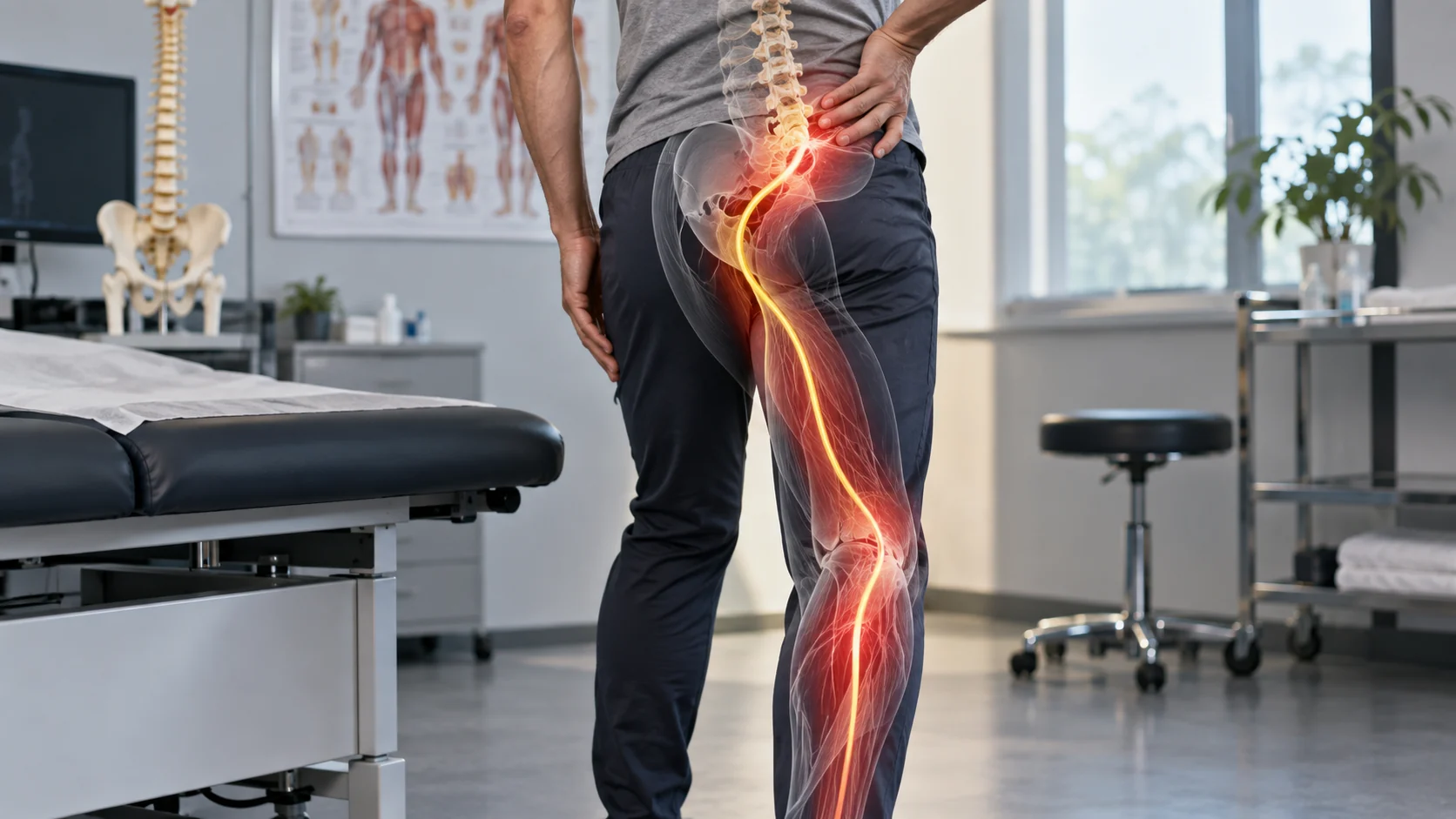
A neurological evaluation may be beneficial for individuals experiencing pain, numbness, electric shock-like sensations, or loss of strength radiating from the lower back to the hip or leg. An evaluation without delay is required if there is new, noticeable muscle weakness or changes in bowel or bladder control.
How is it planned?
Pain distribution, muscle strength, reflexes, and sensory examination are evaluated; MRI is added when necessary. Exercise, neuropathic pain treatments, rehabilitation, and interventional options in appropriate patients are planned according to clinical findings.
Key points
- Sciatica can usually manifest with pain, numbness, or tingling radiating to the hip and leg due to the involvement of a nerve root in the lumbar region.
- Not all radiating leg pain is sciatica; hip joint, sacroiliac region, muscle-tendon problems, and peripheral nerve issues can produce similar complaints.
- Neuropathic pain may present with features such as burning, electric sensations, pins and needles, hypersensitivity to touch, or numbness.
- Newly developed noticeable muscle weakness, impairment of bowel or bladder control, numbness in the saddle area, or rapidly progressing neurological findings require urgent evaluation.
What is sciatica?
Sciatica is used in colloquial language to describe nerve root pain radiating from the lower back to the hip and leg. It is frequently associated with causes such as lumbar disc herniation, foraminal narrowing, or spinal canal stenosis. However, seeing a herniated disc on imaging alone does not mean it is the source of the complaint; concordance with clinical findings must be sought.
What does neuropathic pain mean?
Neuropathic pain is pain associated with a lesion or disease of the somatosensory nervous system. Diabetic neuropathy, postherpetic neuralgia, certain nerve entrapments, and radiculopathy may fall into this category. In diagnosis, the quality of pain, sensory changes, reflexes, and muscle strength are important.
What is evaluated during the examination?
- Distribution of pain along the lower back, hip, and leg
- Whether numbness or sensory loss is dermatomal
- Muscle strength and reflexes
- Provocative tests such as straight leg raise
- Relationship to walking, standing, and sitting
- Accompanying findings of the hip joint and sacroiliac region
When is an MRI needed?
In typical and new-onset radicular pain, if there are no severe neurological findings or other red flags, an immediate MRI is not required for every patient. If findings are prolonged, progressive, if surgical or interventional treatment is being considered, or if the diagnosis is uncertain, imaging may become more meaningful.
Treatment options
The plan is determined according to the duration of symptoms, neurological deficit, pain severity, and functional loss. In appropriate patients, maintaining movement, exercise and physical therapy, selected analgesic approaches, and neuropathic pain medications may be considered. Drug selection should be made based on side effects, comorbidities, and current treatments.
Injections and interventional treatments
Epidural steroid injections or other targeted interventions may contribute to the short-to-medium-term control of particularly prominent radicular pain in some patients. The effect can vary from person to person; the goal is generally to facilitate movement and rehabilitation. A surgical consultation may be needed in the presence of progressive neurological deficit or selected structural problems.
Ozone and other complementary applications
There are studies on paravertebral or peridiscal ozone applications, and positive results on pain and function have been reported in some patient groups. However, application technique, patient selection, and evidence quality are heterogeneous. Therefore, it should be considered not as a substitute for standard neurological evaluation and imaging when necessary, but as a complementary option in appropriate patients.
Our approach in our Bodrum clinic
We do not assign the “sciatica” label solely based on pain radiating to the leg. We first evaluate nerve root findings, the hip and sacroiliac region, muscle strength, reflexes, and red flags. The goal is to establish a stepped plan that restores the individual’s function in the fastest and safest manner possible, without creating an unnecessary imaging or procedural burden.
Related content
References
- Feldman A, Weaver J. Pharmacologic and Nonpharmacologic Management of Neuropathic Pain. Semin Neurol. 2025. PMID: 39393798.
- NICE. Suspected neurological conditions: recognition and referral — cervical and lumbar radiculopathy recommendations.
Written and medically reviewed by: Dr. Kerem Çağlayan
Last medical review: September 10, 2026
Disclaimer: This content is for general medical informational purposes only; it does not substitute for personal diagnosis or treatment recommendations.