Who is it evaluated for?
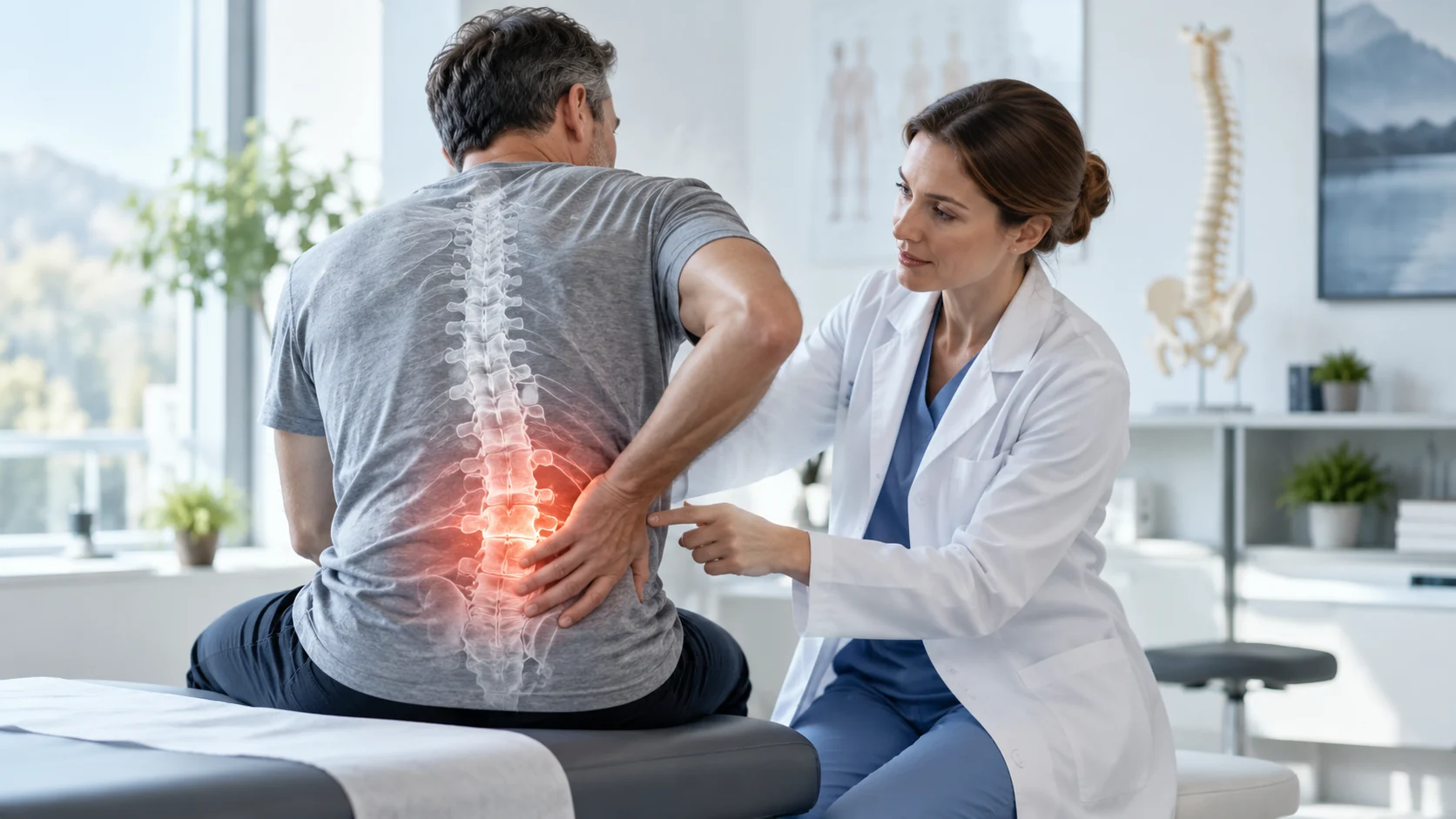
A clinical evaluation may be beneficial for individuals whose low back pain lasts longer than a few weeks, who experience pain or numbness radiating into the leg, whose daily mobility is significantly affected, or who have recurrent episodes.
How is it planned?
Medical history and neurological examination are the first step. Imaging is used only when necessary; mobility, exercise, pain control, rehabilitation, and, in appropriate patients, interventional options are planned in a stepwise manner based on the individual’s findings.
What are the common causes of low back pain?
Muscle and ligament strains, disc degeneration, facet joint-related pain, sacroiliac joint problems, spinal stenosis, and disc herniation are among the common causes. Seeing disc bulging or degeneration on imaging does not always mean that specific finding is the true source of the pain; it must be interpreted alongside the clinical examination.
What is a herniated disc?
The protrusion of disc material toward the spinal canal can affect the nerve root and lead to pain, numbness, or weakness radiating from the lower back into the leg. This may be accompanied by radicular pain or sciatica. Not every disc herniation requires surgery; neurological findings, the severity and duration of the pain, and its impact on daily function determine the choice of treatment.
When is an MRI needed?
In newly developing low back pain, routine imaging may not be necessary in the early period for most individuals if there are no signs suggestive of serious structural disease. MRI or other imaging modalities become more meaningful in the presence of persistent or progressive neurological deficit, severe trauma, suspicion of infection or malignancy, cauda equina signs, or significant radicular complaints that persist despite treatment.
What treatments can be evaluated?
Mobility and exercise
A common aspect of current high-quality guidelines is patient education, self-management, maintaining mobility, and an appropriate physical therapy/exercise approach. Prolonged bed rest is generally not preferred. The type of exercise should be determined according to the individual’s pain pattern, physical condition, and comorbid conditions.
Medication therapy
Certain analgesic and anti-inflammatory options may be used for short-term pain control. Drug selection should be made based on age, gastrointestinal-renal-cardiovascular risks, other medications, and the character of the pain. In long-term medication use, the risk-benefit balance should be reviewed regularly.
Interventional pain treatments
Methods such as nerve root injections, epidural procedures, interventions targeting the facet or sacroiliac joints, and radiofrequency can be evaluated in specific clinical patterns. The contribution of these methods is closely related to accurate identification of the pain source and proper patient selection.
Ozone and other complementary options
Paravertebral or selected interventional ozone applications have been investigated in low back pain and disc-related complaints. Some clinical studies have reported positive results; however, there are differences in administration technique, dosage, patient selection, and control groups. In the appropriate patient, it may be addressed alongside other treatment options and in a way that complements the standard evaluation.
Under what circumstances is emergency evaluation required?
- Newly developed significant leg weakness
- New loss of bowel or bladder control
- Numbness in the perineal region
- Fever or signs of systemic infection
- Severe trauma
- New and unexplained low back pain with a history of cancer
- Unusual pain that worsens at night and does not change with position
Our approach at our Bodrum clinic
In low back pain, we first aim to differentiate whether the pain originates from a mechanical, radicular, neuropathic, or other source. Physical examination, neurological assessment, imaging when necessary, and the individual’s daily functioning are addressed together. The goal is to establish a plan that maintains mobility as much as possible, avoids unnecessary procedures, and utilizes interventional options at the right time if needed.
For the general approach, you can review the Pain Management guide, and for the role of ozone in the field of pain, the Ozone and Pain guide.
References
- McKenzie BJ, et al. Agreement between high-quality clinical practice guidelines in their treatment recommendations for low back pain. Spine J. 2025. PMID: 40639620.
- Briggs AM, et al. The WHO guideline for non-surgical management of chronic primary low back pain in adults. 2025. PMID: 40624581.
- Lim TH, et al. Nonpharmacological Spine Pain Management in Clinical Practice Guidelines. J Orthop Sports Phys Ther. 2025. PMID: 39680669.
Written and medically reviewed by: Dr. Kerem Çağlayan
Last medical review: September 10, 2026
Disclaimer: This content is for general health information purposes only; it is not a personal diagnosis or treatment recommendation.