
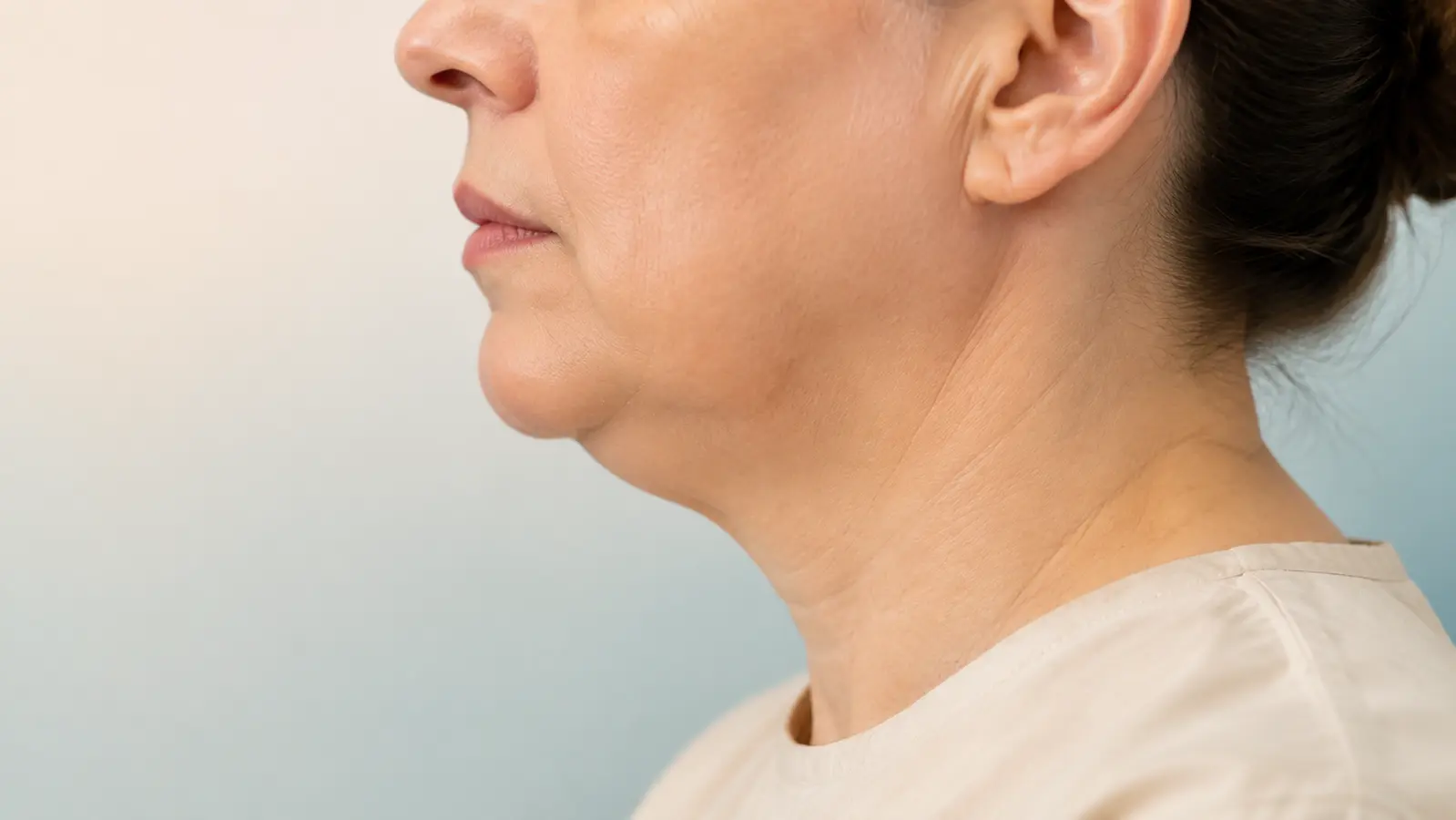
What determines the double chin appearance?
A double chin is not related solely to excess weight. The amount of submental fat, projection of the chin tip, structure of the mandibular line, skin elasticity, platysma muscle, and neck-to-chin transition collectively affect the appearance. For this reason, different treatment options may be more appropriate for two individuals who appear similar in photos.
What distinctions are made during the examination?
- Is submental fat or skin laxity predominant?
- Is there retrusion of the chin tip or weakness in the mandibular line?
- Are platysmal bands prominent?
- Does significant excess skin make surgical options more suitable?
- Is there a finding that needs to be evaluated first, such as unilateral swelling, a mass, or unexplained tenderness?
What does Endolifting target in the double chin?
If adipose tissue is predominant, local volume reduction through a controlled subdermal thermal effect can be targeted; if skin laxity is predominant, tissue tightening via collagen contraction and remodeling can be targeted. The goal is not to unnecessarily reduce facial volume, but to create a more balanced contour in the chin-neck transition.
What does research show?
In a 9-patient jawline/jowl study, an increase in skin thickness, density, and elasticity along with high patient satisfaction were reported following 1470 nm Endolift. These results are promising; however, the study is a small case series and should not be generalized to all double chin types. While a 2024 systematic review also reported positive signals in the jowl area, a 2025 scoping review indicates that the current literature mostly consists of case series.
Endolifting or liposuction?
In cases of limited localized fat and mild-to-moderate skin laxity, Endolifting may be considered. For larger fat volumes, liposuction or laser-assisted lipolysis may be more predictable. In cases of pronounced excess skin, surgical neck lift or different surgical techniques may come into question.
Procedure and recovery process
If deemed suitable, a thin fiber is advanced in the subdermal plane and energy is delivered in a controlled manner according to the anatomy of the chin-neck line. In the first few days, mild swelling, bruising, tightness, or tenderness may be observed. Contour change may be noticeable early; collagen remodeling, however, is a longer process.
Safety
In the submental area, the relationship with superficial blood vessels, nerve structures, and the platysma is important. Safety is closely related to the correct anatomical plane, controlled energy, and an experienced practitioner. Adverse effects such as burns, infection, contour irregularities, temporary numbness, or asymmetry may occur.
Frequently asked questions
Does a double chin disappear completely?
The outcome depends on baseline anatomy. Because the contribution of fat, skin, and jaw structure varies, the goal is contour improvement in harmony with facial proportions rather than “complete elimination.”
Will the result be affected if weight changes?
Yes. Weight fluctuations and natural aging can re-affect the submental contour.
Is a single session sufficient?
In some individuals, a single session may be sufficient; in others, a different plan may be required depending on tissue response and goals. A standard single-session guarantee is not given.
Our approach at our Bodrum clinic
In double chin evaluation, we do not look solely at the amount of fat. By evaluating chin projection, skin quality, platysma structure, and the neck-to-chin angle together, we determine on an individualized basis whether Endolifting, liposuction, RF microneedling, or surgical options make more sense.
Related content
Endolifting main guide → | Jawline Endolifting →
References
- Endolift laser for jowl fat reduction: clinical evaluation and biometric measurement. PMID: 35083532.
- The Endo-lift Laser for Dermatological Aesthetic Conditions: A Systematic Review. PMID: 38886198.
- Scientific evidence on the impact of endolaser in aesthetics: scoping review. PMID: 40116960.
Written and medically reviewed by: Dr. Kerem Çağlayan
Last medical review: September 11, 2026


