What is patellofemoral pain?
Load distribution between the kneecap and femur, hip and knee muscle strength, training load, and movement control play a role together. It should not be evaluated as a single ‘cartilage problem’.
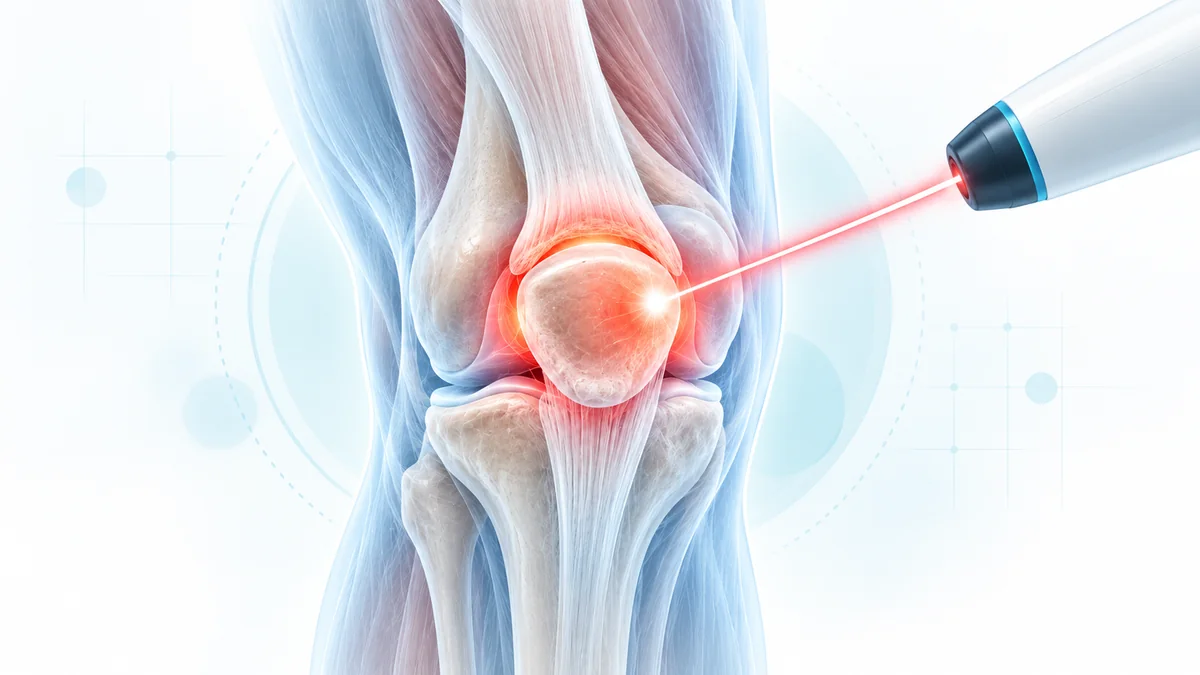
How can laser help?
Laser can support participation in exercise by facilitating pain control. The cornerstone of treatment is hip-knee strengthening and load management.
The role of 980 nm
It is a more rational primary wavelength for soft tissue and periarticular targets around the knee. The HILT protocols used in the meta-analysis are heterogeneous; a single standard specific to 980 nm cannot be derived.
The role of 1470 nm
It has a more superficial thermal character; it is not the primary wavelength for targeting the patellofemoral joint itself.
What does the scientific evidence say?
Level of evidence: B+ / very low certainty. Four RCTs were included in the 2026 meta-analysis; HILT + exercise provided a significant reduction in pain, but did not demonstrate a significant superiority in function.
Our approach at our Bodrum clinic
At our Bodrum clinic, anterior knee pain is differentiated between patellofemoral pain, patellar tendon, meniscus, and osteoarthritis. If laser is to be applied, it is added to the exercise program; success is monitored through tolerance to stairs, squatting, walking, and sports.
Frequently asked questions
Can anterior knee pain while going down stairs be patellofemoral pain?
Yes, it is a common symptom; however, it is not diagnostic on its own.
Is laser alone sufficient?
No. Current studies have evaluated laser in combination with exercise.
References
- PMID 42286680 — HILT for patellofemoral pain, systematic review/meta-analysis.
- PMID 41789279 — Laser therapy for orthopedic pain, systematic review.
Information
This content is general health information.