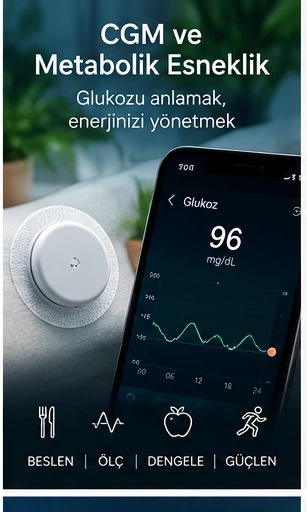
What is metabolic flexibility?
Metabolic flexibility is the body’s ability to adapt between energy sources under different conditions such as fasting, meals, and exercise. CGM does not measure this concept in its entirety; it only shows a portion of glucose dynamics.
What do we evaluate together?
Interpreting CGM data together with fasting glucose, HbA1c, insulin, HOMA-IR, triglyceride/HDL ratio, waist circumference, sleep, meal composition, and physical activity is more meaningful. A single high peak does not indicate disease on its own.
In whom might it be more meaningful?
Short-term CGM monitoring may be considered in selected individuals with a risk of insulin resistance, a family history of diabetes, difficulty with weight management, noticeable post-meal sleepiness, or personalized nutrition goals.
Our approach in our Bodrum clinic
We use CGM not to generate scores or fear, but to observe patterns connected to daily life. The goal is not unnecessary restriction, but to personalize a sustainable nutrition, movement, and sleep plan.
Return to the main longevity guide → · Insulin resistance guide →
Last medical review: September 13, 2026
Warning: CGM results alone do not establish a diagnosis.