What does this score mean?
The Confidence Index is an editorial methodology score that indicates the extent to which the scientific finding evaluated on this page can be trusted, not the success rate of the treatment. Study design, risk of bias, sample, precision, direct applicability, reproducibility, transparency, and clinical relevance are evaluated together.
What did the study investigate?
It evaluated the clinical significance of symptomatic hypophosphatemia risk and the need for monitoring following ferric carboxymaltose.
How was it conducted?
The FDA added a boxed warning to the product label by evaluating spontaneous case reports, Sentinel data, and published literature together.
What was found?
Clinically significant hypophosphatemia cases were confirmed following single or repeated administrations, and the importance of serum phosphate monitoring in at-risk patients was emphasized.
Limitations of the study
Pharmacovigilance data do not measure event incidence and individual causality with RCT precision; the magnitude of risk may vary according to patient characteristics.
What does it mean clinically?
When planning ferric carboxymaltose, phosphate evaluation should be part of safety practice, especially in cases of repeated administration and risk factors.
What do we not know yet?
The exact magnitude of risk in an individual patient, comparative long-term outcomes with different IV iron preparations, and the optimal monitoring frequency are not the same in every case.
Source
The full citations and links of the sources are preserved in the detailed evaluation section of this page.
Written and medically reviewed by: Dr. Kerem Çağlayan · Information about IV applications · All Scientific Research
Detailed evaluation
Research evaluation · September 12, 2026
In a safety communication dated September 1, 2026, the US Food and Drug Administration (FDA) added a boxed warning describing the risk of symptomatic hypophosphatemia to the label of ferric carboxymaltose injection. The regulatory decision is based on the combined evaluation of FAERS/AEMS case reports, FDA Sentinel data, and the literature.
Why did the FDA add a boxed warning?
In the FDA evaluation, it was observed that cases of symptomatic hypophosphatemia continued to be reported after both single infusions and repeated ferric carboxymaltose administrations. Reported outcomes include hospitalization, the need for phosphate replacement over weeks or months, and frequent check-ups. The fact that serum phosphate was measured in less than 20% of ferric carboxymaltose administrations in the Sentinel data suggests that the risk is not sufficiently visible in clinical practice.
Mechanism: FGF23 and renal phosphate loss
Ferric carboxymaltose can increase renal phosphate excretion, particularly with an increase in intact FGF23 levels. This process can suppress active vitamin D metabolism, reduce intestinal absorption of phosphate and calcium, and, if prolonged, impair bone mineralization. For this reason, persistent hypophosphatemia should not be viewed merely as a transient electrolyte change.
Who is at higher risk?
- Those with low baseline serum phosphate
- Those with a history of inflammatory bowel disease or malabsorption
- Those with vitamin D deficiency or hyperparathyroidism
- Those at risk of malnutrition
- Those receiving high-dose ferric carboxymaltose repeatedly or at short intervals
- Those who have experienced unexplained muscle weakness, bone-joint pain, or prolonged fatigue after a previous course of IV iron
How should this be reflected in clinical practice?
In the pre-assessment for IV iron, not only hemoglobin, ferritin, and transferrin saturation, but also phosphate risk should be evaluated. If pre-existing low phosphate is present, it should be corrected; checking serum phosphate is appropriate in high-risk patients and in anyone receiving ferric carboxymaltose again within three months of the previous course.
New-onset muscle weakness, bone pain, widespread joint pain, or fatigue lasting longer than expected after an infusion should not automatically be interpreted as “iron deficiency persists.” Depending on the clinical context, evaluation of phosphate, calcium, magnesium, PTH, and vitamin D may be required.
When should the medication be reconsidered?
The FDA recommends considering permanent discontinuation of ferric carboxymaltose in severe symptomatic or persistent hypophosphatemia. The decision here should be made by considering the severity of hypophosphatemia, symptoms, alternative IV iron options, and the patient’s iron replacement needs together.
Impact on practice
Applicable now. Serum phosphate and risk factors should be added to the IV therapy checklist for ferric carboxymaltose. Especially with repeated administrations, this check should be one of the fundamental components of treatment safety.
Quality of evidence
High. This is not a single observational study; it is a regulatory decision based on multiple safety data sources that resulted in the addition of a boxed warning to the product labeling.
Source
U.S. Food and Drug Administration. FDA Adds Boxed Warning to Labeling for Ferric Carboxymaltose Injection (Injectafer) to Describe Risk of Low Phosphate Levels. September 1, 2026.
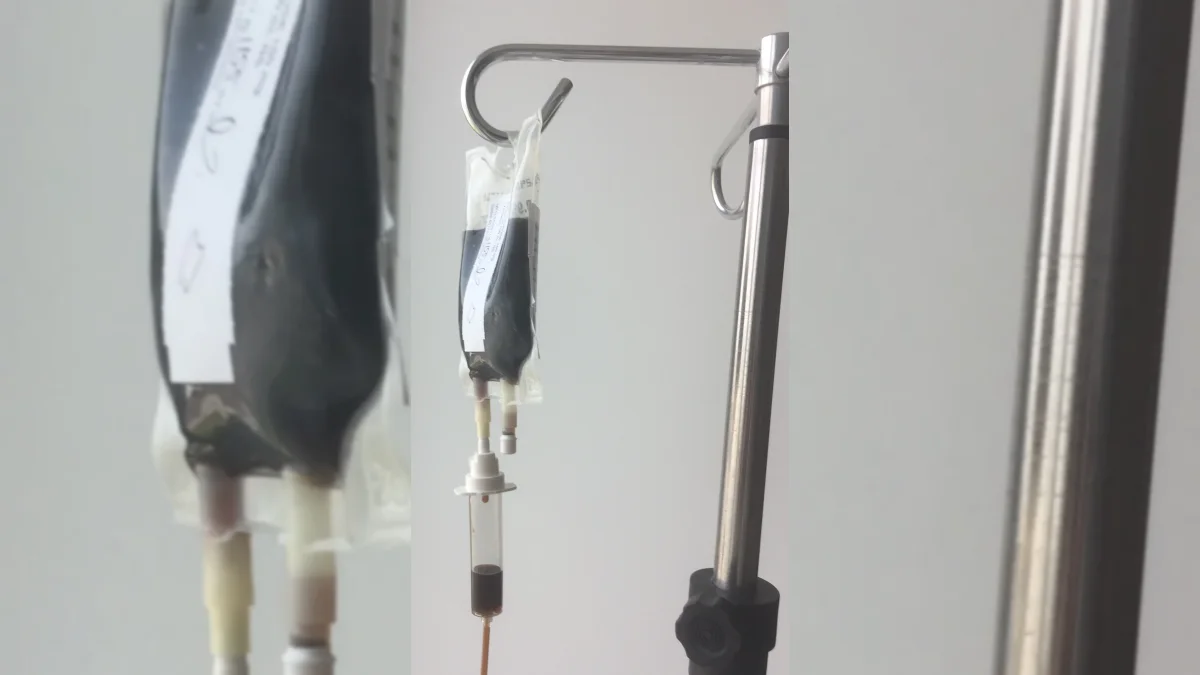
Image: Photograph representing IV iron infusion; Smokefoot/Wikimedia Commons, CC BY-SA 4.0. The image is used to represent IV iron administration, not ferric carboxymaltose itself.