
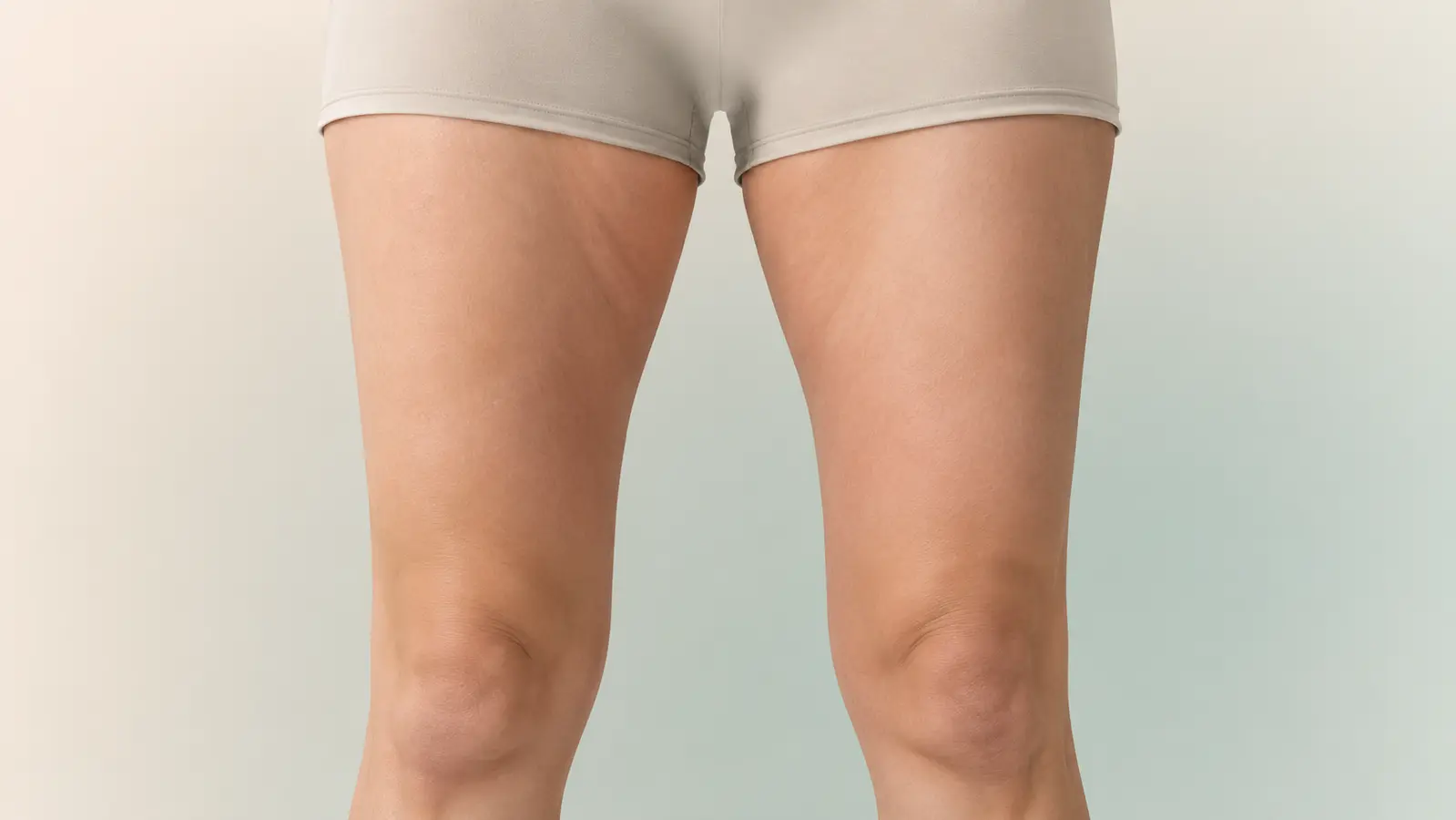
Skin laxity, localized fat accumulation, cellulite, lipedema, and venous/lymphatic swelling are distinct conditions affecting the appearance of the inner thighs. When planning Endolifting, the tissue that constitutes the aesthetic target is first identified.
Who may be considered for inner thigh Endolifting?
It may be considered for contour and tissue quality in individuals with a stable weight, limited localized fat accumulation, and mild–moderate skin laxity. For significant excess skin after major weight loss, thigh lift surgery may be a more comprehensive option.
Why should cellulite, lipedema, and edema be distinguished?
Cellulite is associated with the organization of superficial connective tissue; lipedema with painful, symmetrical fat distribution and easy bruising; and lymphedema or venous insufficiency with swelling and circulatory findings. Each of these conditions requires a different evaluation. Endolifting is not a method that treats all of these conditions through the same mechanism.
What does the research show?
The 2024 systematic review includes studies reporting positive results for localized fat and skin laxity in the thighs and other body areas. The 2025 scoping review showed that study designs in the current literature consist mostly of case series and that protocols are heterogeneous. Therefore, it is not appropriate to provide a standard loss in centimeters or duration of results for the thighs.
Procedure and recovery
A thin fiber is advanced in the target subdermal plane, and controlled laser energy is applied. Swelling, bruising, tenderness, and temporary tightness may occur after the procedure. Recommendations for returning to daily activities, compression, and exercise are planned according to the extent of the procedure.
Safe planning
If there is suspected active thrombosis, a significant venous problem, unexplained one-sided swelling, an active infection, or a significant bleeding risk, medical evaluation is required before an aesthetic procedure. Contour irregularity, seroma, thermal injury, and pigment changes are among the rare complications.
Our approach at our Bodrum clinic
First, we distinguish excess skin, fat tissue, and circulatory/lymphatic causes. In suitable cases, Endolifting is compared with liposuction, RF-based tightening, weight management, or surgical options when necessary.
Frequently asked questions
Does it completely eliminate cellulite?
Cellulite is multifactorial in nature. Improving skin laxity does not mean that all causes of cellulite will be eliminated.
Is it a treatment for lipedema?
No. Lipedema is a separate clinical condition, and the approach to diagnosis/treatment is different.
Will both legs be completely equal?
Natural asymmetry is evaluated at the outset. The goal is to achieve a harmonious contour; absolute symmetry cannot be guaranteed.
Related content
General guide to Endolifting · The difference between Endolifting and laser lipolysis · Endolifting safety
References
- Nilforoushzadeh MA et al. Aesthetic Plast Surg. 2024. PMID: 38886198.
- Vidal GP et al. Lasers Med Sci. 2025. PMID: 40116960.


