Does epigenetics change genes?
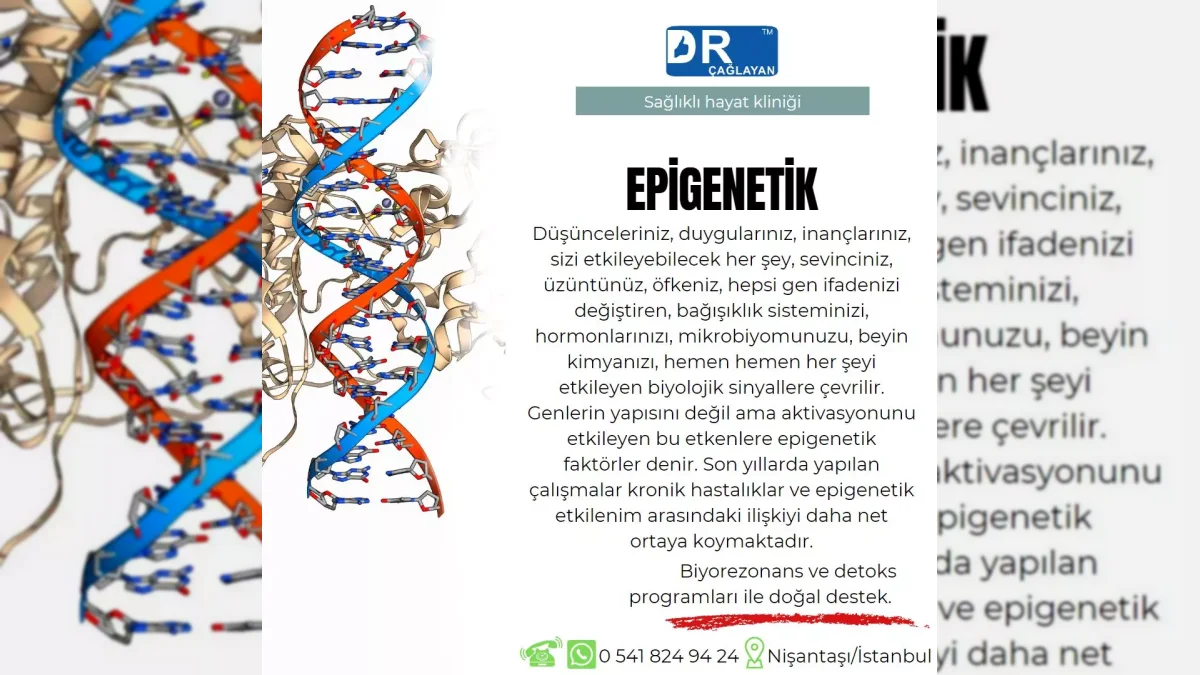
Epigenetic changes mostly do not alter DNA letters; they affect when and how much the cell uses specific genes. Aging, development, nutrition, physical activity, smoking, environmental exposures, and certain disease processes may be associated with epigenetic marks.
Can emotions and stress affect gene expression?
Chronic stress can generate biological responses through hormonal, immune, and nervous system pathways and may be associated with certain epigenetic changes. However, a simple and deterministic model such as “a thought directly turns on a specific gene” is not accurate.
Can epigenetic changes be reversed?
Some epigenetic marks are dynamic and can change throughout life. However, this does not mean that any diet, “detox,” or device clears individual-specific harmful epigenetic marks. Clinically meaningful change must be demonstrated separately in human studies for a specific intervention and a specific outcome.
Connection to healthy living
Regular physical activity, not smoking, a balanced diet, adequate sleep, and the control of blood pressure and metabolic risks have strong rationales for health. The relationship between these habits and certain epigenetic pathways is being investigated; however, clinical recommendations should not be based solely on the claim of “epigenetic optimization.”
Related article
Is it possible to “cleanse genes”?