What does this score mean?
The Confidence Index does not indicate the success rate of a treatment, but rather editorial confidence in the clinical conclusion that can be drawn from the available data. Human data, study design, mechanistic validation, peer-reviewed publication, and clinical endpoints are evaluated together.
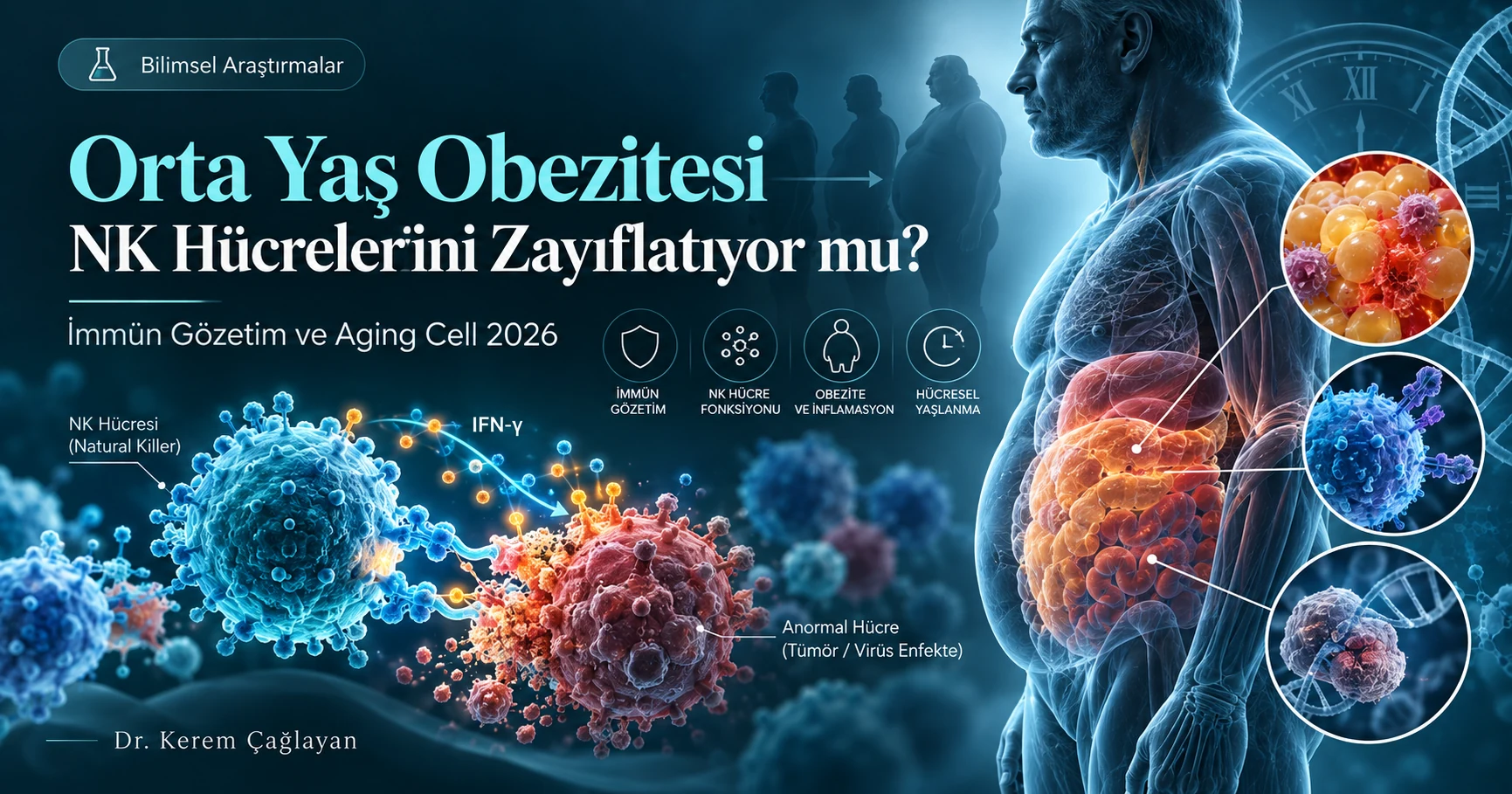
Brief outcome: Midlife and adipose tissue expansion were found to be associated with decreases in NK cell counts, maturation, and effector functions. The findings support the intersection of immune aging and metabolic health, but it has not yet been proven that weight loss reverses this impairment.
Why are NK cells important?
Natural killer (NK) cells are innate immune cells that play a role, particularly in recognizing virus-infected cells and cells undergoing malignant transformation. Cytotoxic granule release, degranulation, and interferon-gamma (IFN-γ) production are core components of NK cell function.
What did the study investigate?
The study, published in Aging Cell in September 2026, examined how midlife-associated adipose tissue alterations could affect NK cell biology. Researchers used samples from healthy middle-aged human donors together with aged/obesity-associated mouse models.
Key findings
In the midlife group, NK cell function was reported to be attenuated compared with young comparators; the effect could be particularly more pronounced in males. In mice, decreases in NK cell count and maturation in the spleen and white adipose tissue were observed alongside increased adipose tissue volume and reduced basal metabolic rate.
In functional assessments, reduced degranulation capacity and decreased IFN-γ response indicated that the immune surveillance capacity of NK cells against target cells might be impaired.
Where does obesity fit into this process?
Adipose tissue is not merely an energy reservoir; it is an active organ that shapes the immune system via cytokines, adipokines, and metabolites. Chronic energy surplus and adipose tissue inflammation can create a microenvironment that may impair NK cell metabolism and effector capacity. The study suggests that midlife may increase susceptibility to this effect.
Strengths of the study
Evaluating human samples together with experimental animal models strengthens biological consistency. In addition, examining not only cell counts, but also indicators of maturation and functional responses is important.
Limitations
A significant portion of the mechanistic experiments was performed in mouse tissues. Although human data show an association, they do not prove causality on their own. The study is not a randomized clinical trial testing whether an intervention inducing weight loss restores NK cell function.
What does it mean clinically?
The results support that metabolic health cannot be considered separately from immune aging. Nevertheless, as of today, a conclusion that “if you lose weight, your NK cells will rejuvenate” or “a specific supplement that enhances NK cells has been proven” cannot be drawn.
Why is it interesting for longevity?
Immunosenescence is one of the important components of age-related changes in cancer surveillance and resistance to infection. The possibility that obesity accelerates this process in midlife adds a mechanistic dimension to the importance of body composition and metabolic health in healthy aging.
References
Biao R, Wang X, et al. Natural Killer Cell Dysfunction Is Emerging During Midlife Obesity. Aging Cell. 2026;25(9):e70707. DOI: 10.1111/acel.70707.
Medical evaluation: This content has been prepared for the purpose of evaluating scientific research; it is not a personal diagnosis or treatment recommendation. Preclinical and experimental findings should not be interpreted as clinical treatment efficacy. · All Scientific Research